ChannelVessel Intelligent Equipment Co., Ltd. Contact Us
WATER TREATMENT

Water Treatment Pressure Vessels & Process Equipment

Custom pressure vessels, filter vessels, storage tanks and process skids engineered around the operating conditions of industrial water and wastewater treatment systems.

From pretreatment and media filtration to activated carbon, ion exchange, process storage and integrated treatment skids, ChannelVessel manufactures equipment according to your process data, water chemistry, design pressure, material requirements and plant layout.
Custom Fabrication Process-Matched Design Project-Specific Materials
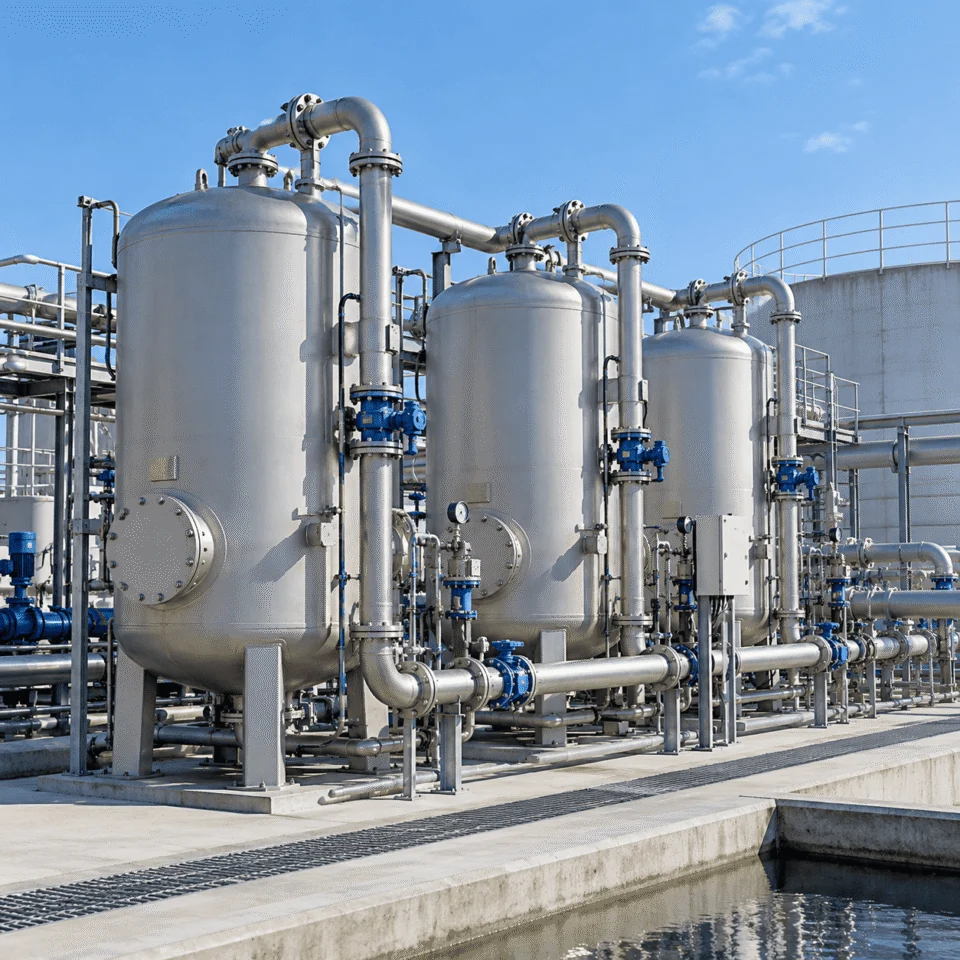
Water treatment pressure vessels and process equipment
ENGINEERED AROUND YOUR PROCESS Water chemistry, pressure, media, flow and plant layout.
PROCESS POSITIONING

From Raw Water to Treated Water

A water treatment vessel should not be selected as an isolated piece of equipment. Its configuration depends on where it sits in the treatment process, what happens inside the vessel and what equipment comes before and after it.

Raw Water
Pretreatment
Media Filtration
Carbon / Ion Exchange
Membrane Treatment
Polishing / Storage
PRETREATMENT

Pretreatment

Raw water may require buffering, chemical conditioning or preliminary solids removal before entering downstream treatment equipment. Vessel size, material and connection arrangement should match the actual feed-water conditions and treatment sequence.

FILTRATION

Media Filtration

Pressure filter vessels can contain sand, anthracite, garnet or other filtration media to reduce suspended solids and turbidity before more sensitive downstream processes.

ADSORPTION

Activated Carbon Treatment

Activated carbon vessels are used where adsorption is required for chlorine, organics, odor or other contaminants. The vessel must provide suitable media depth, flow distribution, freeboard and backwash conditions.

RESIN PROCESS

Ion Exchange & Softening

Resin vessels may be used for water softening, demineralization, polishing or other ion-exchange processes. Bed depth, service flow, regeneration method, backwash expansion and internal distribution all affect vessel configuration.

MEMBRANE SUPPORT

Membrane Pretreatment & Downstream Treatment

Media filtration, carbon treatment and ion exchange are frequently used before or around membrane-based water treatment systems. ChannelVessel focuses on the steel process vessels, tanks and skids surrounding these treatment stages rather than membrane pressure housings themselves.

BUFFERING

Treated Water & Process Storage

After treatment, storage and buffer tanks can stabilize flow, provide intermediate capacity and support continuous operation between treatment stages and downstream users.

The correct vessel configuration changes with the treatment stage. Media, water chemistry, flow direction, backwash or regeneration requirements, downstream equipment and plant layout should all be reviewed before fabrication.

APPLICATIONS

Different Treatment Processes Need Different Vessel Configurations

Water treatment vessels may look similar from the outside, but their internal arrangement, nozzles, materials and operating cycles can be very different. We manufacture vessels around the actual treatment duty instead of applying one standard configuration to every project.

Media Filter Vessels

Designed for sand, multimedia and specialty filtration media used to remove suspended solids and reduce turbidity.

Depending on the process, the vessel may require dedicated inlet distribution, underdrain or collector systems, media support arrangements, backwash connections, air-scour connections and sufficient freeboard for bed expansion.

Activated Carbon Vessels

Used for granular activated carbon and other adsorption media.

Design considerations can include carbon bed depth, contact requirements, inlet distribution, backwash flow, internal retention screens, drainage and access for media replacement.

Ion Exchange & Softener Vessels

Configured for cation, anion, mixed-bed or softening resin processes.

The engineering basis may include resin volume, service flow, bed expansion, regeneration sequence, distributor design, collectors and protection against resin loss during backwash.

Process Water Storage Tanks

Storage tanks can be designed for raw water, intermediate treatment stages, treated water or other process duties.

Material selection, usable volume, venting, drainage, level instrumentation, nozzle positions and cleaning access can be adapted to the plant arrangement.

Pressure & Buffer Vessels

Where the treatment process requires pressure stabilization, intermediate buffering or controlled process capacity, vessels can be designed around the required working volume and pressure conditions.

Integrated Water Treatment Skids

For projects that require more than a standalone vessel, ChannelVessel can integrate vessels with piping, valves, instruments, supports and other specified components into modular process skids.

This can reduce field assembly work and help align equipment interfaces before shipment.
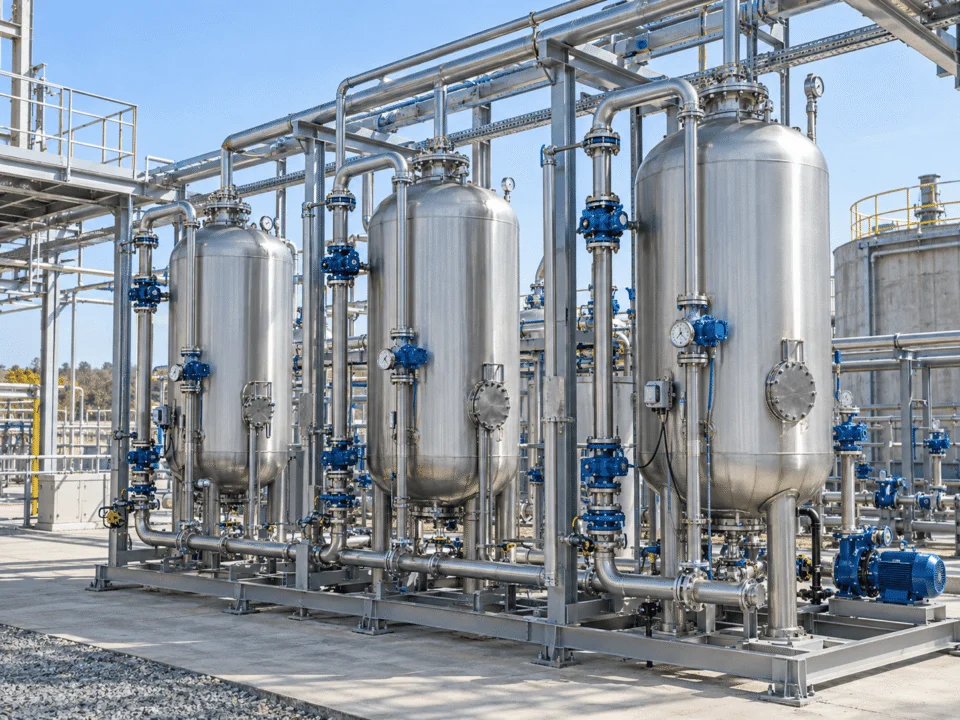
Water treatment pressure vessels, filter vessels and process skid equipment
PROCESS-SPECIFIC DESIGN The vessel shell, internals, nozzles and operating cycle must work as one system.
ENGINEERING BASIS

Water Treatment Vessel Design Starts With the Process

Diameter and pressure alone are not enough to define a water treatment vessel. The treatment medium, water chemistry, flow direction, backwash cycle, internal distribution and maintenance requirements can all change the final mechanical configuration.
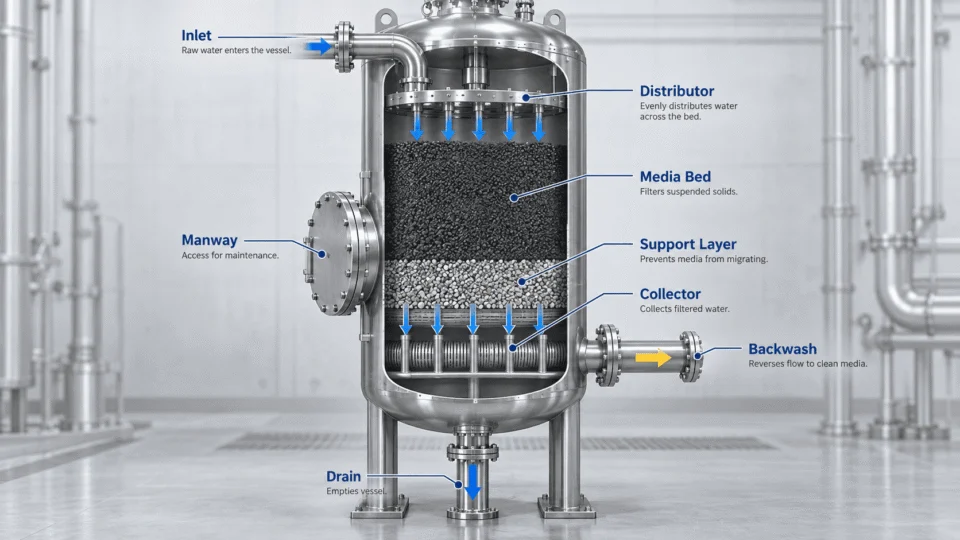
Engineering cutaway of a water treatment filter vessel showing inlet distribution, media bed, support layer, collector, backwash flow and maintenance access
CHEMISTRY Fluid & Corrosion Basis
MECHANICAL Pressure & Temperature
PROCESS Media & Bed Design
HYDRAULICS Service & Backwash Flow

Water Chemistry

The first question is not simply whether the fluid is “water.” Raw water, seawater, process water, recycled wastewater and chemically treated water can create very different corrosion conditions.

Important project data can include pH, chloride concentration, dissolved solids, oxidants, cleaning chemicals and other corrosive constituents. These conditions influence material selection, corrosion allowance, lining or coating requirements and expected service life.

Operating & Design Conditions

We need to understand normal operating pressure and temperature as well as the required mechanical design conditions.

Design pressure, design temperature, vacuum conditions where applicable, cyclic operation and abnormal operating cases should be identified before the vessel configuration is finalized.

Treatment Media

Sand, anthracite, garnet, activated carbon and ion-exchange resin behave differently inside a vessel.

Media type and quantity affect bed depth, freeboard, pressure drop, internal support requirements, flow distribution and backwash behavior.

Service Flow & Backwash

A filter vessel must operate correctly during more than its normal service cycle.

Backwash water, air scour, regeneration and rinse conditions may require significantly different flow paths from normal operation. These conditions affect nozzle sizing, distributor geometry, collector design and available expansion space above the media bed.

Internal Distribution

Poor distribution can reduce the effective use of the treatment media even when the pressure vessel itself is mechanically sound.

Depending on the application, the vessel may require inlet distributors, laterals, nozzle plates, collectors, screens, retention devices or other custom internals to achieve suitable flow through the media bed.

Connections & Maintenance Access

Nozzles should be positioned around the real plant layout rather than added after the vessel design is complete.

We can review requirements for process inlet and outlet connections, backwash lines, drains, vents, chemical connections, instrument ports, manways, lifting points and maintenance access before fabrication.

ENGINEERING OUTCOME

The result is not simply a pressure-rated shell. It is a vessel configured around the treatment process it is expected to perform.

MATERIAL SELECTION

Select the Material From the Water Chemistry — Not the Application Name

There is no single material that is automatically correct for every water treatment project. Material selection should consider the actual water composition, chloride concentration, treatment chemicals, temperature, pressure, cleaning method, required service life and project budget.

STAINLESS STEEL SS304 / SS316L

Where Stainless Steel Fits

SS304 and SS316L are commonly considered where corrosion resistance, cleanliness or reduced dependence on internal coatings is important.

Stainless steel may be appropriate for treated water, process water and other applications where the operating environment is compatible with the selected grade.

Corrosion resistance
Clean-water service
Reduced coating dependency
Process cleanliness requirements
Stainless steel selection should still be checked against chloride levels, oxidizing chemicals, temperature and the complete process chemistry.
Explore Stainless Steel Pressure Vessels
SELECT BY PROCESS DATA Water Chemistry First
pH Acidity / Alkalinity
Cl⁻ Chloride Level
T Temperature
Chem Treatment Chemicals
P Design Pressure
Life Required Service Life
CARBON STEEL Coated / Lined Options

Where Carbon Steel Fits

Carbon steel can provide a practical solution for large industrial filter vessels, storage tanks and cost-sensitive water treatment systems.

Where direct exposure to the process water requires additional corrosion protection, suitable internal coatings or lining systems can be specified according to the application.

Large vessel construction
Industrial filtration systems
Internal coating / lining options
Project-specific external protection
External surface preparation and protective coating systems can also be adapted to the installation environment and project specification.
Explore Carbon Steel Pressure Vessels
PROJECT-SPECIFIED MATERIALS

When Standard Choices Are Not Enough

Where SS304, SS316L or standard carbon steel is not suitable, material requirements can be reviewed according to the specified process conditions and applicable project standard. The final choice should be based on engineering data rather than a generic material preference.

PROJECT INPUTS

From Water Analysis to Fabrication

What We Need to Start Your Water Treatment Vessel Project

The more complete the process information is at the beginning of the project, the easier it is to define the correct vessel configuration before fabrication.

PROCESS INFORMATION

What the Vessel Must Do

Tell us what the vessel will do in the treatment system.

Water source Treatment stage Required flow rate Treatment media Process sequence Filtration / adsorption / ion exchange / storage duty
DESIGN CONDITIONS

Mechanical Design Basis

Provide the available mechanical design basis, including normal operating conditions and the limits that should be considered for mechanical design.

Operating pressure Design pressure Operating temperature Design temperature Vacuum conditions Cyclic operation
WATER CHEMISTRY

Corrosion & Material Inputs

Where available, provide a water analysis or the chemistry data that may influence material selection, corrosion protection and expected service life.

pH Chlorides TDS Suspended solids Treatment chemicals Oxidants / corrosive constituents
VESSEL CONFIGURATION

Dimensions, Internals & Connections

If your process has already been developed, send the vessel configuration and internal requirements that have been defined by your engineering team.

Vessel diameter Overall height Working volume Media volume Nozzle schedule Internals Manway requirements Backwash / regeneration arrangement
If these details have not been finalized, send the available process data for engineering review.
PROJECT REQUIREMENTS

Fabrication, Inspection & Documentation

Also include the project requirements that affect fabrication, inspection, documentation, shipment and installation.

Required material Applicable design code Coating / lining system Inspection requirements Documentation requirements Transportation limits Installation-space limits
USEFUL PROJECT DOCUMENTS Already have engineering files?
Vessel Datasheet P&ID Process Drawing Existing Equipment Drawing
SEND US YOUR PROJECT DATA

Send Us Your Datasheet or Drawings

Already have a vessel datasheet, process drawing, P&ID or existing equipment drawing? Send it to our team together with the operating conditions. We can review the vessel configuration, material, connections, internals and fabrication requirements before quotation.

Scroll to Top
DRAWING & FILE REVIEW

Send Your Drawings

Upload your drawings, datasheets or existing specifications. Our engineering team will review the files and respond with technical feedback.

Engineering Review

Drawings, specifications and process requirements

Confidential File Handling

Project files are used only for technical review and quotation

Faster Technical Feedback

Clearer inputs help us respond more accurately and efficiently

DRAWING & FILE REVIEW

Send Your Drawings

Upload your drawings, datasheets or specifications. Our engineering team will review your files and provide technical feedback.

Contact Form Demo (#3)
Project Protected NDA available
12h Response
ASME / PED
AFTER SUBMISSION
01 Review
→
02 Confirm
→
03 Quote
TECHNICAL QUOTATION

Get a
Technical Quote

Tell us what you need. Our engineering team will review your requirements and respond within 12 hours.

Engineered for Your Application

From concept to certified manufacturing

Global Compliance

ASME, PED and other international standards

Expert Support

Direct access to our engineering team

TECHNICAL QUOTATION

Get a Technical Quote

Tell us what you need. Our engineering team will review your requirements and respond within 12 hours.

Contact Form Demo
Project Protected NDA available
12h Response
ASME / PED
AFTER SUBMISSION
01 Review
→
02 Confirm
→
03 Quote