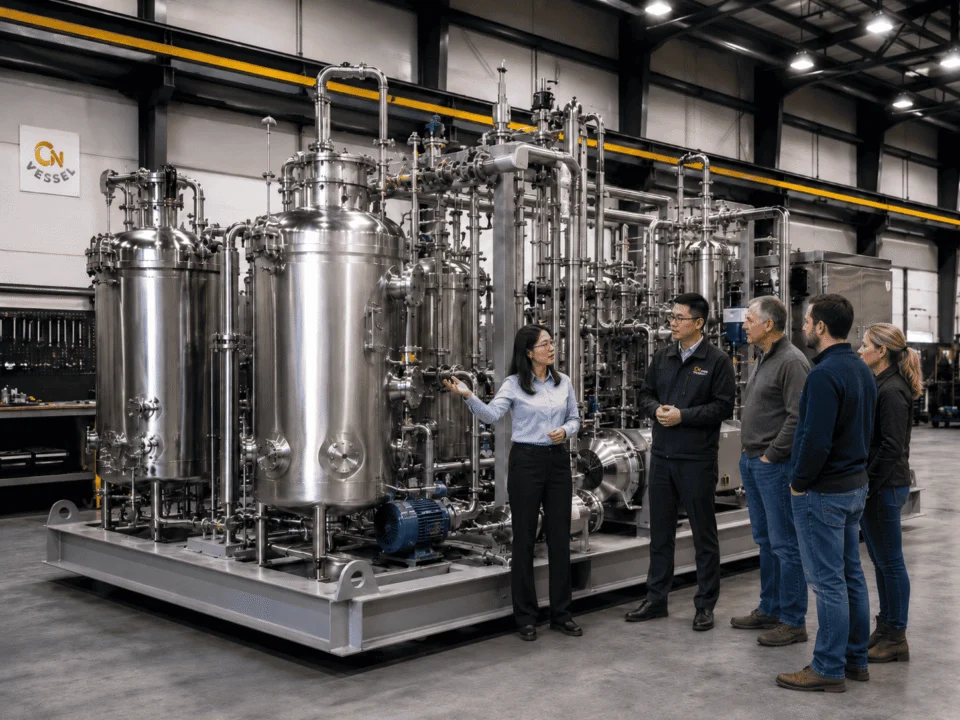
Custom Process Skids & Skid-Mounted Process Systems
Integrated process packages engineered around your P&ID, operating conditions, equipment requirements and site layout—from individual process equipment to a factory-assembled skid ready for project integration.

Process Skids for Different Process Requirements
Different process duties require different equipment combinations, piping arrangements and control requirements. Choose the skid configuration closest to your application, or send us your P&ID for a custom-built system.

Custom Process Skid Systems
When a standard configuration does not fit your process, the skid can be engineered around your P&ID, required equipment, operating conditions and available installation space.
Discuss Your Process DOSING
Chemical Dosing Skids
Controlled preparation, metering and injection of chemicals for water treatment, chemical processing and other industrial systems.
View Solution THERMAL
Heat Exchange Skids
Integrated heat exchangers, circulation pumps, valves and instrumentation for process heating, cooling and temperature control.
View Solution TRANSFER
Storage & Transfer Skids
Integrated tanks, transfer pumps, piping and valves for liquid storage, circulation and controlled transfer between process stages.
View Solution CUSTOM DUTY
Other Process Skid Configurations
Mixing, filtration, separation and other process duties can be integrated around the equipment combination required by your process.
Discuss Your ApplicationWhat Can Be Integrated Into a Process Skid?
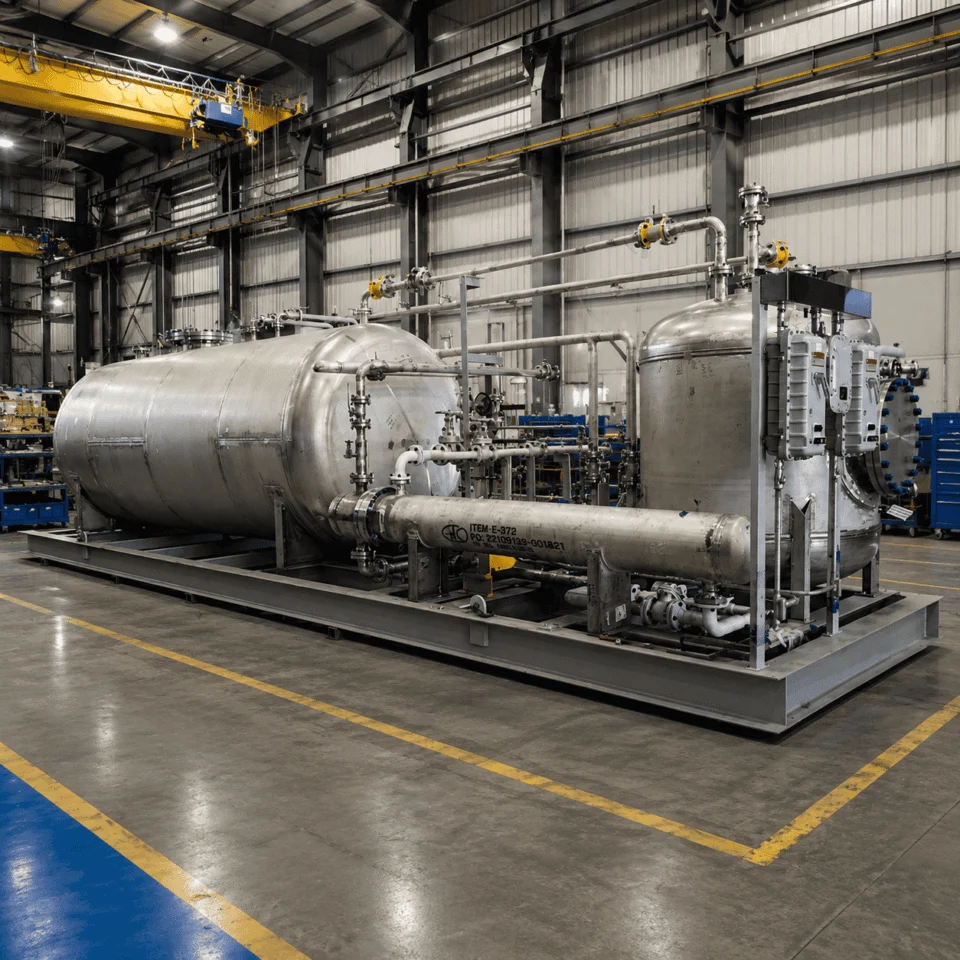
A process skid brings the equipment, piping, valves and instrumentation required for a defined process duty onto a coordinated skid structure. The exact combination depends on the process medium, flow rate, pressure, temperature, control requirements and available installation space.
Core Process Equipment
The main equipment is selected around the required process duty and operating conditions.
Piping, Pumps & Flow Control
Components are arranged to move, isolate, regulate and distribute process fluids between equipment.
Measurement & Control
Instrumentation is selected according to the required monitoring, control and automation scope.
Structure, Access & Connections
The skid structure must support installation, maintenance, lifting, transportation and site connections.
The final equipment combination is selected around the process duty, operating conditions, control philosophy and agreed project scope.
Why Use a Skid-Mounted Process System?
A skid-mounted process system moves a large part of equipment integration, piping assembly and system checking from the installation site into the factory. For projects with multiple interconnected components, this can simplify site work and make equipment interfaces easier to define before delivery.

More Integration Before the Skid Reaches Site
Equipment, piping, valves and instrumentation can be coordinated as one package before the skid is shipped for project installation.

Factory Assembly
Equipment, piping, valves and instrumentation can be assembled as one coordinated package before shipment.
Reduced Site Assembly
More of the mechanical integration can be completed before the equipment reaches the installation site, reducing separate assembly work on site.
Defined Interfaces
Process, utility and electrical connection points can be identified before shipment so site interfaces are clearer during installation.
Coordinated Layout
Pumps, vessels, valves, instruments and piping are arranged around the available footprint rather than installed as unrelated pieces of equipment.
Pre-Shipment Checks
Applicable dimensional, piping, pressure, instrumentation and functional checks can be completed before shipment according to the agreed project scope.
More Integration Is Left to the Site
Equipment Is Coordinated as One Package
From Your P&ID to a Finished Process Skid
A process skid moves through several engineering and manufacturing stages before it is ready for shipment. Each step helps turn the process requirements into an equipment package that can be fabricated, assembled, checked and prepared for project installation.
Process Review
We start with your P&ID, process description, operating medium, flow rate, pressure, temperature and required process duty.
Equipment Selection
Vessels, pumps, heat exchangers, filters, valves and instruments are selected around the process conditions and agreed project scope.
Skid Layout
A preliminary layout is developed around the available footprint, equipment arrangement, piping routes, connection orientation and maintenance access.
Detailed Engineering
Equipment connections, piping, supports, instrumentation, utility connections and project interfaces are developed for the agreed skid configuration.
Drawing Approval
Fabrication begins only after the required project drawings and major configuration details have been reviewed and approved.
Fabrication & Assembly
The skid frame, pressure equipment and piping are fabricated, followed by equipment installation, valve fitting, instrumentation and package assembly.
Inspection & Testing
Applicable dimensional inspection, weld inspection, pressure or leak testing, instrument checks and functional verification are arranged according to project scope.
Packing & Delivery
After final checks, the skid is prepared for lifting, protection, packing and international project shipment.

Engineering Before Fabrication
Process requirements, equipment arrangement and project interfaces are reviewed before drawings are released for manufacturing.
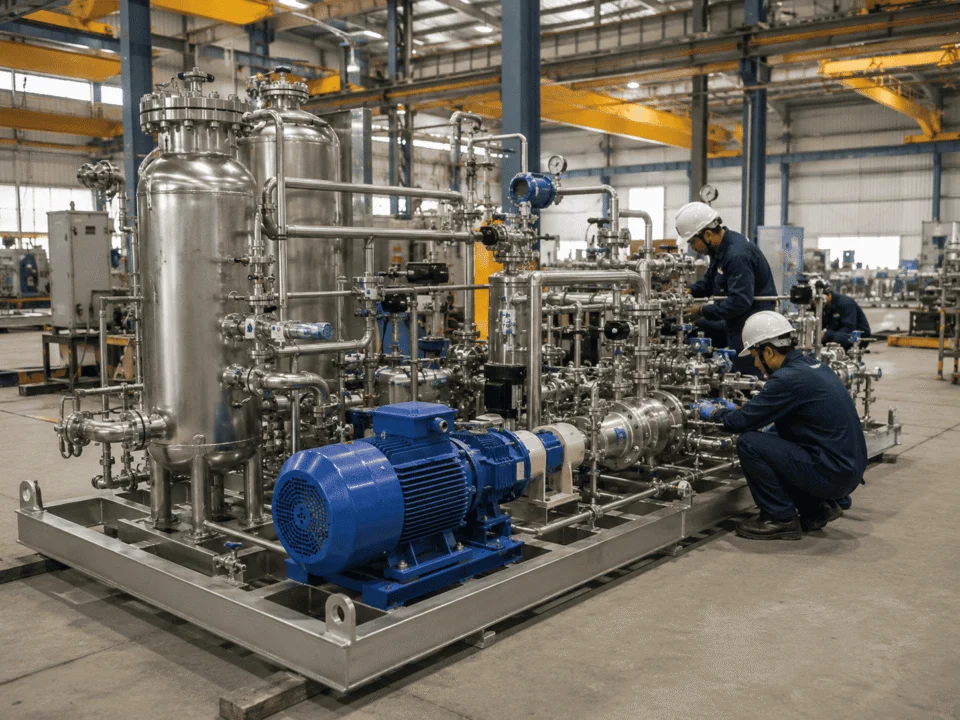
Built as an Integrated Package
Equipment, piping, valves and instruments are brought together on the skid frame during factory assembly.

Checked Before Shipment
Applicable inspections and tests are completed according to the agreed project requirements before the skid is prepared for delivery.
Final manufacturing details depend on the approved drawings, operating conditions, selected components and agreed inspection requirements for the project.
What Determines the Final Process Skid Design?
A process skid cannot be finalized from capacity alone. Equipment selection, skid footprint, piping arrangement, materials, instrumentation and testing requirements all depend on the actual process conditions and project constraints.
Inputs That Shape the Final Skid
The final configuration is developed around the process, site and project requirements rather than a fixed standard layout.
Medium & Chemistry
Composition, viscosity, solids, corrosiveness and cleanliness requirements influence materials, seals and equipment selection.
Flow Rate & Function
Heating, cooling, dosing, filtration, separation, mixing or transfer duties require different equipment and flow arrangements.
Pressure & Temperature
Operating and design conditions affect vessel design, piping class, ratings, components and possible vacuum requirements.

Equipment, footprint, piping, materials, instruments, interfaces and inspection scope are coordinated into one project-specific package.
Materials & Corrosion
Wetted materials are selected around the process medium, temperature, corrosion risk, cleaning needs and project specification.
Footprint & Maintenance
Available space, access routes, ceiling height, maintenance clearance and transport limits influence the module arrangement.
Utilities & Controls
Power, steam, cooling water, compressed air, CIP, PLC/HMI, DCS signals and process connections must match the site.
Codes, Inspection & Documentation
Applicable codes, NDT, pressure testing, documentation, customer specifications and third-party inspection requirements are confirmed before release for manufacturing.
SS304, SS316L, duplex stainless steel, carbon steel and other specified materials can be evaluated according to the process and customer requirements.
Designed Around Installation, Access & Maintenance
A workable skid layout must consider more than fitting equipment onto a frame. Vessel orientation, pump access, piping routes, lifting points, maintenance clearance and site connection locations all need to work together before the layout is released for fabrication.

The layout is reviewed as one coordinated system—not as separate pieces of equipment placed on a frame.
Equipment Placement
Vessels, pumps, heat exchangers, filters and control components are positioned around process flow, piping requirements, access needs and the available skid footprint.
Access for Operation & Maintenance
Valves, instruments, strainers, pumps, manways and removable components should remain accessible for routine operation, inspection and maintenance.
Piping & Support Arrangement
Piping routes are coordinated to reduce unnecessary crossings, support loads correctly and keep operating and maintenance areas clear.
Defined Battery-Limit Connections
Process, utility, drain, vent, electrical and control interfaces can be organized around defined connection locations for clearer site integration.
Lifting, Transport & Module Size
Overall skid dimensions and structural details must consider lifting, transport limits, site access and the route from unloading point to the final installation position.
One Skid or Multiple Modules?
When a complete package exceeds transport, lifting or installation limits, the system can be evaluated as multiple modules with defined interconnecting points for site assembly.
Review the Skid Against the Actual Installation Conditions
The skid layout should be checked against both process requirements and the actual installation conditions before the project is released for fabrication.
How a Process Skid Is Built, Inspected & Checked Before Shipment
A process skid is not complete when the equipment has simply been mounted onto the frame. Fabrication quality, piping fit-up, weld inspection, pressure integrity, instrument installation and final interface checks are verified against the approved project requirements before shipment.
Built to the Approved Project Configuration
Manufacturing follows the approved layout, drawings, selected equipment and project requirements.
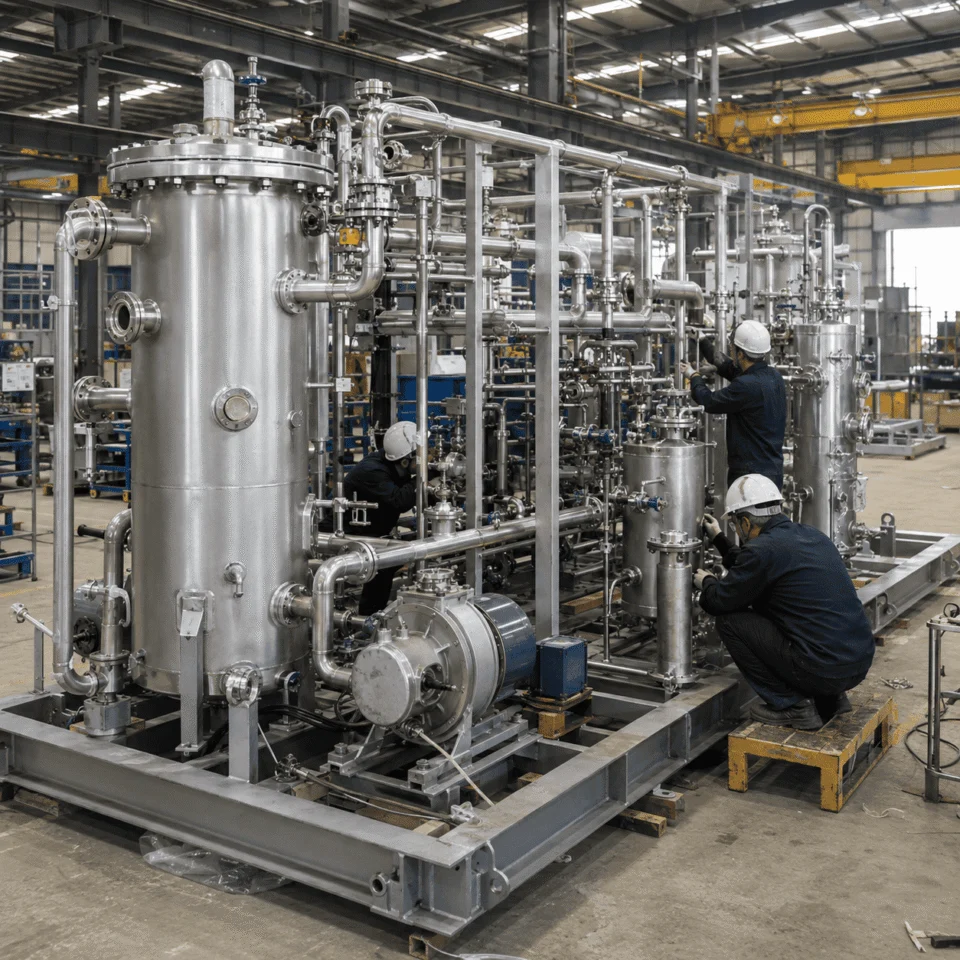
The skid frame, equipment supports and pressure-containing equipment are fabricated according to the approved layout and manufacturing drawings.
Process piping is cut, fitted, welded and supported around the approved routing, with valves, instruments and equipment connections installed to the project configuration.
Pumps, vessels, heat exchangers, filters, valves, instruments and control components are installed onto the skid and checked against the approved equipment arrangement.
Checked Before the Package Leaves the Factory
The exact inspection and testing scope depends on the equipment, applicable code and agreed project specification.

Key dimensions, equipment positions, nozzle directions and battery-limit connection locations can be checked against the approved drawings before shipment.
Welds are inspected according to applicable fabrication and project requirements. RT, UT, PT or other NDT methods can be applied where specified.
Pressure-containing equipment and relevant piping circuits can be pressure or leak tested according to the applicable design basis and agreed inspection scope.
Instruments, control valves, switches and control components can be checked for model, installation position, signal or functional requirements according to project scope.
Before packing, the completed skid is reviewed for equipment identification, connection orientation, loose items, lifting provisions, protection and shipment readiness.

From Built Package to Shipment-Ready Skid
Final verification is based on the approved project information, agreed inspection scope, interface requirements and shipment preparation requirements.


Overall size, equipment position, nozzle orientation and connection locations.

Visual inspection and specified NDT according to the applicable inspection plan.

Hydrostatic, pneumatic or leak testing as applicable to the equipment and project scope.

Installation, identification and functional checks where included in the package scope.

Inspection records, test reports and project documents according to agreed requirements.
Project Records That Travel With the Equipment
Documentation scope is confirmed according to the applicable code, customer specification and agreed project requirements. The package can be organized around the records needed for installation, inspection and final project handover.
Approved drawings and interface information used to define the manufactured skid and site connections.
Material, fabrication and inspection records included according to the agreed inspection and documentation scope.
Information that supports installation, equipment identification, utilities, operation and maintenance.
Final project and shipment records organized for receiving, document control and project closeout.

Have an ITP, NDT Requirement or Third-Party Inspection Scope?
Send your inspection, testing and documentation requirements together with the project specification so they can be reviewed before manufacturing is released.
Process Skids Built Around Different Industrial Applications
The same skid concept can serve very different process duties. Equipment selection, piping, materials, controls and package layout are developed around the actual application rather than a fixed industry template.

Chemical Processing Skids
Integrated skid systems can be configured for chemical dosing, circulation, transfer, filtration, heating, cooling and other process duties involving controlled fluid handling.
View Chemical Industry SolutionsFinal equipment and materials depend on the chemical service and project requirements.
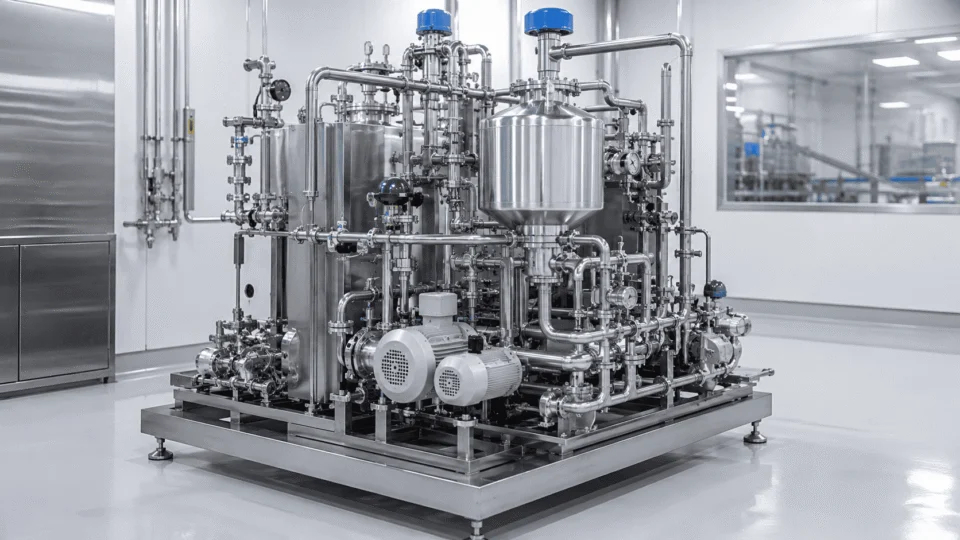
Pharmaceutical & Fine Chemical Process Systems
For projects requiring controlled materials, clean process piping, precise dosing, temperature control or contained transfer, the skid configuration can be developed around the required process and cleaning requirements.
View Pharmaceutical SolutionsHygienic or clean-process requirements are evaluated according to the actual project specification.

Food & Beverage Process Skids
Process skids can integrate storage, circulation, heating, cooling, filtration, mixing support and transfer equipment for liquid food and beverage processing lines.
View Food & Beverage SolutionsProduct-contact materials and cleaning requirements are selected around the actual process.

Water Treatment Process Skids
Skid-mounted packages can combine dosing tanks, pumps, filters, piping, valves and instrumentation for chemical dosing, filtration, conditioning and water-treatment processes.
View Water Treatment SolutionsPump, filter and dosing scope is developed around the required water-treatment duty.

New Energy Process Skids
Process packages for battery materials and other new-energy projects can be developed around chemical handling, transfer, filtration, temperature control and project-specific process requirements.
View New Energy SolutionsMaterials and equipment selection depend on the medium, process duty and project specification.
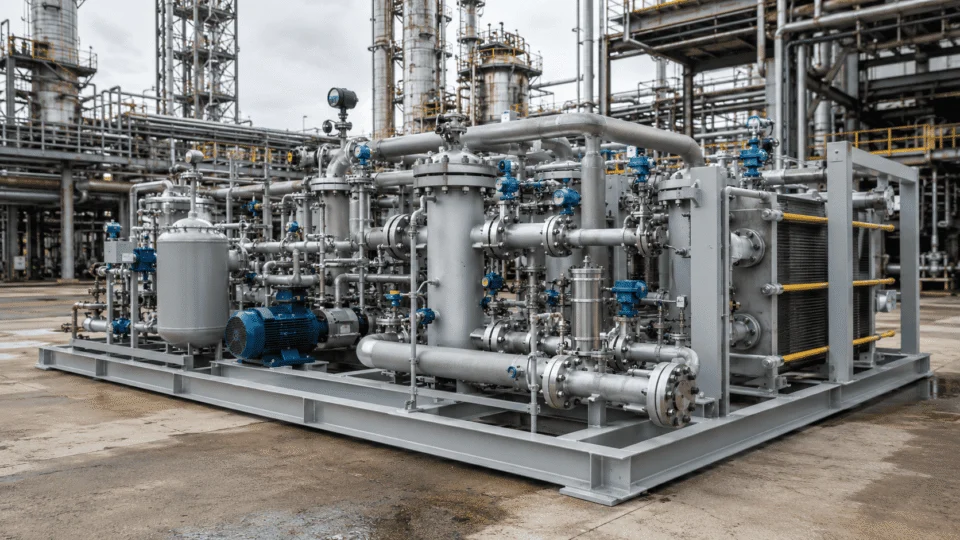
Petrochemical & Industrial Utility Skids
Integrated process packages can support fluid transfer, filtration, separation, heat exchange, utility distribution and other plant services where multiple components need to operate as one packaged system.
View Petrochemical SolutionsThe package scope is coordinated around the actual plant service and site interface requirements.
Have a P&ID, Datasheet or Process Requirement?
Send us your available P&ID, process datasheet, equipment list, layout or operating requirements. Our team can review the process duty, equipment scope, skid layout, battery limits and project requirements before preparing the next step.
Send whatever is currently available.