Stainless Steel Pressure Vessels for Corrosive & Clean Process Applications
Custom SS304 and SS316L pressure vessels manufactured around your process medium, pressure, temperature, capacity, surface finish and connection requirements.
Send us your drawing, datasheet or operating conditions. ChannelVessel can review the stainless steel grade, wetted parts, corrosion risk, internal finish, nozzle arrangement, inspection requirements and fabrication scope before quotation.
Start Your Stainless Steel Pressure Vessel Project
You do not need a complete vessel specification to begin. Send the drawing, datasheet or process information you already have, and we can identify what still needs to be confirmed before quotation.
I Already Have a Drawing or Datasheet
If vessel dimensions, material, design conditions or nozzle information are already defined, send the available documents first. We can review the fabrication scope and identify missing engineering inputs before quotation.
I Have Process Conditions, but No Vessel Drawing
Medium, pressure, temperature and required capacity are enough to begin defining the vessel configuration.
SEND THESE FIRSTI Am Not Sure Whether to Use SS304 or SS316L
The grade should be checked against the actual chemistry and service condition rather than selected from a generic rule.
CONFIRM THESE FIRSTMy Process Has Cleaning or Surface Finish Requirements
Ra target, internal polishing, weld treatment and cleaning method should be defined before the fabrication scope is priced.
CONFIRM THESE FIRSTThe Vessel Must Fit an Existing Process Line
Existing piping, structural space and maintenance access should be checked before nozzle and support positions are finalized.
USEFUL SITE DATAStill early in the project? Send the process conditions you know now. Missing details can be confirmed during engineering review.
Choosing the Right
Stainless Steel Grade
SS304, SS316 and SS316L can all be used for pressure vessel fabrication, but the correct grade depends on process chemistry, chloride exposure, temperature, cleaning requirements and welded service conditions.
SS304
GENERAL SERVICEWater, steam, air, non-aggressive liquids, many food and beverage applications.
Good general corrosion resistance, wide availability and cost-effective performance.
High chloride environments, strong acids and elevated-temperature service.
SS316
HIGHER CORROSIONRESISTANCE
Chemical processing, corrosive environments, chloride-containing service and marine exposure.
Molybdenum content improves resistance to pitting and many chemical environments.
Chloride concentration and operating temperature still need to be evaluated carefully.
SS316L
PREFERRED FOR WELDED& CLEAN PROCESS
Welded pressure vessels, pharmaceutical systems, food processing, biotech and fine chemical service.
Low carbon content reduces sensitization risk and supports welded clean-service applications.
Still not immune to pitting or crevice corrosion in aggressive chloride environments.
Explore corrosion data, material compatibility and metallurgy considerations.
When Stainless Steel
Is the Better Choice
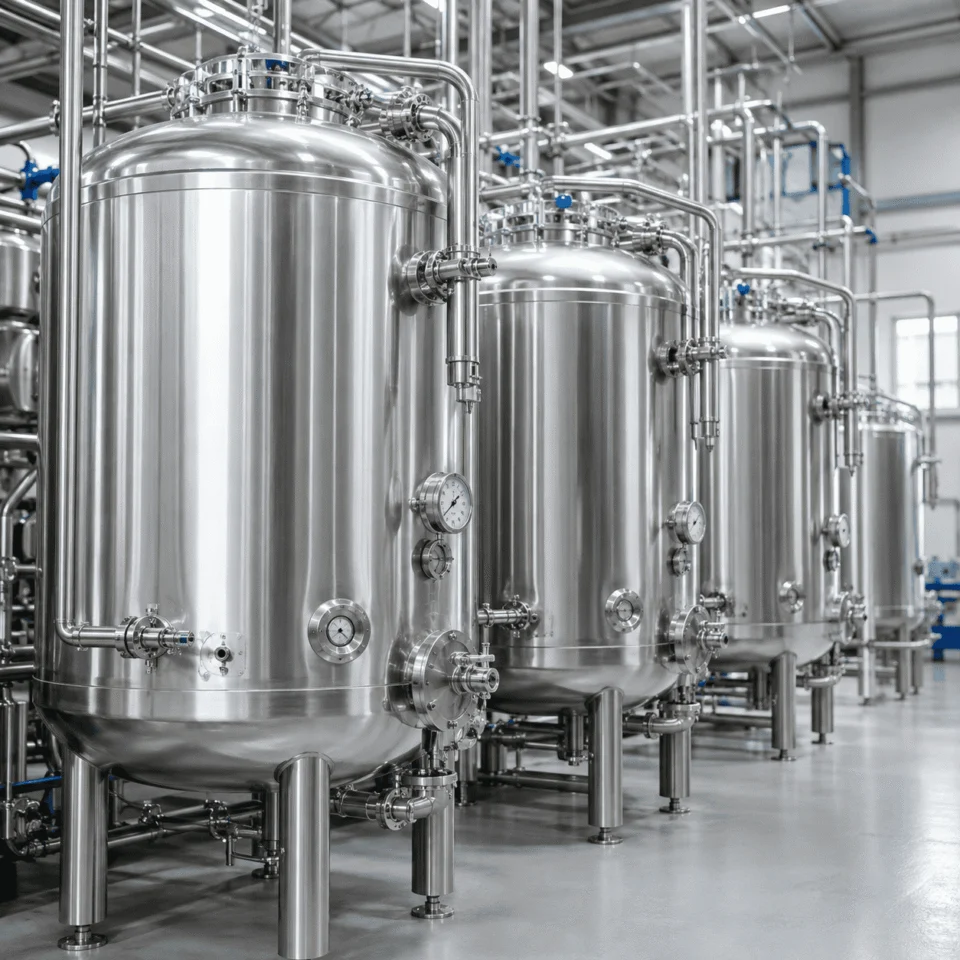
Stainless steel is not always the default answer, but in many process conditions it delivers longer service life, cleaner operation and lower total cost over time.
Key Reasons to Choose Stainless Steel
Ideal for environments with moisture, corrosive chemicals, salts or cleaning agents that may cause rust or coating failure in carbon steel.
Prevents contamination risk for pharmaceuticals, food, beverages and fine chemicals that require high purity and clean processing.
Built for frequent CIP, disinfection and water rinse processes without coating damage or material degradation.
Minimizes the need for painting, lining or internal coatings, reducing maintenance, rework and coating failure risks.
Higher initial investment can be offset by longer service life, fewer repairs, less downtime and lower maintenance cost.
✓ Corrosion resistance is critical
✓ Coating failure is not acceptable
✓ Product purity and cleanliness are essential
✓ Longer service life and lower lifecycle cost are priorities
✓ Frequent cleaning and washdown are required
× Service is non-corrosive and compatible
× Coating and maintenance strategy are acceptable
× Lower initial cost is the main priority
× Cleanliness requirements are limited
We can review your process conditions and recommend the most reliable and cost-effective material solution.
Design Around Your Process Conditions
Vessel capacity alone does not define a pressure vessel. Pressure, temperature, medium, geometry, nozzles, supports and loads must be reviewed together to ensure a safe, reliable and compliant design before fabrication.
Pressure & Temperature
- Operating Pressure
- Design Pressure
- Vacuum
- Design Temperature
Process Duty
- Medium
- Working Volume
- Total Volume
Installation
- Orientation
- Diameter
- Height

Connections
- Nozzle Size
- Orientation
- Flange Standard
- Instruments
Mechanical
- Supports
- External Loads
- Agitator Loads
Internals
- Coils
- Baffles
- Dip Pipes
- Other Internals
Surface Finish Defines
Cleanliness and Performance
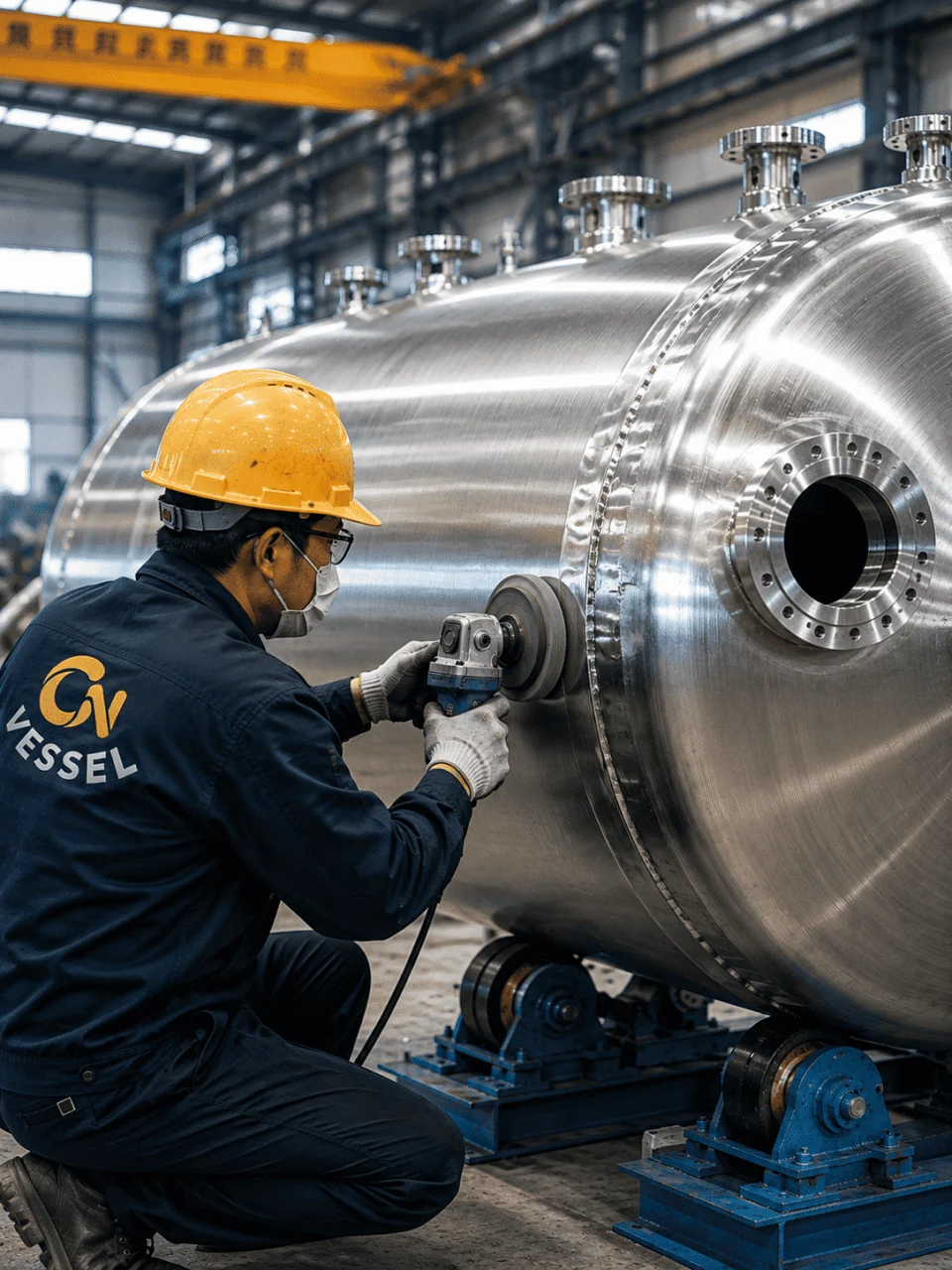
The right surface finish and post-weld treatment are essential for corrosion resistance, product purity and long-term reliability.
Internal Surface Finish
As-fabricated, mechanically polished or project-specified Ra to match your process and cleanability requirements.
Weld Finish
Welds can be ground smooth and blended to eliminate crevices, reduce product hold-up and improve cleanability.
Surface Roughness (Ra)
Specify required Ra values for critical service, especially pharmaceutical, food and fine chemical applications.
Pickling & Passivation
Removes heat tint and contaminants after welding and fabrication, restoring the stainless steel surface after manufacturing.
External Finish
Industrial mill finish, brushed or polished surfaces are available based on appearance and environment requirements.
mean sanitary finish. Surface and weld requirements must be clearly defined.
Before Fabrication
Clear finish specifications help avoid rework, delay and unexpected costs.
Medium
Method
Ra Value
Requirement
Pressure Vessel Configurations Built Around Your Process
Select the vessel configuration around process duty, installation space, heat-transfer needs and operating sequence—not from a standard vessel template.
Vertical Vessel
Selected where compact footprint, gravity drainage and vertical liquid level are advantageous.
Horizontal Vessel
Used where site headroom is limited or where horizontal geometry better suits liquid hold-up and process layout.
Jacketed Vessel
Used where controlled heating or cooling is required through an external heat-transfer zone.
Agitated Vessel
Configured for mixing, blending, suspension or enhanced heat transfer where mechanical agitation is required.
Internal Coil Vessel
Selected where additional heat-transfer area is required inside the vessel or where an external jacket is not sufficient.
Custom Internals & Nozzles
Used where process distribution, instrumentation, cleaning or piping layout requires project-specific internals and connections.
Manufacturing Stainless Steel Without Losing the Material Advantage
Stainless steel performance depends not only on the material grade, but also on how the plate is handled, formed, welded, cleaned and protected throughout fabrication.
Material Identification & Segregated Handling
CONTROL POINTMaterial identity is maintained through fabrication while stainless steel is kept away from carbon steel contamination sources, unsuitable handling surfaces and tools that may introduce free iron.
Cutting & Forming Control
CONTROL POINTPlate cutting, rolling, forming and edge preparation are carried out with suitable equipment and clean contact surfaces so that the stainless material is not damaged or contaminated before welding.
Controlled Welding
CONTROL POINTWelding is managed through qualified procedures, suitable filler material, controlled heat input, clean joint preparation and disciplined weld sequencing to protect both structural integrity and corrosion performance.
Post-Weld Surface Restoration
CONTROL POINTAfter welding, heat tint, oxide and fabrication residue are removed according to the approved surface requirement so that the specified finish can be restored before final cleaning.
Final Cleaning & Protection
CONTROL POINTInternal and external surfaces are cleaned and protected from recontamination, while open connections and finished surfaces are controlled before the vessel moves to final inspection and shipment preparation.
Inspection & Testing Before the Vessel Leaves the Factory
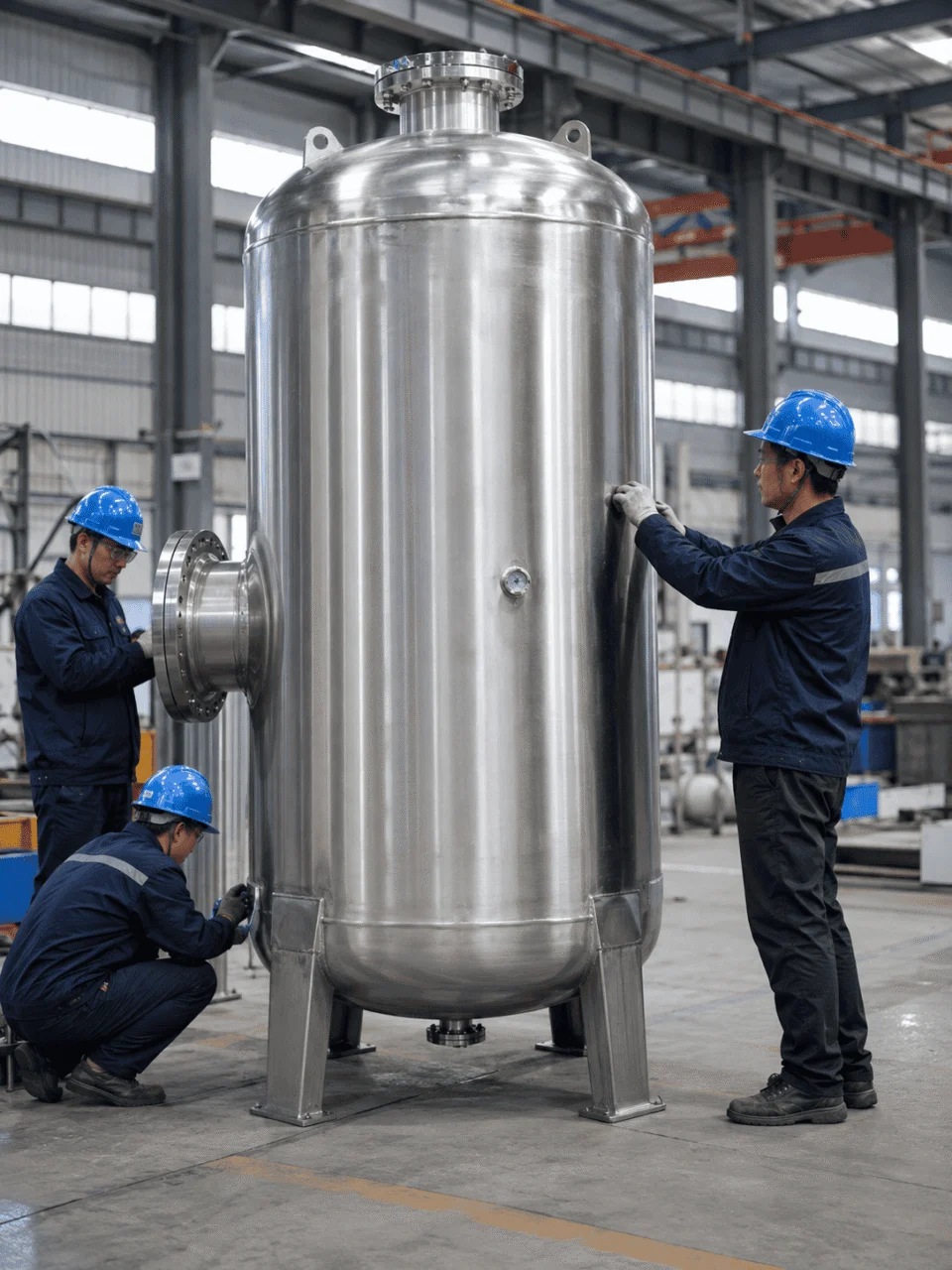
Before shipment, the vessel is checked against the approved drawing, applicable inspection requirements and project specifications to verify dimensions, weld quality, pressure integrity and final condition.
Material Traceability
VERIFYMaterial identity and supporting certificates are reviewed against the approved vessel material requirements and fabrication records.
Dimensional Inspection
VERIFYOverall dimensions, nozzle locations, support positions and flange orientation are checked against the approved drawing before release.
Weld Inspection & NDT
VERIFYVisual inspection and project-required NDT are performed according to the applicable code, vessel design and specified examination extent.
Pressure / Leak Testing
VERIFYThe test method and pressure are confirmed from the approved design and applicable project requirements before the vessel is accepted for release.
Surface & Cleanliness Inspection
VERIFYFinished surfaces, weld areas, vessel interior and open connections are visually checked against the specified final condition and cleanliness requirement.
Final Documentation Package
VERIFYInspection and quality records are compiled according to the agreed project documentation scope before the vessel is prepared for shipment.
Where Stainless Steel Pressure Vessels Fit Best
From corrosive chemical service to clean product-contact applications, the right stainless steel vessel configuration depends on the medium, cleaning requirement, operating conditions and process role.
Corrosion-sensitive and solvent-based process duties
Cleanable vessel service for controlled batch processing
Cleanable product-contact vessels for frequent processing cycles
Corrosion-sensitive service for treated water and chemical systems
Advanced material and chemical preparation process service
Specialty pressure service where medium compatibility drives material choice
What We Need for an Accurate Quote
The more clearly your process conditions, vessel requirements and project expectations are defined, the faster we can review the design basis and prepare a useful quotation.
Process Conditions
Vessel Requirements
Material & Quality Requirements
Project Information
Frequently Asked Questions About Stainless Steel Pressure Vessels
Practical answers for buyers reviewing design responsibility, documentation, fabrication scope, project timing and international delivery.
Yes. We can review customer drawings, process datasheets, P&IDs or preliminary process information as the starting point for a custom vessel project. Before fabrication, the design basis, material, operating conditions, nozzle arrangement, supports and applicable requirements need to be confirmed. If your drawing is still preliminary, it can be reviewed together with the available process data before a quotation or manufacturing drawing is finalized.
ASME Section VIII requirements can be reviewed when they are specified for the project. The applicable design code, design conditions, material requirements, examination scope, testing and documentation should be confirmed before engineering work is finalized. Not every vessel project uses the same code or inspection scope, so the required standard should be identified during quotation and technical review rather than assumed from the vessel type alone.
For custom projects, key vessel details are normally confirmed through the drawing review process before fabrication proceeds. This can include overall dimensions, nozzle size and orientation, support arrangement, vessel configuration and other project-specific interfaces. The purpose is to align the manufacturing basis with the agreed technical requirements before material cutting, forming and fabrication begin.
Yes, these features can be integrated when required by the process. Depending on the project, the vessel may include a heating or cooling jacket, agitator, internal coil, dip pipe, distributor, baffles, custom nozzles or other internals. The final configuration should be based on the actual process duty, mechanical design and approved drawing rather than selected as a standard accessory package.
Depending on the project requirements, the documentation package may include material certificates, inspection records, NDT reports, pressure-test records and approved or as-built drawings. Additional manufacturing or quality records can also be defined when required. Documentation scope should be confirmed with the project before shipment so the required records are included in the agreed supply scope.
Manufacturing time depends on vessel size, material availability, design complexity, internal components, quantity, inspection requirements and documentation scope. A simple vessel and a large jacketed or agitated vessel will not follow the same production schedule. The project timeline is therefore confirmed after the technical scope has been reviewed and the main design and supply requirements are clear.
Packing and transport are planned according to vessel dimensions, weight, surface condition and destination. Openings can be protected, finished surfaces covered where necessary, and the vessel secured on suitable supports or transport frames. Depending on the final shipping size, delivery may use a standard container, flat rack or other suitable transport method. Special export packing requirements should be identified during project review.
Yes. You can begin with the information already available, especially the process medium, pressure, temperature, required volume and any known material or configuration requirements. A preliminary drawing, datasheet or P&ID is helpful but not always necessary for the first review. Missing design inputs can then be identified and confirmed with your team before the final quotation and manufacturing basis are completed.
Discuss Your Stainless Steel Pressure Vessel Project
Send us your process conditions, vessel requirements, drawing or datasheet. Our team can review the project scope and help define the next engineering steps before fabrication.