Carbon Steel Pressure Vessels for Industrial Process Systems
Custom carbon steel pressure vessels engineered around your process medium, pressure, temperature, capacity, corrosion requirements and installation conditions.
Send us your drawings, datasheet or operating conditions. ChannelVessel can review the material grade, corrosion allowance, vessel configuration, nozzle arrangement, coating or lining requirements, inspection scope and fabrication details before production begins.
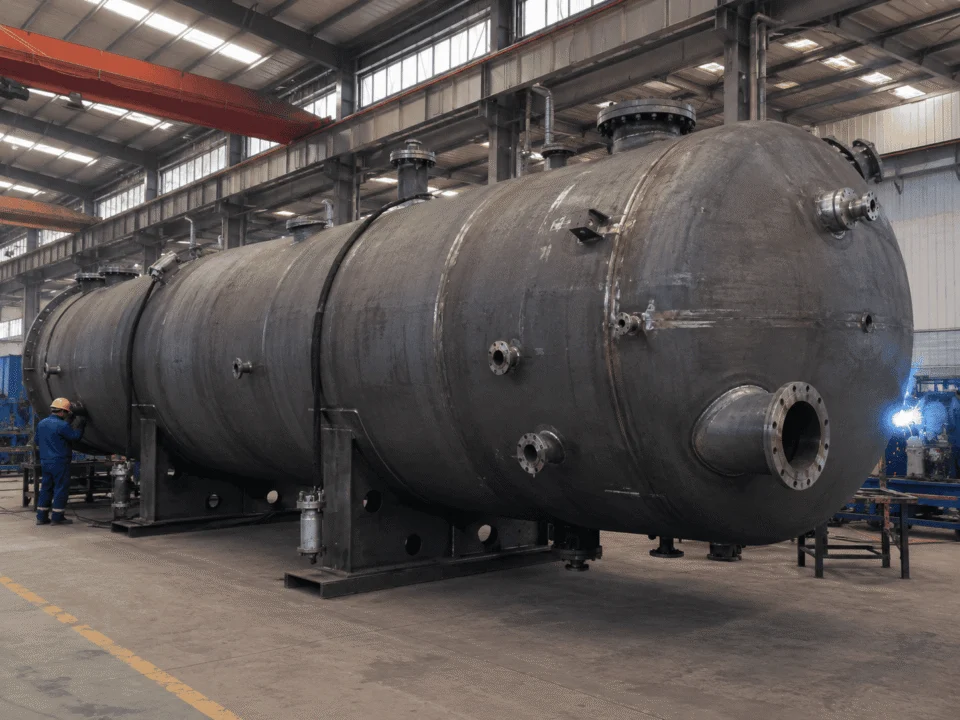
When Is Carbon Steel the Right Choice?
Carbon steel is not the best answer for every process. Use these key considerations to determine whether a carbon steel pressure vessel is a suitable and economical solution for your service conditions.

Engineered around your actual medium, pressure and temperature.
Lower material cost where service conditions are suitable for carbon steel.
Widely used across utility, hydrocarbon and general process services.
Design, fabrication and inspection can follow ASME and project requirements.
Best suited for non-aggressive and compatible media such as water, steam, oil, air, hydrocarbons and many industrial gases.
When corrosion is limited or can be managed with corrosion allowance, coating, lining or cladding, carbon steel remains a practical choice.
Large-diameter and heavy-wall vessels can benefit from lower initial material cost when service conditions allow.
If the process requires high cleanliness, sanitary finish or exceptional corrosion resistance, stainless steel may be preferred.
Send us your process details and our engineers will review the material direction.
Carbon Steel Materials Selected for Pressure Vessel Service
Material grade should match the design temperature, thickness, toughness, welding requirements and project specification—not simply the vessel capacity.
Minimum and maximum operating temperature define material toughness and temperature rating.
Required thickness affects material availability, allowable stress and welding procedure.
Low-temperature toughness or impact testing may be required by code or project specification.
Weldability, heat input control and post-weld heat treatment requirements influence material selection.
Corrosion allowance, coatings or linings may affect the final material decision.
Applicable design code and owner specification override general material recommendations.

Gr.70 Common Direction
- Widely used pressure-vessel-quality carbon steel plate
- Good fabrication performance for many industrial duties
- Useful where higher strength is required
- Design temperature limits
- Thickness and allowable stress
- Toughness / impact requirements
- Welding procedure and PWHT
- Corrosion allowance or protection method
Gr.60 Consider When Applicable
- Lower strength than Grade 70
- May suit moderate design conditions
- Useful when higher strength is unnecessary
- Temperature limitations
- Thickness and allowable stress
- Toughness requirements
- Welding and heat treatment
Carbon Steel Use When Required
- Selected for low-temperature service
- Greater attention to low-temperature toughness
- Minimum design metal temperature
- Impact-test requirements
- Material specification limits
- Weldability and PWHT
Carbon Steel As Per Project Requirements
- Specified by owner, EPC or project standard
- Used where an approved material list controls procurement
- Material specification
- Mill test certificates
- Traceability and heat number
- Code and customer compliance requirements
The final selection must always be confirmed from the actual service conditions and project requirements.
How Corrosion Is Controlled in Carbon Steel Pressure Vessels
The protection strategy depends on the corrosion mechanism, process medium, temperature, installation environment and required service life.
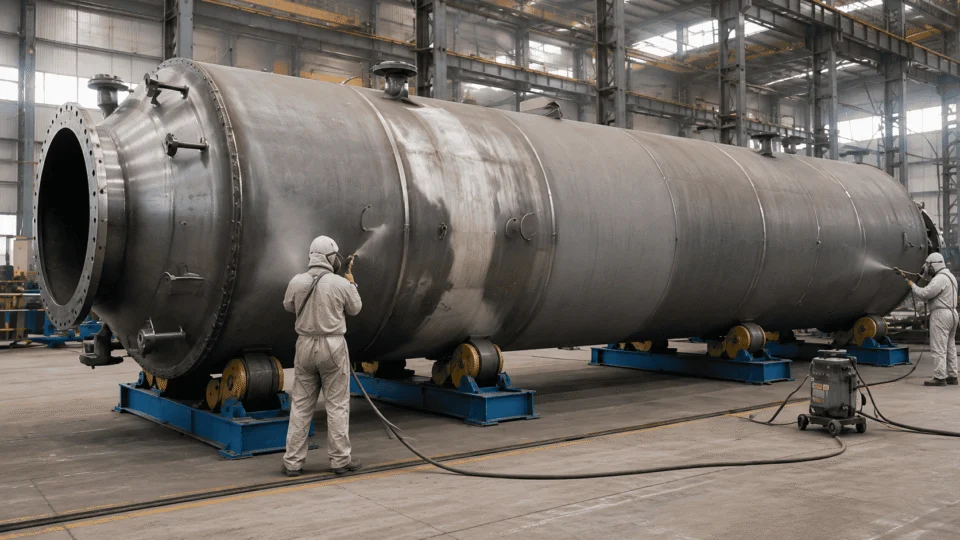
Protection Starts With
the Service Conditions
The medium and its chemistry determine the corrosion risk.
Temperature affects both the corrosion rate and the protection method.
General, localized or microbiologically influenced corrosion may occur.
The longer the service life, the more critical the protection strategy becomes.
Select the protection method second.
Add material thickness to compensate for uniform corrosion.
- Suitable for predictable, uniform general corrosion
- Not effective for severe localized corrosion
Stable corrosion environment with predictable corrosion rate and easy inspection access.
A protective barrier between the process fluid and the steel surface.
- Depends on chemical compatibility and temperature
- Requires proper surface preparation and application
Mild to moderate service conditions where coating performance can be maintained.
High-isolation protection for more demanding service conditions.
- Provides higher resistance to aggressive media
- Selected based on lining type and service temperature
Aggressive chemicals, higher temperatures or longer service life requirements.
Carbon steel strength with a corrosion-resistant surface layer.
- Combines carbon steel structural strength
- Protects the process-contact surface
When corrosion is severe but carbon steel structure is preferred for strength and cost.
Protects the vessel from atmospheric and site environment exposure.
- Includes surface preparation, primer and coating system
- Maintenance and touch-up are important
Depends on installation location, climate, insulation and operating environment.
Severe localized corrosion, hygienic service, highly aggressive media or product contamination sensitivity may justify changing the base material rather than increasing the complexity of the protection system.
and corrosion control→
Designed Around Your Actual Operating Conditions
Every pressure vessel is engineered around the real process conditions, not just capacity. These design factors directly shape the final configuration, thickness and structural details.
Determines the required shell and head thickness, flange rating, reinforcement and pressure-test basis.
Affects allowable material stress, thermal conditions and the suitability of seals, coatings and internals.
Adds extra thickness where needed to support long-term integrity under predictable corrosive service.

Changes shell geometry, overall dimensions, support arrangement, fabrication handling and transport planning.
Connected piping, nozzle orientation and external loads can affect local reinforcement and layout decisions.
Wind, seismic, test weight, internals, agitators or other attached equipment introduce additional design loads.
Two vessels with the same nominal capacity can have completely different thicknesses, nozzles, reinforcements and supports when their operating conditions and site requirements are different.
From Approved Drawings to a Fabricated Pressure Vessel
Once the design and critical interfaces are approved, fabrication moves through controlled plate preparation, forming, fit-up, welding, attachment installation and dimensional verification.
The objective is not simply to complete fabrication. Each manufacturing stage must preserve the dimensions, interfaces and pressure-retaining details defined in the approved design.


Material identity, dimensions, cutting and edge preparation are controlled before forming begins.
Shell courses and formed components are prepared to the required geometry, diameter and dimensional tolerances.
Shell seams, heads and major pressure-retaining joints are aligned and welded to the approved fabrication requirements.
Nozzles, manways, supports and project-specific attachments are positioned to match the approved interfaces.
Critical dimensions, nozzle orientation and installation interfaces are checked before the vessel proceeds to inspection and testing.
Late changes to nozzle positions, supports or installation interfaces can affect fit-up, reinforcement and downstream piping, so these details should be frozen before fabrication wherever possible.
Inspection and Testing Built Into the Fabrication Process
Each vessel is verified through material traceability, dimensional inspection, weld examination, pressure testing and final documentation review before release.
Inspection is planned as part of manufacturing so that required checks, witness points and test records are completed at the correct stage rather than added after fabrication.

Material identification, heat numbers and certificates are checked against the approved material requirements.
Dimensions, nozzle orientation, support positions, weld appearance and key fabrication interfaces are verified.
VT, PT, MT, UT or RT may be applied as required by the code, joint category, service and project specification.
The pressure boundary is verified using the approved test medium, pressure, hold procedure and acceptance criteria.
Material, weld, NDT, test, dimensional and final drawing records are reviewed before the vessel is released.

Inspection Scope Should Be Defined Before Production
The inspection plan should confirm what must be checked, who must witness it, which steps require hold points and what records must be included in the final documentation package.
Required examination method, weld coverage and acceptance basis.
Stages the customer, inspector or third party may need to witness.
Activities that should not proceed until inspection acceptance is confirmed.
Hydrostatic, pneumatic or leak-test requirements as applicable to the project.
Required certificates, reports, records and final manufacturing documentation.
Final acceptance conditions that must be satisfied before shipment.
NDT extent, witness points, hold points, test requirements and documentation expectations should be confirmed early so the quality plan can be built into the manufacturing sequence.
Carbon Steel vs Stainless Steel Pressure Vessels
The better material is the one that fits the process, corrosion risk, cleanliness requirements and lifecycle expectations—not simply the one with the lower initial purchase price.
Carbon steel can offer strong project economics when the service is compatible. Stainless steel becomes more attractive as corrosion resistance, product cleanliness or maintenance reduction becomes a primary design requirement.
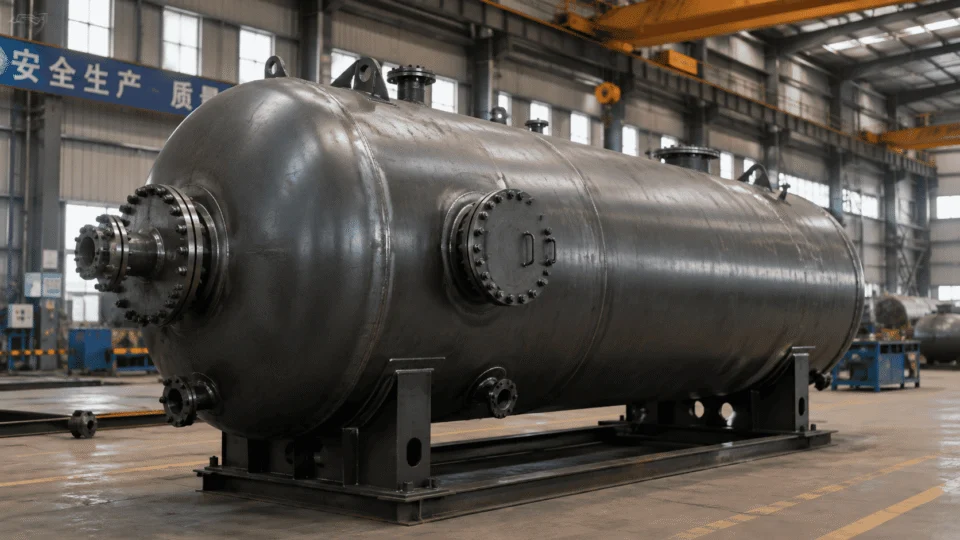

Economical for Compatible Industrial Service
Often preferred for larger or heavier pressure vessels when corrosion can be controlled and product-contact cleanliness is not the dominant requirement.
Can provide a significant material-cost advantage, especially for larger diameters, thicker walls and heavier vessel construction.
Corrosion allowance, coating, lining, cladding or other protection can be considered when the service permits a carbon steel pressure boundary.
Material economics become increasingly relevant as vessel diameter, plate thickness and fabricated weight increase.
Initial savings should be reviewed together with coating repair, corrosion monitoring, inspection access and expected service life.
Selected When Corrosion and Cleanliness Drive the Design
Often considered where the base material itself must provide stronger corrosion resistance, cleaner product contact or reduced dependence on protective systems.
Material and fabrication cost are typically higher, so the choice should be justified by corrosion, cleanliness or lifecycle requirements.
An appropriate stainless steel grade can reduce reliance on separate internal protection, but the grade must still match the actual medium and temperature.
Better suited when surface condition, frequent cleaning, contamination control or cleaner product contact becomes a primary requirement.
May reduce some coating, lining or repair requirements where the selected stainless grade is inherently compatible with the service.
Which Material Direction Fits Your Project?
Use the process conditions to decide whether carbon steel remains the practical choice or whether corrosion resistance and cleanliness justify moving toward stainless steel.
Carbon steel is usually worth evaluating first when the service is compatible and the project benefits from lower material cost.
- Corrosion can be controlled
- Cleanliness is not the main driver
- Large or heavy construction affects economics
The economic advantage can narrow when corrosion control requires increasingly demanding protection and maintenance.
- Multiple protection systems are required
- Frequent repair or inspection is expected
- Product contamination risk is increasing
Stainless steel becomes more attractive when corrosion resistance, clean product contact or reduced protection demand drives the vessel design.
- Corrosion resistance is a primary requirement
- Frequent cleaning or cleaner contact is required
- Lifecycle maintenance is more important than initial cost
Send the process medium, pressure, temperature, corrosion concerns and cleanliness requirements so the material route can be reviewed before the vessel configuration is finalized.
Ready to Define Your Carbon Steel Pressure Vessel?
Send your operating conditions, datasheet, P&ID or existing vessel drawings. We can review the available information, identify the remaining engineering inputs and prepare the project scope for quotation.
We review the available operating data, drawings and project requirements.
Missing technical inputs, interfaces and supply boundaries are confirmed.
The agreed scope is prepared for quotation and engineering follow-up.
