FOOD & BEVERAGE PROCESSING
Process Equipment for the Food & Beverage Industry
Explore stainless steel tanks, mixing vessels and heat exchange equipment for beverage bases, syrups, sauces and edible oils. Discuss your product, working capacity and operating conditions with ChannelVessel to define the equipment scope for your project.
- Reliable
Equipment - Hygienic
Design - Tailored
Solutions - Support
Your Project

Equipment for Your Food & Beverage Process
Start with the job the equipment needs to do. Use the process groups below to identify a starting point, then define the operating requirements for your application.
Holding & Storage
Plan buffer or intermediate storage for liquid ingredients and prepared products. Specify usable working volume, holding temperature, filling and discharge arrangements, and the connections to the next process step.
Sanitary Storage TanksMixing & Blending
Match the mixing tank to your ingredient-addition sequence and required final consistency. Describe the recipe type, viscosity and mixing task, including whether ingredients need to dissolve, disperse or remain suspended.
Mixing TanksHeating & Cooling
Compare batch temperature control in a jacketed vessel with a separate heat exchanger. Provide starting and target temperatures, the available processing time, product characteristics and the heating or cooling utilities at your site.
Process Integration
Define whether the project needs an individual vessel or a skid-mounted package. Identify the proposed piping, pumps, instruments and controls, together with the connections and equipment that will remain part of your existing plant.
Custom Process SkidsFor dedicated applications, explore our Dairy Industry and Brewing & Fermentation pages.
View Industry PagesDefine Your Product-Contact and Cleaning Requirements
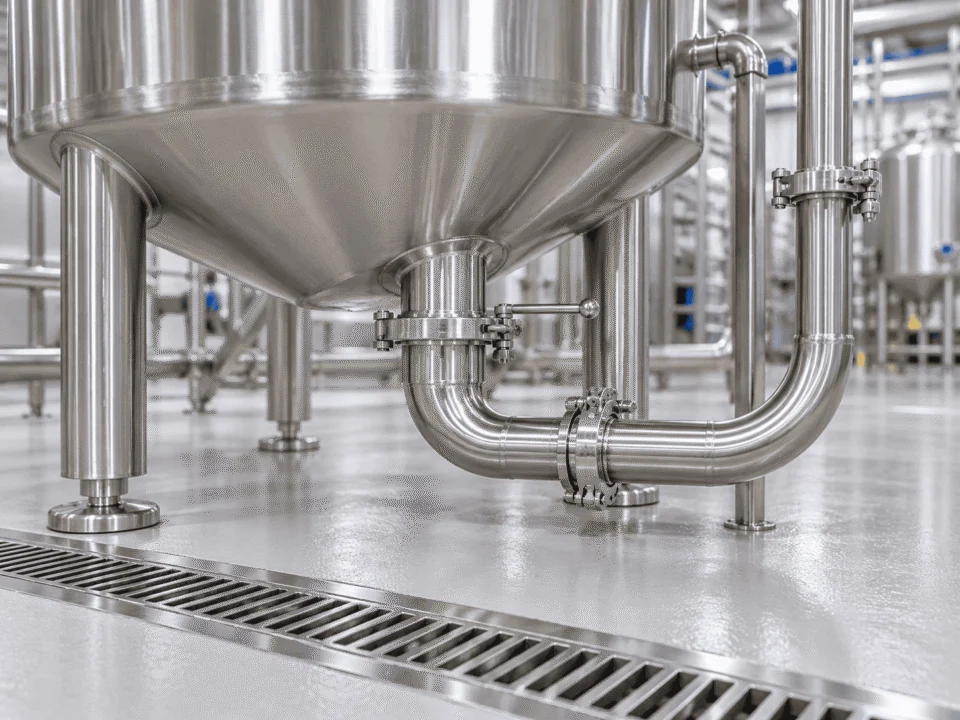
A useful equipment specification should define both the surfaces your product touches and how the equipment will be cleaned between production runs. These requirements should be agreed before the vessel layout is finalized.
Product-Contact Materials
Identify the requirements for product-contact metals, gaskets and seals together. Provide the product composition, processing temperatures and cleaning chemicals, together with any food-contact documentation required by your project.
Surfaces, Welds & Connections
State the required internal finish and how it will be checked. Include welds, nozzles, fittings and seals in the review rather than specifying a polished vessel shell alone.
Cleaning Method & Drainage
Specify whether the equipment will use CIP, manual cleaning or dismantling. Review cleaning-device coverage, internal obstructions, outlets and drainage together instead of treating the cleaning device as an isolated component.
Operating & Cleaning Conditions
Provide production and cleaning conditions separately, including temperatures and any pressure or vacuum. Where a heating or cooling jacket is required, identify the conditions on both the product and utility sides.
Agree on Drawings, Inspection and Documentation
Make equipment acceptance part of the purchase specification, not a discussion left until shipment. Agree on what will be reviewed, checked and documented for your order before fabrication begins.
Drawing Review
Confirm the working volume, overall dimensions, nozzle positions and installation clearances. Record the agreed product-contact and cleaning requirements, together with the connections to existing equipment, before releasing the design for fabrication.
Inspection Scope
Agree on the dimensional, surface and weld checks relevant to the order. Where pressure, leak or other testing is required, define the test basis, acceptance criteria, witnessing arrangements and required records in advance.
Learn more about Inspection & TestingHandover Documents
Confirm the document list with the quotation. Identify the drawings, material records, inspection or test reports, and operating or maintenance information included in the supply scope, together with any additional project-specific documents.
Food & Beverage Equipment FAQs
Get quick answers to common questions about equipment selection, batch flexibility, cleaning integration and pressure requirements for food and beverage projects.
Final drawings are not required to start a project discussion. Share the product, target capacity, operating conditions and any available layout or connection information. The remaining assumptions can then be identified before the quotation is finalized.
Specify both the smallest and largest batches you plan to run, rather than only the nominal vessel capacity. Mixing and temperature-control performance should be reviewed across the intended working-volume range.
A shared vessel should be reviewed against all intended recipes. Differences in viscosity, ingredients, processing temperature and cleaning requirements can affect the vessel configuration and changeover procedure.
Existing CIP compatibility requires more than matching connection sizes. Share the available cleaning flow, pressure, temperature, chemicals, and supply and return conditions so the vessel and cleaning arrangement can be reviewed together.
Not every food-processing vessel is automatically a pressure vessel. The design basis depends on the actual operating and cleaning conditions, including internal pressure, vacuum and any jacket-side pressure. Applicable pressure requirements should be reviewed for the intended service and installation location.