Process Equipment for the Chemical Industry
Custom-engineered pressure vessels, reactors, storage tanks, heat exchangers, columns, separators and process skids for demanding chemical processing applications.
Designed around your process medium, pressure, temperature, corrosion conditions and operating requirements.
Custom
Engineered
Designed around
your process conditions.
Chemical-Resistant
Materials
SS304, SS316L, carbon steel
and project-specified materials.
Built for
Global Projects
Engineering, fabrication,
testing and export delivery.
and product storage
and mixing
processes
and purification
How Process Equipment Fits Into
Chemical Production
Chemical production moves through a series of controlled steps, from storage and preparation to reaction, heat transfer, separation and final product handling. Each stage requires equipment designed for a specific process duty.
Raw Material Storage
Receive and hold feedstocks before processing.
Mixing & Preparation
Blend, dissolve or condition materials for the next step.
Reaction
Control chemical conversion under defined process conditions.
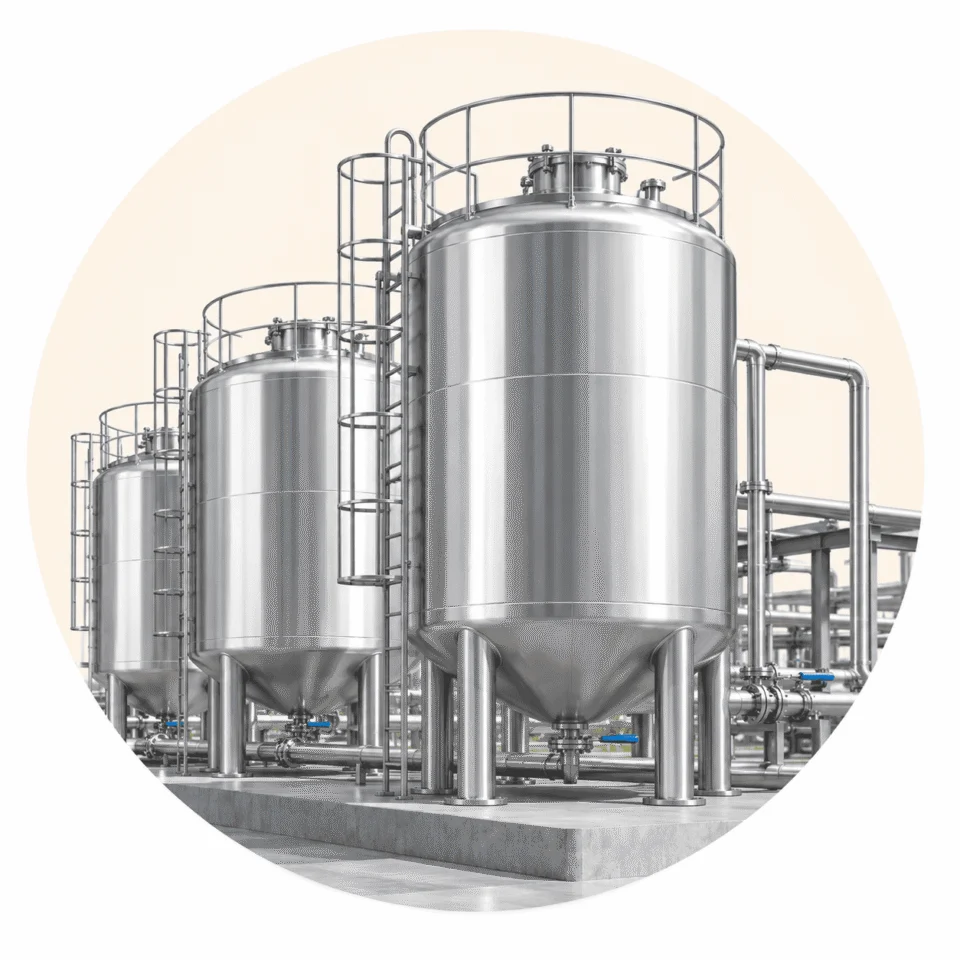
Final Product Storage
Hold finished or intermediate products before transfer.
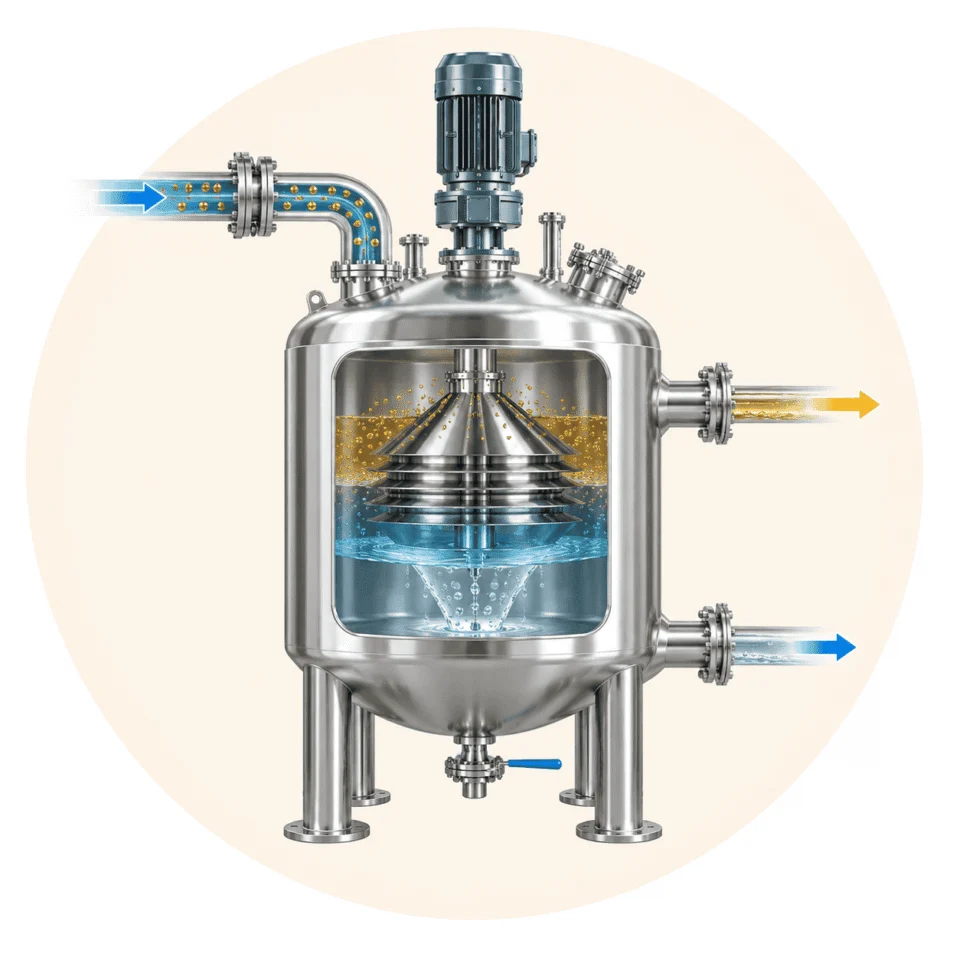
Separation & Purification
Separate phases, remove impurities or recover products.
Heating & Cooling
Add or remove heat to maintain the required temperature.
Process Equipment We Build for Chemical Plants
From individual vessels to complete process skids, ChannelVessel supplies chemical process equipment engineered around the medium, operating conditions and process duty of each project. Our equipment supports storage, reaction, heat transfer, separation, purification and integrated chemical processing.
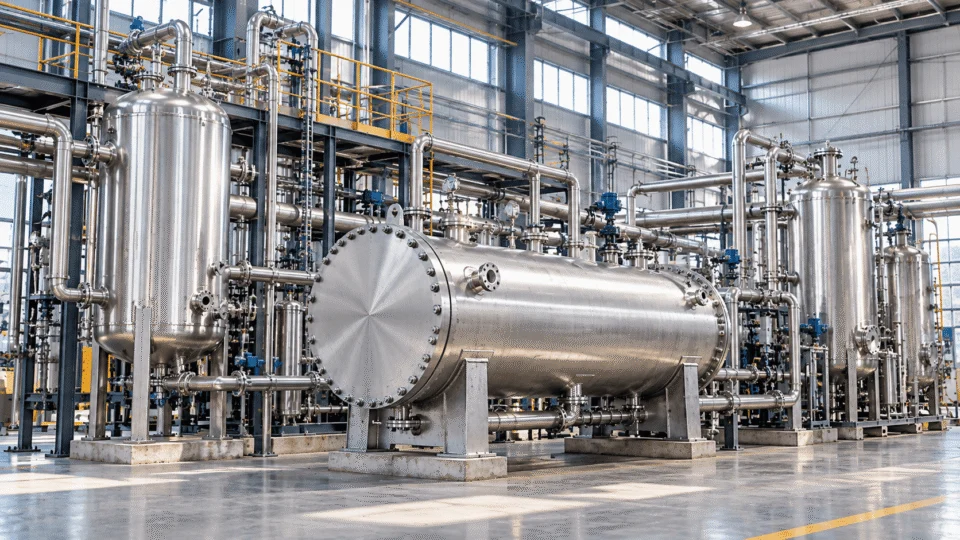
Pressure Vessels
Engineered for chemical process containment under positive pressure, vacuum or combined operating conditions. Vessel material, design pressure, temperature, nozzle arrangement and fabrication requirements are defined around the process medium and project duty.
Manufacturing
NDT Inspection
Operating Range
Your Process Duty
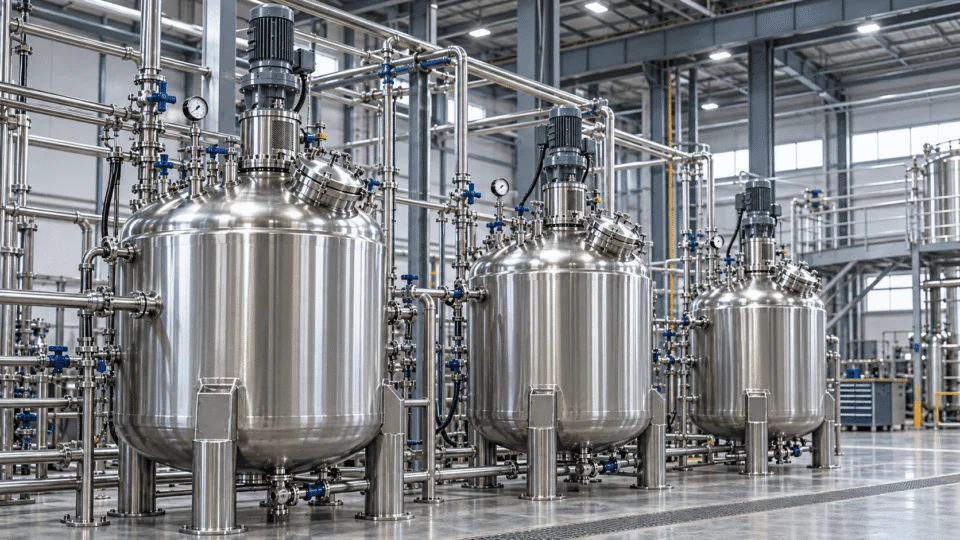
Reactors
Built for controlled chemical conversion where agitation, pressure, temperature and heat transfer must work together. Reactor configuration can be adapted to viscosity, mixing duty, residence time, heating or cooling method and the characteristics of the process medium.
Matched to Duty
Heat Transfer
Design Options
for Process Media
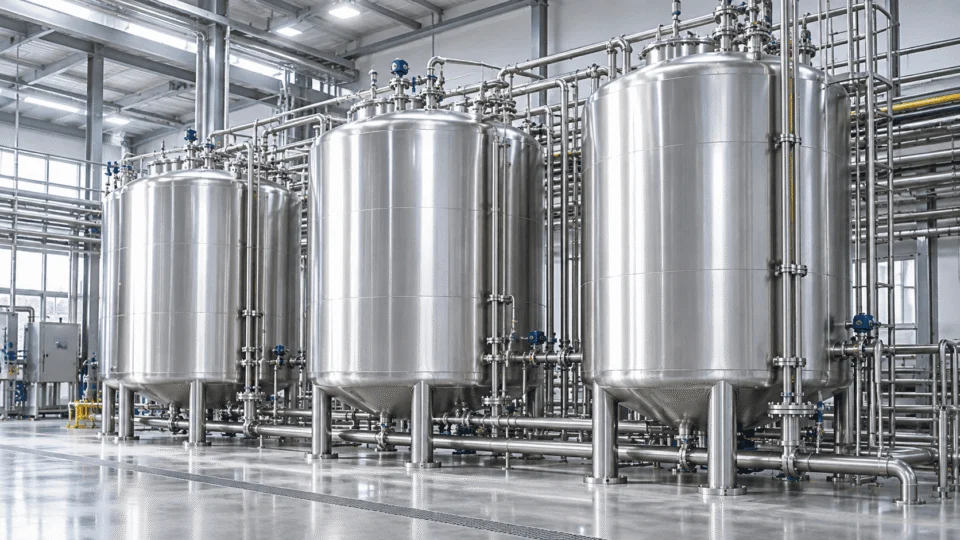
Storage Tanks
Designed for safe storage of chemical feedstocks, intermediates and finished products. Tank geometry, material, corrosion allowance, insulation, heating, agitation, venting and connection layout can be selected around the stored medium and operating requirements.
Finished Product Storage
Options
When Required
Vent & Drain Layout
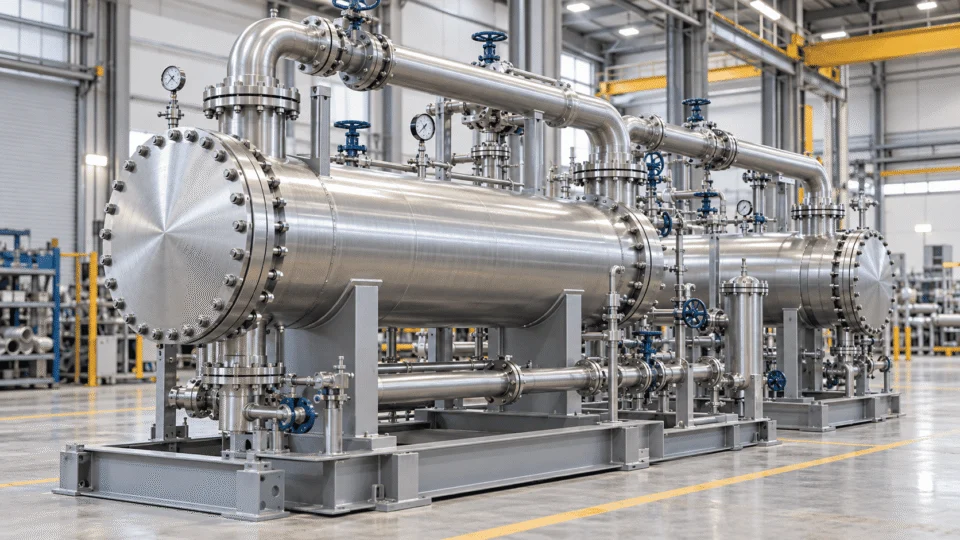
Heat Exchangers
Applied where a chemical process requires controlled heating, cooling, condensation or evaporation. Thermal duty, fluid properties, pressure, temperature, fouling tendency and material compatibility define the exchanger configuration and fabrication requirements.
Cooling Duty
Evaporation
for Process Fluids
& Layout

Columns & Towers
Fabricated for distillation, absorption, stripping and other mass-transfer duties in chemical plants. Column dimensions, internals, operating pressure, material and nozzle arrangement are coordinated with the process design and project specifications.
Purification Duty
Stripping Service
Operation
to Project Design

Separators & Filter Vessels
Used for gas-liquid separation, liquid-liquid separation, solids removal and process filtration. Vessel geometry, internals, filtration elements and connections are selected around flow rate, phase behavior, solids loading and required separation performance.
Separation
Separation
& Filtration
for Required Performance
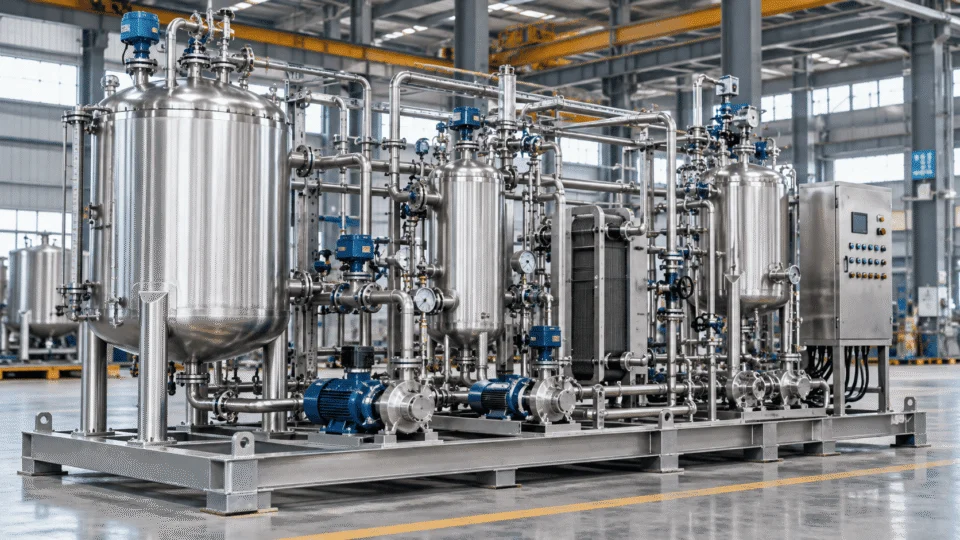
Process Skids
Integrated skid systems combine vessels, heat exchangers, pumps, piping, valves and instrumentation into a coordinated process package. Layout and interfaces are engineered around process flow, installation space, control requirements and the customer’s site conditions.
Integration
& Pumps
& Controls
Site Interfaces

Pressure Vessels
Engineered for chemical process containment under positive pressure, vacuum or combined operating conditions. Vessel material, design pressure, temperature, nozzle arrangement and fabrication requirements are defined around the process medium and project duty.

Reactors
Built for controlled chemical conversion where agitation, pressure, temperature and heat transfer must work together. Reactor configuration can be adapted to viscosity, mixing duty, residence time, heating or cooling method and the characteristics of the process medium.

Storage Tanks
Designed for safe storage of chemical feedstocks, intermediates and finished products. Tank geometry, material, corrosion allowance, insulation, heating, agitation, venting and connection layout can be selected around the stored medium and operating requirements.

Heat Exchangers
Applied where a chemical process requires controlled heating, cooling, condensation or evaporation. Thermal duty, fluid properties, pressure, temperature, fouling tendency and material compatibility define the exchanger configuration and fabrication requirements.

Columns & Towers
Fabricated for distillation, absorption, stripping and other mass-transfer duties in chemical plants. Column dimensions, internals, operating pressure, material and nozzle arrangement are coordinated with the process design and project specifications.

Separators & Filter Vessels
Used for gas-liquid separation, liquid-liquid separation, solids removal and process filtration. Vessel geometry, internals, filtration elements and connections are selected around flow rate, phase behavior, solids loading and required separation performance.

Process Skids
Integrated skid systems combine vessels, heat exchangers, pumps, piping, valves and instrumentation into a coordinated process package. Layout and interfaces are engineered around process flow, installation space, control requirements and the customer’s site conditions.
Materials for Corrosive Chemical Service
Material selection for chemical process equipment depends on the process medium, concentration, operating temperature, pressure, corrosion behavior, cleanliness requirements and expected service life. ChannelVessel evaluates these conditions before defining the vessel material and fabrication requirements.
SS304
Widely used for general chemical storage and process service with good cleanability, general corrosion resistance and excellent fabrication performance.
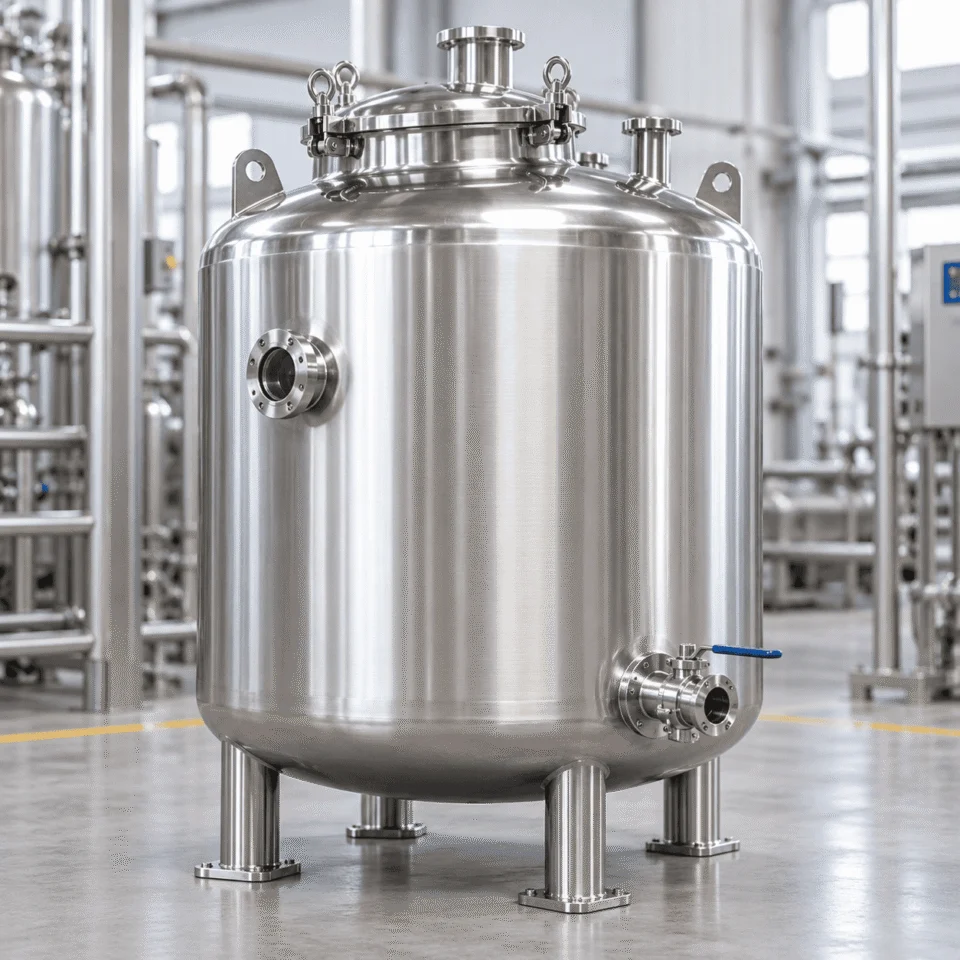
SS316L
More suitable for chemical service with higher corrosion requirements, especially where the process medium, temperature or cleanliness requirements are more demanding.
Explore Stainless Steel Vessels →
Carbon Steel
Suitable for applications where the material is compatible with the process medium and cost and structural strength are important. Corrosion allowance, lining or coating can be applied as required by the project.
Explore Carbon Steel Vessels →
Project-Specified Materials
When SS304, SS316L or carbon steel are not suitable, materials can be selected according to the process datasheet, medium characteristics, corrosion requirements and project specifications.

What We Need to Select the Material
To provide a suitable material recommendation, the following process information is required:
of process fluids
molar concentration
temperature
pressure conditions
cleaning and hygiene needs
operating cycle
Engineering Chemical Process Equipment Around Your Process Conditions
Chemical process equipment should not be selected by vessel type alone. Pressure, vacuum, temperature, process duty, heat transfer, agitation, internals, nozzle arrangement, instrumentation and installation conditions all influence the final equipment configuration. ChannelVessel reviews these requirements together before fabrication begins.
Process Duty & Capacity
The equipment may be used for storage, reaction, heating, cooling, separation or integrated processing. Required working volume, batch size and continuous or intermittent operation all affect the vessel size, structural design and configuration.
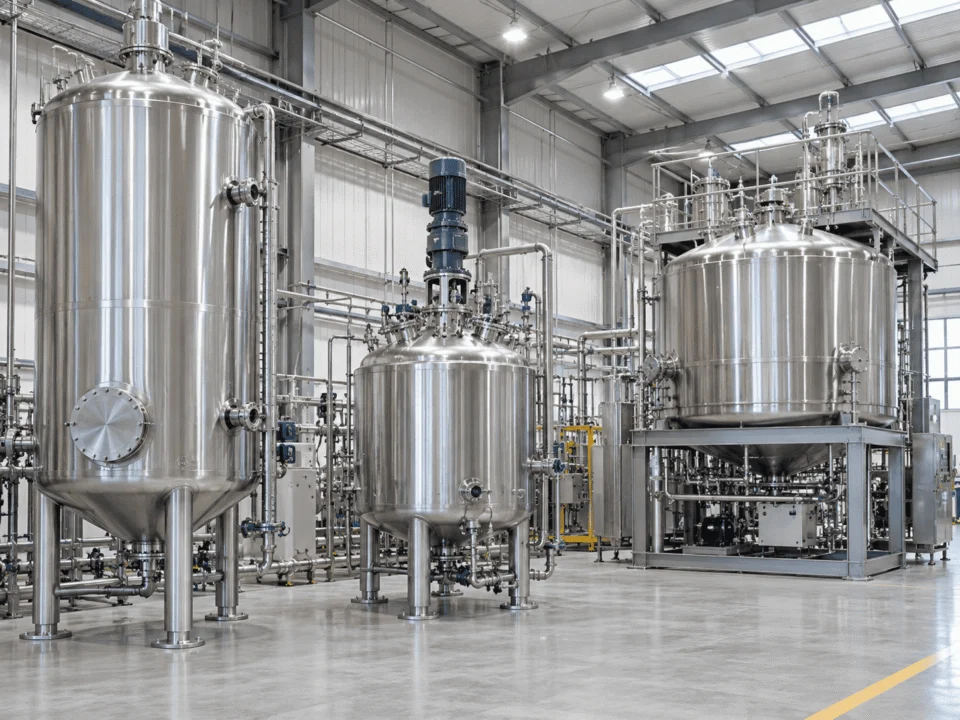
Pressure, Vacuum & Temperature
Operating pressure, vacuum level and design temperature directly influence wall thickness, head type, reinforcement, flange rating, sealing design and mechanical structure. Proper design ensures safe, stable and long-term operation under actual process conditions.
Explore Vacuum Vessels →
Heating & Cooling Requirements
Jacket, internal coil, external heat exchanger or other heating and cooling methods are selected based on heat duty, temperature increase or decrease rate, process medium properties and specific process requirements.
Explore Jacketed Pressure Vessels →
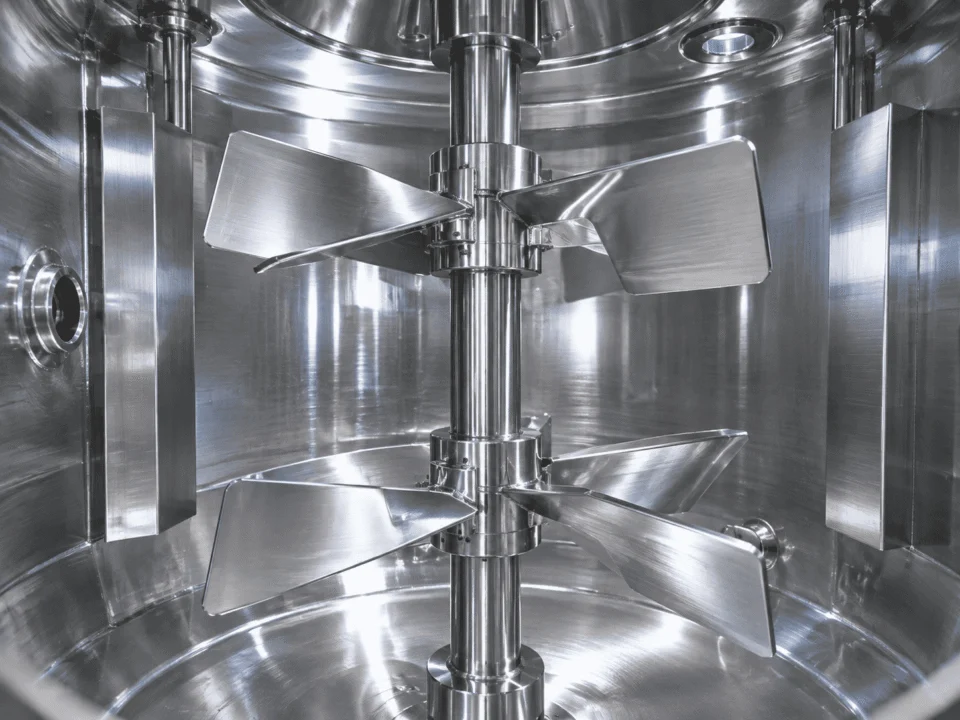
Mixing, Internals & Separation Duty
Agitator type, impeller design and speed depend on the medium viscosity, phase characteristics and process objectives. For separation equipment, trays, packing, filters, demisters and other internals are selected according to the actual separation duty.
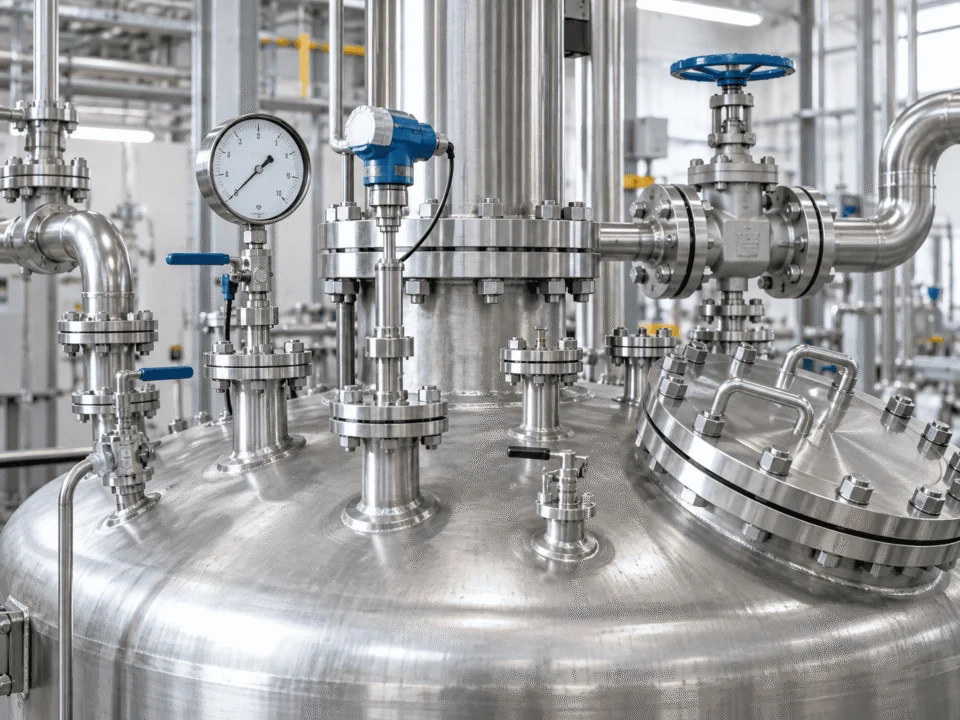
Nozzles, Instruments & Connections
Inlet and outlet nozzles, CIP connections, drains, vents, instrument nozzles, level, temperature and pressure ports, sampling points and other connections must be defined in advance to meet process control, operation and maintenance requirements.
Installation, Maintenance & Site Interfaces
Overall dimensions, transportation, lifting, platform layout, maintenance space and on-site piping interfaces all affect the final equipment arrangement. These factors should be reviewed early to ensure smooth installation and long-term operation.
Explore Custom Pressure Vessels →
Chemical Process Equipment for Different Chemical Applications
Different chemical products place different demands on equipment design. Medium characteristics, viscosity, corrosion behavior, operating temperature, pressure, batch size, cleaning requirements and process sequence all influence the final equipment configuration. ChannelVessel adapts vessel, reactor, heat-transfer, separation and integrated process equipment around the actual production duty.
Flexible Equipment for Multi-Product Chemical Production
Specialty chemical plants often handle smaller batches, multiple formulations and frequent product changeovers. Equipment therefore needs to balance material compatibility, cleanability, mixing performance and batch repeatability. Vessel configuration, agitation, surface requirements and connections can be adapted around the process medium and the way each formulation is produced.
Reaction and Heat-Transfer Equipment for Viscous Processes
Resin and polymer production can involve increasing viscosity, exothermic reactions and closely controlled heating or cooling. Reactor geometry, agitator selection, jacket or coil design and temperature-control strategy should be considered together so the process remains uniform as viscosity and reaction conditions change during the batch.
Mixing, Temperature Control and Product Handling
Coatings, inks and adhesive processes may require consistent blending, controlled viscosity, temperature management, solvent handling, filtration and finished-product storage. Equipment can be configured around the required mixing intensity, thermal duty and transfer sequence so each stage supports stable product quality and practical plant operation.
Closed Processing for Volatile and Recoverable Media
Solvent and organic chemical service often places greater emphasis on closed processing, vapor containment, pressure or vacuum operation, condensation and recovery. Equipment layout, sealing, nozzles and heat-transfer arrangements should be reviewed together with the process conditions to support controlled handling of volatile media throughout the production sequence.
Equipment Defined Around Chemical Compatibility
Corrosive chemical service requires careful review of medium composition, concentration, temperature and expected exposure. Material selection, corrosion allowance, lining or coating, gasket and sealing choices and fabrication details should be matched to the actual chemical duty rather than selected from a generic equipment specification.
Integrated Equipment for Multi-Step Process Duties
Intermediate and additive production may combine reaction, blending, holding, transfer, filtration and storage within one project. Equipment interfaces should be planned as part of the complete process sequence so vessel sizing, connections, instrumentation and transfer paths work together instead of being treated as isolated pieces of equipment.
How We Manufacture and Inspect
Chemical Process Equipment
Our equipment is manufactured according to approved design, material requirements, and operating conditions, and is checked through material verification, controlled welding, NDT, dimensional inspection, and pressure testing before shipment.
SAFE, RELIABLE
OPERATIONS
Material Verification
Verify material grades, certificates and traceability meet the approved specifications.
Forming, Fit-Up & Welding Control
Control forming, fit-up and welding in accordance with approved procedures and project requirements.
NDT & Weld Inspection
Perform NDT and weld inspection to verify integrity and compliance with applicable requirements.
Dimensional & Nozzle Inspection
Check dimensions, tolerances and nozzle orientation against approved drawings.
Pressure, Leak & Functional Testing
Conduct pressure testing, leak testing and functional checks as required.
Final Inspection & Release
Complete final inspection, review records and obtain release approval before shipment.
Before Shipment, We Verify
Orientation
Integrity
Condition
Documentation
How a Chemical Equipment
Project Moves From Inquiry to Shipment
Every chemical equipment project starts with process information. Medium, capacity, pressure, temperature, material requirements, process duty, site interfaces and available drawings are reviewed before the equipment configuration is confirmed. From engineering review and drawing approval to fabrication, inspection and shipment, each stage follows a defined project sequence.
Process Data & Requirements
We review medium, capacity, pressure, temperature, material requirements, process duty and available drawings before defining the project scope.
Engineering Review
Process conditions, vessel type, material selection, heat transfer, agitation, internals and site constraints are reviewed to define the equipment configuration.
Drawing Approval
General arrangement, dimensions, nozzle orientation, supports and interfaces are confirmed before fabrication begins.
Packing & Shipment
Connections are protected, documents are prepared and the equipment is arranged for shipment according to the project and transport requirements.
Inspection & Testing
Required inspections and tests are completed according to the equipment type, drawing, code and project specification before release.
Fabrication
After approval, materials are prepared and fabrication proceeds according to the confirmed design and project requirements.
The quotation should start with the process medium, working or total capacity, operating and design pressure, temperature, required material, process duty and main connection requirements. If you already have a process datasheet, P&ID, general arrangement drawing or equipment specification, send it with the inquiry. More complete process information allows the vessel configuration, material, nozzles and fabrication scope to be defined more accurately before pricing.
Yes. ChannelVessel can manufacture according to customer drawings, equipment datasheets or project specifications after engineering review. Before fabrication, we confirm the main dimensions, material, design pressure and temperature, nozzle orientation, supports, heating or cooling requirements, agitation, internals and site interfaces. Where necessary, drawings are revised or completed for customer approval before manufacturing begins.
Material selection depends on the chemical medium, concentration, operating temperature, pressure, corrosion behavior, cleanliness requirements and expected service life. SS304, SS316L and carbon steel are common options, while project-specified materials, linings or coatings may be required for more demanding service. The final recommendation should be based on the actual process conditions rather than a generic material preference.
Yes, when the vessel is specifically engineered for those conditions. Positive internal pressure, external pressure under vacuum and combined pressure-vacuum service create different mechanical loads and must be considered during design. Wall thickness, stiffening, head geometry, reinforcement, connections and sealing details may all change depending on the required pressure range. A standard pressure vessel should not automatically be assumed suitable for full vacuum service.
Yes. A chemical vessel can combine an external jacket, internal coil or other heat-transfer arrangement with an agitator when the process requires temperature control and mixing in the same equipment. The selected configuration depends on heat duty, temperature change rate, medium viscosity, mixing objective, batch size and cleaning requirements. These functions should be reviewed together because agitation and heat transfer directly influence process performance.
Inspection scope is defined by the equipment type, approved drawing, applicable code and project specification. Typical checks can include material verification, visual weld inspection, dimensional and nozzle inspection, NDT, X-ray radiographic inspection when required, pressure or hydrostatic testing, leak checking and final visual inspection. Jackets, coils and other pressure-retaining sections can also be tested separately where the project requires it.
Yes. Depending on the project scope, a process skid can integrate vessels, heat exchangers, pumps, piping, valves, instruments and supporting structure into one coordinated package. The engineering scope is normally defined from the process requirements, P&ID, available installation space, control philosophy and site interfaces. Confirming battery limits and connection points early helps reduce installation work and interface problems on site.
Shipping is planned according to the overall equipment dimensions, weight, lifting method and destination. Nozzles, flanges, instruments and finished surfaces are protected before transport, while lifting points and supports are prepared for safe handling. Depending on the project, equipment may be shipped in a standard container, open-top container, flat rack or other suitable transport arrangement. Oversized equipment requires transport planning before fabrication is finalized.