ChannelVessel Intelligent Equipment Co., Ltd. Contact Us
Heat Exchangers

Custom Industrial Heat Exchangers for Process Heating and Cooling

Shell and tube, stainless steel, condenser, evaporator and process cooler solutions built for chemical, food, pharmaceutical, water treatment and industrial process systems.
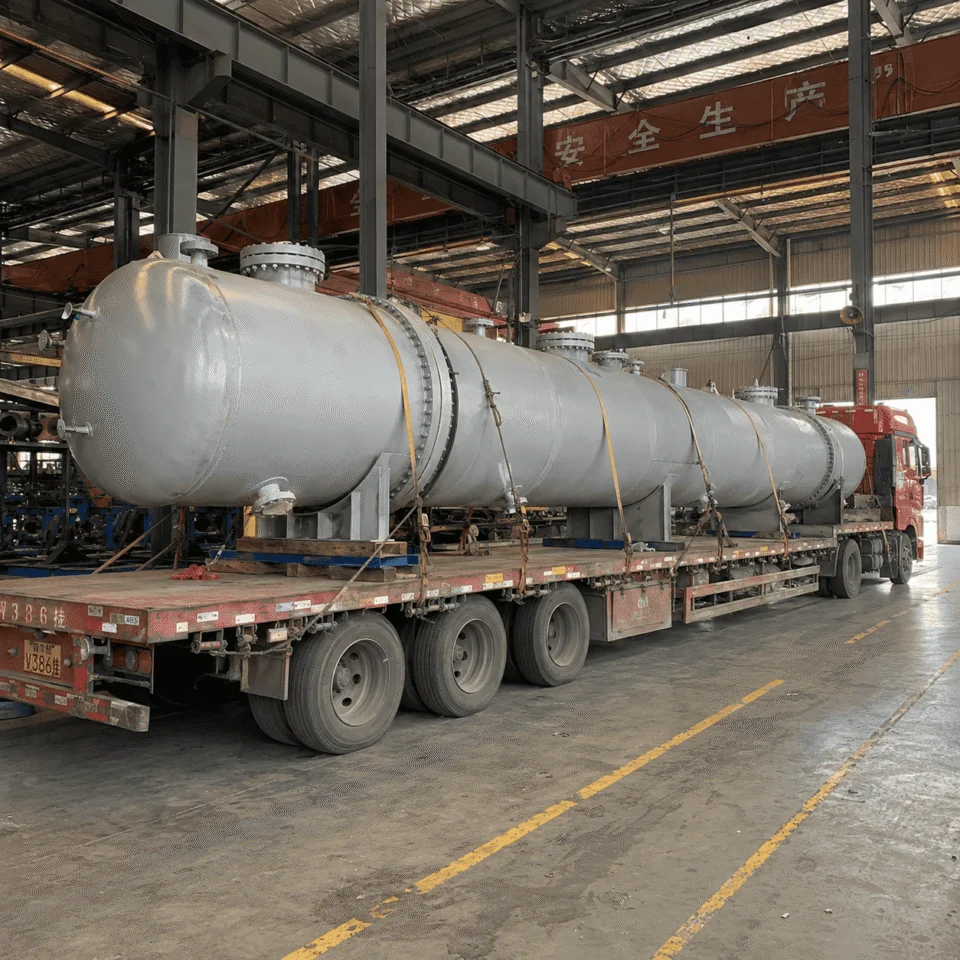
Shell & Tube / Condenser / Evaporator
Stainless Steel / Carbon Steel / Duplex Steel
Design Pressure Customized by Project
Built for Heating, Cooling and Heat Recovery
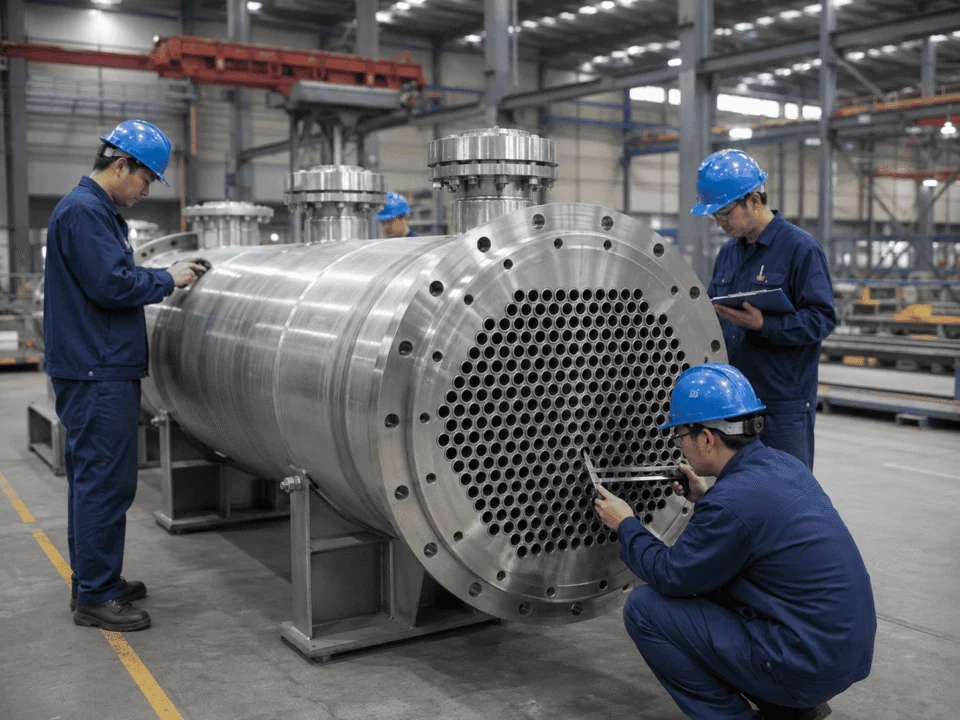
Industrial shell and tube heat exchanger in ChannelVessel factory
Choose by Process Requirement

Heat Exchangers Built for Different Process Requirements

Different projects need different heat exchanger structures. Some buyers need high-pressure shell and tube units, while others care more about corrosion resistance, vapor condensation, evaporation, process cooling or limited installation space. Use the cards below to find the direction that fits your process first.
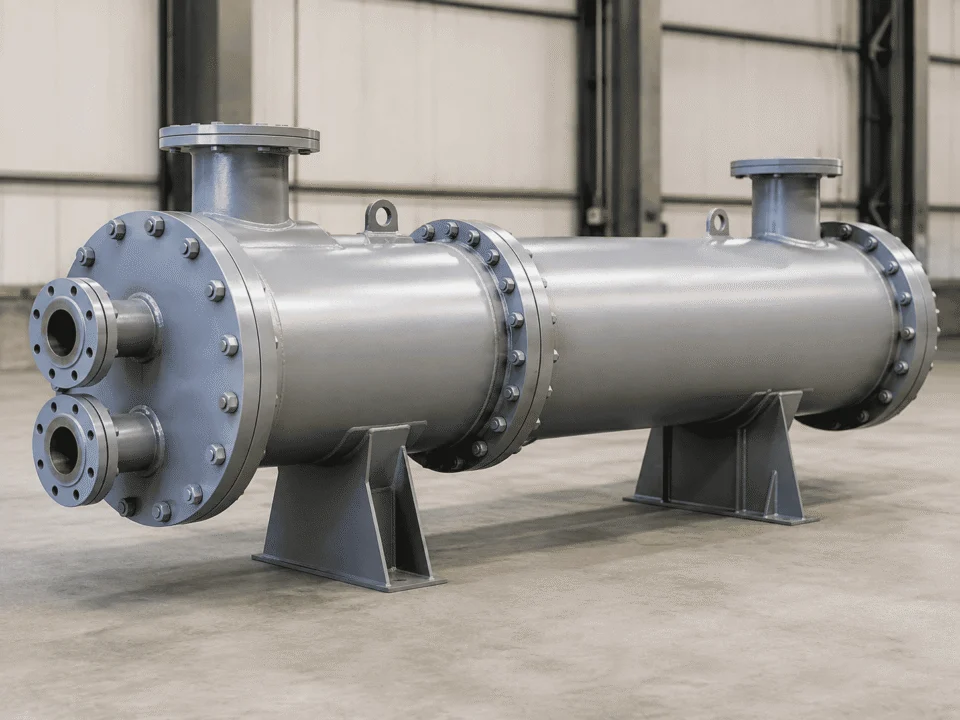
Shell and tube heat exchanger Image area
Add shell and tube heat exchanger photo
Heating / Cooling

Shell and Tube Heat Exchangers

For industrial heating, cooling, condensation and heat recovery applications where stable operation and pressure resistance are important.
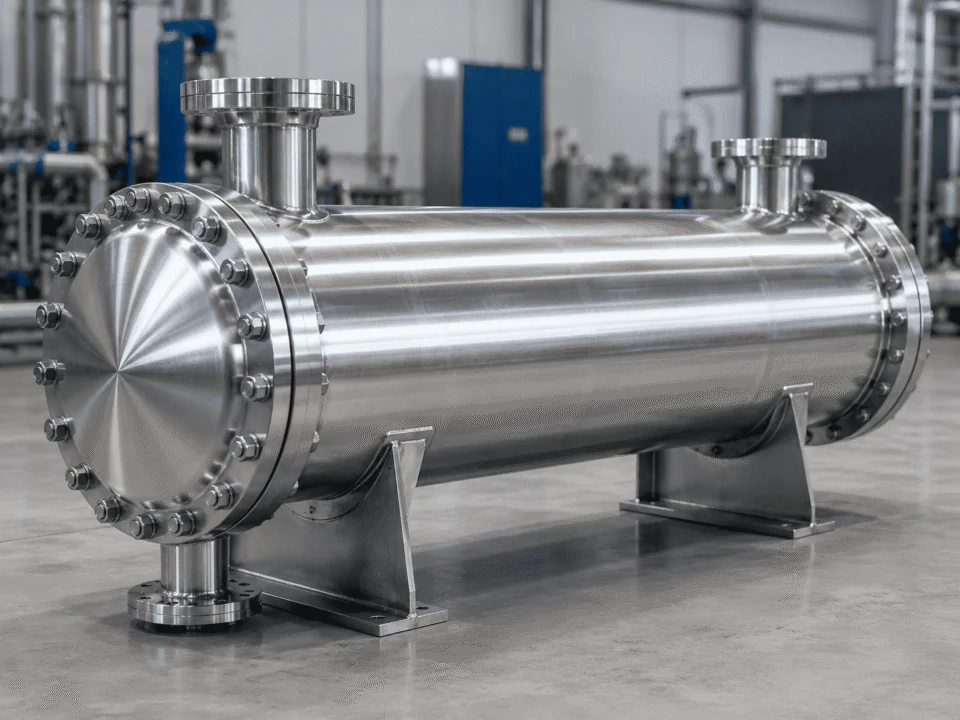
High Pressure Heat Recovery Continuous Operation
Stainless steel heat exchanger Image area
Add stainless steel heat exchanger photo
Corrosive Media

Stainless Steel Heat Exchangers

For corrosive, sanitary or clean process systems using SS304, SS316L or other stainless steel materials based on the medium.

SS304 / SS316L Corrosion Resistance Clean Process
Industrial condenser Image area
Add condenser photo
Vapor Condensing

Condensers

For vapor condensation, solvent recovery, steam systems and process cooling lines where vapor must be converted back into liquid.
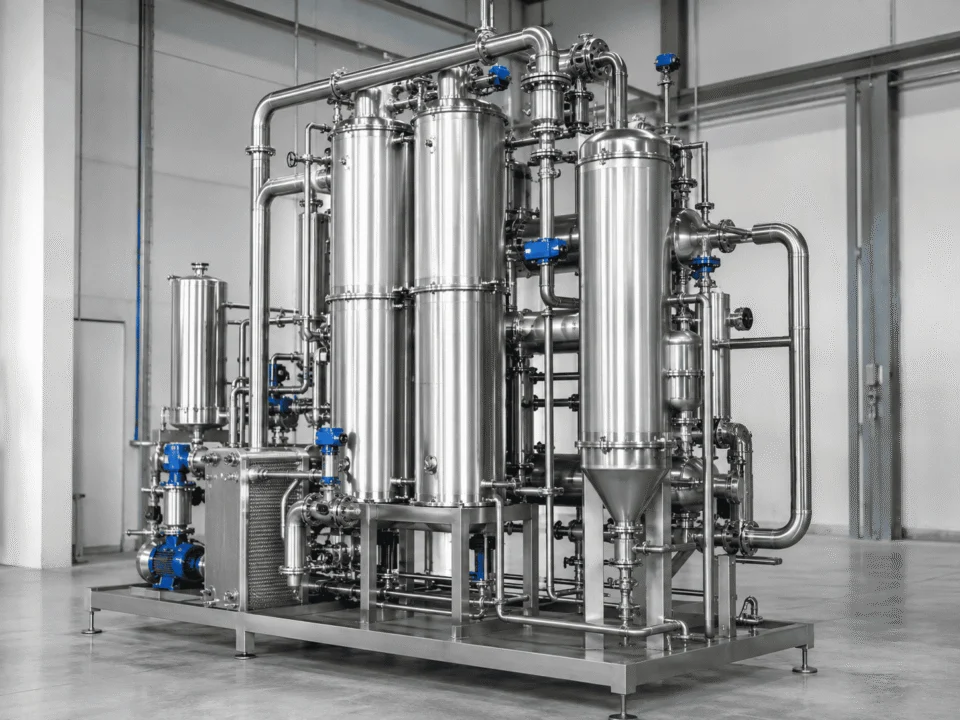
Vapor to Liquid Solvent Recovery Steam Condensing
Industrial evaporator Image area
Add evaporator photo
Concentration

Evaporators

For concentration, evaporation and thermal separation processes where controlled heat transfer is required.

Concentration Thermal Separation Process Evaporation
Industrial process cooler Image area
Add process cooler photo
Process Cooling

Process Coolers

For reducing the temperature of liquid, gas or process streams before storage, filtration, packaging or the next production stage.
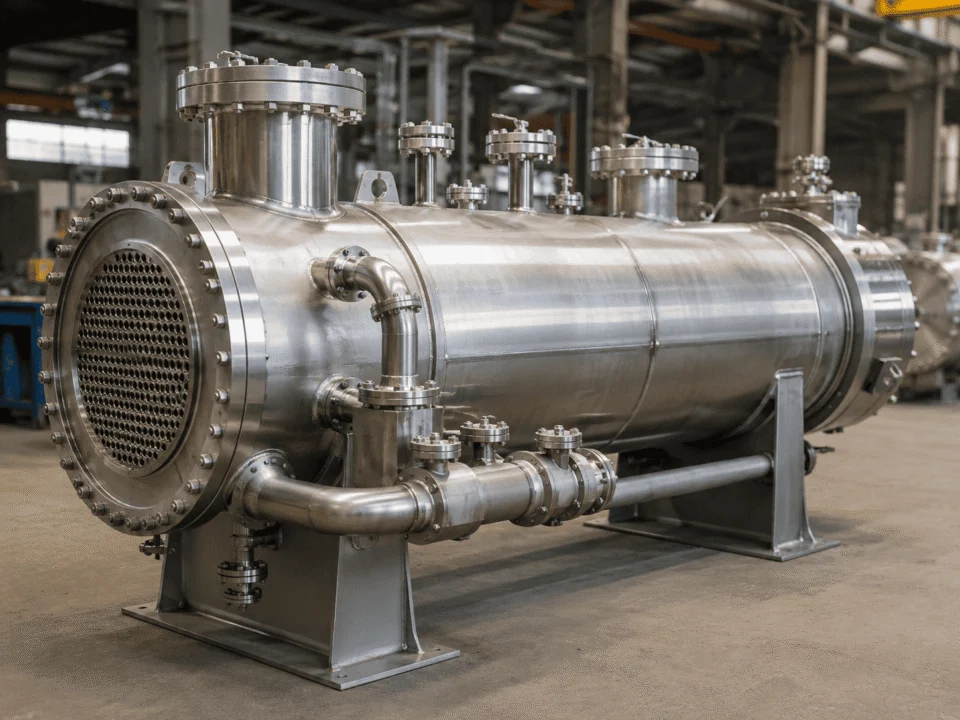
Liquid Cooling Gas Cooling Before Next Stage
Custom industrial heat exchanger Image area
Add custom heat exchanger photo
Project Design

Custom Heat Exchangers

Designed around your medium, flow rate, temperature range, pressure, fouling tendency, cleaning method and installation layout.

Custom Duty Project Parameters Layout Matching
Not sure which heat exchanger type fits your process?

Send us your medium, flow rate, inlet and outlet temperature, operating pressure and installation space. We can help review the suitable direction before quotation.

Send Process Parameters
Heat Exchanger Sizing Data

What We Need to Size a Heat Exchanger for Your Process

Reliable heat exchanger design and quotation depend on accurate process data. Please provide the key details below so we can deliver the right solution for your application.

Prepare These
Details Before
Quotation

The more complete your data, the more accurate our sizing, performance prediction, and quotation will be.

Send Your Process Parameters
1

Hot Side Medium

What to Send:Fluid name, composition (if known), phase
Why It Matters:Determines material selection and corrosion risk
2

Cold Side Medium

What to Send:Fluid name, composition (if known), phase
Why It Matters:Affects material choice and performance
3

Flow Rate

What to Send:Mass flow or volumetric flow for each side
Why It Matters:Defines exchanger size and velocity
4

Inlet / Outlet Temperature

What to Send:Inlet and outlet temperature for each side
Why It Matters:Determines heat duty and LMTD
5

Operating Pressure

What to Send:Operating pressure for each side
Why It Matters:Ensures mechanical integrity and safety
6

Design Temperature

What to Send:Maximum / minimum design temperature
Why It Matters:Affects material rating and component selection
7

Allowable Pressure Drop

What to Send:Maximum pressure drop allowed on each side
Why It Matters:Impacts exchanger sizing and operating cost
8

Fouling Tendency

What to Send:Fouling potential or known deposits
Why It Matters:Affects heat transfer and cleaning strategy
9

Installation Space

What to Send:Available space (L×W×H), orientation, lifting limits
Why It Matters:Ensures equipment fits and is installable
10

Required Code

What to Send:Applicable code and any local requirements
Why It Matters:Determines code compliance and documentation
Technical Capability

Custom Heat Exchanger Design Based on Real Operating Conditions

Every heat exchanger is sized according to real operating conditions, not only by model name. ChannelVessel can customize shell diameter, tube size, tube length, heat transfer area, pressure rating, material, testing method and surface finish based on your medium, temperature, flow rate, pressure and installation layout.

Heat Transfer Area1 m² – 1,000 m²
Shell DiameterDN200 – DN3000
Design PressureVacuum – 10 MPa
Design Temperature-20°C – 350°C

Technical Capability Matrix for Custom Heat Exchanger Projects

Final design confirmed by process data
ItemAvailable Range / OptionsProject Consideration
Heat Transfer Area1 m² to 1,000 m² custom rangeSelected according to heat duty, flow rate, temperature difference and fouling factor.
Shell DiameterDN200 to DN3000Customized based on capacity, tube bundle arrangement, pressure rating and installation space.
Tube Diameter19 mm / 25 mm / 32 mm optionsSelected according to medium property, fouling tendency, velocity and cleaning requirement.
Tube Wall Thickness1.5 mm to 3 mmBased on design pressure, corrosion allowance, material and service life requirement.
Tube Length1 m to 8 mCustomized according to heat transfer area, layout, maintenance space and transport limit.
Design PressureVacuum to 10 MPaHigher pressure can be reviewed according to project design, material and code requirement.
Design Temperature-20°C to 350°CHigher temperature can be designed with suitable material, sealing and expansion allowance.
Common MaterialsSS304, SS316L, 2205 duplex stainless steel, carbon steel, Q345R, SA516 Gr.70Material is selected according to medium corrosion, temperature, pressure and project standard.
TestingHydrostatic test, air tightness test, RT / UT / PT / MT as requiredTesting plan can follow drawing, inspection requirement, client standard or code requirement.
Surface FinishPickling, passivation, polishing, blasting, coatingSurface treatment is selected according to corrosion resistance, cleanliness and installation environment.

Heat Transfer Area

Available Range / Options

1 m² to 1,000 m² custom range

Project Consideration

Selected according to heat duty, flow rate, temperature difference and fouling factor.

Shell Diameter

Available Range / Options

DN200 to DN3000

Project Consideration

Customized based on capacity, tube bundle arrangement, pressure rating and installation space.

Tube Diameter

Available Range / Options

19 mm / 25 mm / 32 mm options

Project Consideration

Selected according to medium property, fouling tendency, velocity and cleaning requirement.

Tube Wall Thickness

Available Range / Options

1.5 mm to 3 mm

Project Consideration

Based on design pressure, corrosion allowance, material and service life requirement.

Tube Length

Available Range / Options

1 m to 8 m

Project Consideration

Customized according to heat transfer area, layout, maintenance space and transport limit.

Design Pressure

Available Range / Options

Vacuum to 10 MPa

Project Consideration

Higher pressure can be reviewed according to project design, material and code requirement.

Design Temperature

Available Range / Options

-20°C to 350°C

Project Consideration

Higher temperature can be designed with suitable material, sealing and expansion allowance.

Common Materials

Available Range / Options

SS304, SS316L, 2205 duplex stainless steel, carbon steel, Q345R, SA516 Gr.70

Project Consideration

Material is selected according to medium corrosion, temperature, pressure and project standard.

Testing

Available Range / Options

Hydrostatic test, air tightness test, RT / UT / PT / MT as required

Project Consideration

Testing plan can follow drawing, inspection requirement, client standard or code requirement.

Surface Finish

Available Range / Options

Pickling, passivation, polishing, blasting, coating

Project Consideration

Surface treatment is selected according to corrosion resistance, cleanliness and installation environment.

!

The ranges above are typical customization capabilities for heat exchanger projects. Final dimensions, pressure rating, material thickness and testing requirements are confirmed after reviewing your process data, drawing requirements and applicable standards.

Engineering Design Points

Key Engineering Factors That Affect Heat Exchanger Performance

Heat exchanger performance depends on more than equipment size. In real projects, flow rate, temperature difference, material, fouling tendency, pressure drop and thermal expansion all affect the final design.

01

Heat Duty Is Not Decided by Size Alone

A larger shell does not always mean better performance. Heat duty depends on flow rate, temperature difference, fluid properties, tube arrangement and allowable pressure drop. We review these conditions before confirming heat transfer area and structure.

02

Material Must Match the Medium

For clean water or low-corrosion media, carbon steel may be suitable. For corrosive liquids, food process lines or pharmaceutical applications, stainless steel such as SS304 or SS316L is usually considered. Material selection affects service life, cleaning and maintenance cost.

03

Pressure Drop Needs to Be Controlled

If the pressure drop is too high, the system may require a larger pump or suffer unstable flow. We consider pressure drop during both tube side and shell side design, instead of only focusing on heat transfer area.

04

Fouling Changes the Design

For media that can crystallize, scale, contain solids or leave residue, the exchanger may need suitable tube diameter, removable structure or easier cleaning access. Fouling is considered early because it affects long-term performance, not only first-day operation.

05

Expansion and Temperature Difference Matter

When hot and cold sides have a large temperature difference, thermal expansion must be considered in tube sheet, shell and support design. This helps reduce stress, leakage risk and deformation during long-term operation.

!

These engineering factors help us recommend a heat exchanger that fits the process, not just a unit that matches a rough size or material description.

Mechanical Design Options

Heat Exchanger Construction Options for Maintenance and Operation

Product type is only one part of heat exchanger selection. The mechanical construction also affects thermal expansion, cleaning access, maintenance time, installation clearance and lifecycle cost. ChannelVessel reviews these factors before the fabrication drawing is finalized.

Construction 01

Fixed Tube Sheet Heat Exchanger

In a fixed tube sheet design, the tube sheets are welded or otherwise fixed to the shell. The construction is compact and straightforward, making it a practical choice when operating conditions are stable and the shell-side fluid is relatively clean.

Best Fit Stable process duty with relatively clean shell-side service
Maintenance Tube-side access is straightforward; shell-side mechanical cleaning is more limited
Thermal Expansion Large shell-to-tube temperature differences require careful thermal stress review
Project Value Compact layout, fewer moving construction parts and efficient fabrication
Engineering note: final suitability depends on temperature difference, material combination, fouling tendency, pressure and expected cleaning method.
How this construction affects the project
Cleaning AccessBetter on tube side; limited shell-side mechanical access
Thermal MovementLower tolerance than expansion-friendly constructions
Installation SpaceUsually compact and easy to integrate
Typical Decision DriverSimple construction + stable service conditions
Construction 02

U-Tube Heat Exchanger

U-tube construction allows the tube bundle to expand and contract more freely as process temperatures change. This makes it useful where the shell side and tube side may experience a significant temperature difference or repeated thermal cycling.

Best Fit High temperature difference or repeated heating and cooling cycles
Maintenance Bundle access can be good, while mechanical cleaning at the U-bend requires consideration
Thermal Expansion U-shaped tubes naturally accommodate differential thermal movement
Project Value Reduces thermal expansion stress without adding a shell expansion joint in many designs
Engineering note: tube-side fouling behavior should be reviewed because the U-bend area is not as accessible to straight mechanical cleaning tools.
How this construction affects the project
Cleaning AccessGood bundle access; U-bend tube cleaning must be considered
Thermal MovementStrong ability to accommodate differential expansion
Installation SpaceRequires bundle-removal clearance when maintenance demands it
Typical Decision DriverLarge temperature difference or thermal cycling
Construction 03

Floating Head / Removable Tube Bundle

A floating head or removable bundle construction is selected when shell-side inspection, cleaning or bundle removal is important. It also allows the shell and tube bundle to expand more independently under changing operating temperatures.

Best Fit Fouling service, demanding maintenance plans or shell-side inspection requirements
Maintenance Better access to the outside of the tubes and internal shell area after bundle removal
Thermal Expansion Allows more independent shell and tube movement than a fixed tube sheet design
Project Value Higher maintainability where shutdown time and cleaning access are important
Engineering note: this construction is more mechanically complex, so fabrication cost, sealing details and maintenance clearance should be evaluated together.
How this construction affects the project
Cleaning AccessHigh — suitable when shell-side cleaning matters
Thermal MovementGood accommodation of differential expansion
Installation SpaceNeeds clear bundle-pulling space during maintenance
Typical Decision DriverMaintenance accessibility + fouling control
Construction 04

Custom Nozzle, Support and Installation Layout

For project equipment, nozzle direction and support arrangement can be as important as thermal performance. ChannelVessel can review piping orientation, equipment footprint, lifting requirements, support positions and maintenance clearance before drawings are approved.

Nozzle Position Adjusted around actual inlet, outlet, vent, drain and instrument connections
Support Design Saddle spacing and support details reviewed for equipment size and installation condition
Maintenance Space Tube bundle removal, channel opening and bolt access can be considered before fabrication
Project Value Reduces field modification risk when equipment must fit an existing process line
Engineering note: provide the plot plan, piping drawing, equipment orientation or available installation envelope when space is restricted.
What we review before finalizing the drawing
Site InterfaceNozzle direction, elevation and piping connection points
Support / LoadSaddles, base arrangement and equipment orientation
Service AccessHead opening, bundle removal and inspection clearance
Typical Decision DriverExisting piping or limited installation envelope
Construction should be selected from the real operating and maintenance conditions.

Send the medium, flow rate, inlet/outlet temperature, operating pressure, fouling tendency, cleaning method and available installation space. We can review the mechanical construction together with the thermal duty.

Send Project Parameters
Material Selection

Material Options for Different Media and Corrosion Conditions

Material selection affects corrosion resistance, service life, cleaning method and long-term maintenance cost. ChannelVessel selects heat exchanger materials according to the medium, chloride content, temperature, pressure, cleaning requirement and project standard.

Common Material Options and Typical Applications

Special alloys reviewed by project
MaterialSuitable ForProject Note
Carbon SteelGeneral industrial water, steam and low-corrosion process fluids.Cost-effective for non-corrosive or low-corrosion applications.
SS304Clean water, food-related process and mild chemical media.Common stainless steel option for clean and mild service conditions.
SS316LCorrosive liquids, chloride-containing environments and sanitary applications.Better corrosion resistance than SS304, often considered for sanitary or more demanding media.
Duplex Stainless Steel 2205Higher corrosion resistance and higher strength requirements.Suitable when both corrosion resistance and mechanical strength are important.
TitaniumSeawater, strong chloride media and special corrosion conditions.Available by project requirement after material and process review.
Nickel AlloyHigh-corrosion chemical process applications.Available by project requirement for special chemical or high-corrosion service.

Carbon Steel

Suitable For

General industrial water, steam and low-corrosion process fluids.

Project Note

Cost-effective for non-corrosive or low-corrosion applications.

SS304

Suitable For

Clean water, food-related process and mild chemical media.

Project Note

Common stainless steel option for clean and mild service conditions.

SS316L

Suitable For

Corrosive liquids, chloride-containing environments and sanitary applications.

Project Note

Better corrosion resistance than SS304, often considered for sanitary or more demanding media.

Duplex Stainless Steel 2205

Suitable For

Higher corrosion resistance and higher strength requirements.

Project Note

Suitable when both corrosion resistance and mechanical strength are important.

Titanium

Suitable For

Seawater, strong chloride media and special corrosion conditions.

Project Note

Available by project requirement after material and process review.

Nickel Alloy

Suitable For

High-corrosion chemical process applications.

Project Note

Available by project requirement for special chemical or high-corrosion service.

!

Final material selection should be confirmed after reviewing the medium composition, operating temperature, chloride content, cleaning method and applicable project standard.

Manufacturing & Quality Control

Manufacturing and Inspection for Reliable Heat Transfer Equipment

As a pressure vessel and process equipment manufacturer, ChannelVessel controls heat exchanger fabrication from tube sheet machining, shell welding and tube bundle assembly to pressure testing, NDT inspection, surface treatment and final shipment inspection.

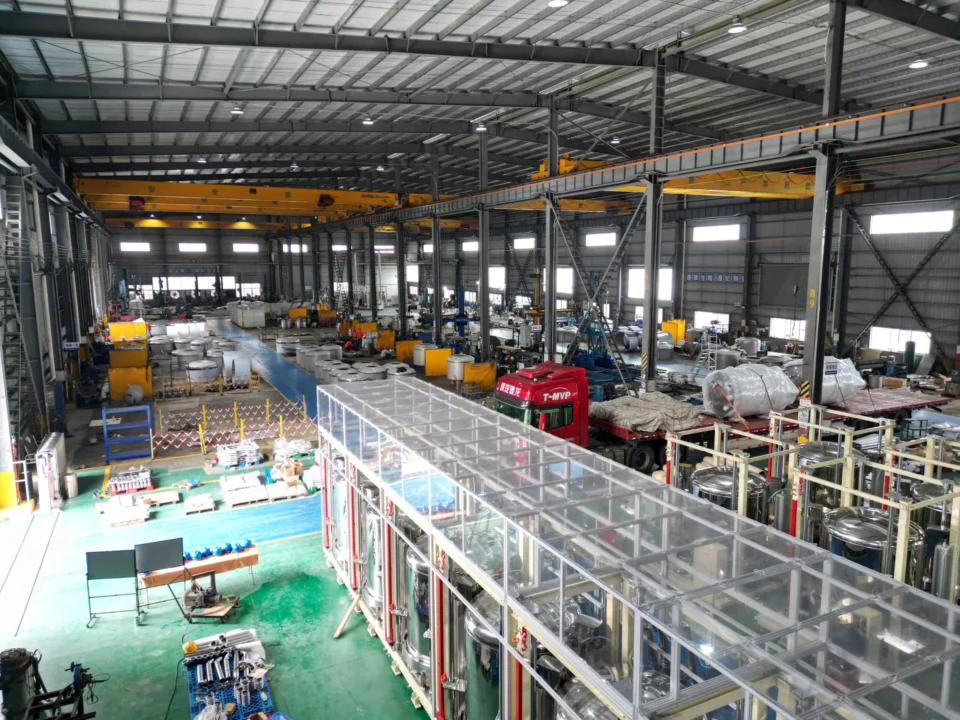
Key Manufacturing and Inspection Steps

Each custom heat exchanger is manufactured according to approved drawings, process requirements and project inspection standards.

Machining & AssemblyTube sheet drilling, tube bundle assembly and baffle plate fabrication.
01

Tube Sheet Drilling and Machining

Tube sheets are drilled and machined according to drawing requirements to ensure tube layout accuracy and assembly fit.

02

Tube Bundle Assembly

Tube bundles are assembled according to tube arrangement, baffle spacing and heat transfer design.

03

Baffle Plate Fabrication

Baffle plates are fabricated to support the tube bundle and guide shell-side flow for stable heat transfer performance.

Welding & FabricationTube-to-tube-sheet connection, shell welding, nozzle and flange welding.
04

Tube-to-Tube-Sheet Welding or Expansion

Tube ends can be welded or expanded according to design requirement, pressure rating and medium condition.

05

Shell Fabrication and Welding

Shells are rolled, fitted and welded according to approved drawings and pressure vessel fabrication procedures.

06

Nozzle and Flange Welding

Nozzles and flanges are welded with attention to alignment, sealing surface, pressure rating and connection requirements.

Testing & ShipmentPressure testing, air tightness testing, NDT, surface treatment and final inspection.
07

Hydrostatic Pressure Testing

Hydrostatic testing is performed to verify pressure resistance before delivery.

08

Air Tightness Testing

Air tightness testing can be arranged when sealing performance is required by the project.

09

RT / UT / PT / MT Inspection as Required

NDT inspection can be performed according to drawing, project specification or inspection requirement.

10

Surface Treatment

Pickling, passivation, blasting or coating can be selected according to material, corrosion condition and installation environment.

11

Final Dimensional Inspection Before Shipment

Dimensions, nozzles, flanges, nameplate, surface condition and shipment protection are checked before packing.

Industry Applications

Heat Exchangers for Industrial Process Applications

Industrial heat exchangers are used in many process systems for heating, cooling, condensation, evaporation and heat recovery. ChannelVessel manufactures custom heat exchangers for chemical, petrochemical, food, pharmaceutical, water treatment and new energy applications based on real operating conditions and project requirements.

Chemical processing heat exchanger applications
Process Industry

Chemical Processing

Heating, cooling, condensation and solvent recovery for chemical production, synthesis, separation and process reaction systems.

Heating Cooling Solvent Recovery
View Industry Solutions
Petrochemical and oil gas heat exchanger applications
Heavy Duty

Petrochemical & Oil Gas

High-pressure and high-temperature process heat exchange for petrochemical production, oil and gas processing and related industrial systems.

High Pressure High Temperature Process Heat Exchange
View Industry Solutions
Food and beverage stainless steel heat exchanger applications
Clean Process

Food & Beverage

Stainless steel heating, cooling and sanitary process systems for food ingredients, beverages, clean water and process liquids.

Stainless Steel Sanitary Process Clean Liquid
View Industry Solutions
Pharmaceutical clean process heat exchanger applications
Controlled Material

Pharmaceutical

Clean process heating and cooling with controlled material selection, surface finish and inspection requirements for pharmaceutical production lines.

Clean Process SS316L Controlled Material
View Industry Solutions
Water treatment heat exchanger applications
Process Water

Water Treatment

Cooling, heating and thermal recovery for process water systems, wastewater treatment, filtration lines and industrial water circulation systems.

Process Water Heat Recovery Industrial Water Systems
View Industry Solutions
New energy heat exchanger and thermal management applications
Energy Systems

New Energy

Thermal management for battery materials, chemical process lines, energy storage systems and related new energy production processes.

Thermal Management Battery Materials Energy Systems
View Industry Solutions
Project Customization Process

How We Customize a
Heat Exchanger for Your Project

You do not need a complete drawing to get started. Just send us your process parameters, and our engineers will take care of the rest.

01

Confirm Medium
and Flow Rate

Review hot side and cold side media, flow rate and fluid characteristics.

02

Review
Temperatures

Check inlet and outlet temperatures for heating, cooling, condensation or heat recovery.

03

Calculate
Heat Duty

Review heat duty, temperature difference and allowable pressure drop.

04

Select Material
and Structure

Choose suitable material, tube size, shell structure and cleaning method.

05

Confirm Drawings
and Layout

Confirm dimensions, nozzles, flange standards, supports and installation space.

06

Manufacture
and Test

Fabricate, inspect, pressure test and prepare the heat exchanger for shipment.

Comparison Section

Shell and Tube, Condenser or Process Cooler:
Which One Do You Need?

Different processes have different thermal requirements. Use this quick comparison guide to identify the right equipment for your application.

Start With Your Process Requirement

Instead of choosing by equipment name first, start from what your process needs to do: transfer heat between liquids, condense vapor, evaporate liquid, cool a process stream, resist corrosion or fit a special layout.

Heating / Cooling
Condensation
Evaporation
Corrosion Resistance
01
Requirement
Liquid-to-liquid heat transfer
Recommended Equipment
Shell and tube heat exchanger
Why It Fits
Suitable for stable heating, cooling or heat recovery between two process fluids.
02
Requirement
Vapor condensation
Recommended Equipment
Condenser
Why It Fits
Designed to cool vapor and convert it into liquid.
03
Requirement
Liquid concentration or evaporation
Recommended Equipment
Evaporator
Why It Fits
Used when heat is required to remove part of the liquid or concentrate the product.
04
Requirement
Cooling process liquid before storage
Recommended Equipment
Process cooler
Why It Fits
Helps reduce product or process stream temperature before storage, packaging or the next process step.
05
Requirement
Corrosive or sanitary medium
Recommended Equipment
Stainless steel heat exchanger
Why It Fits
SS304 or SS316L can be selected for corrosion resistance, clean process or sanitary requirements.
06
Requirement
Special layout or unknown process condition
Recommended Equipment
Custom heat exchanger
Why It Fits
Structure, material, nozzle direction and size can be reviewed according to your process data.
FAQ

Questions Buyers Often Ask Before Ordering a Custom Heat Exchanger

These questions focus on quotation data, material selection, cleaning structure, drawings, inspection and process system requirements.

01 What information do you need to quote a custom heat exchanger?

Please send the hot side and cold side media, flow rate, inlet and outlet temperatures, operating pressure, design temperature, material preference and installation layout. If you already have drawings, nozzle orientation or project standards, you can send them together for a more accurate quotation.

02 Can you manufacture shell and tube heat exchangers according to ASME requirements?

Yes. ChannelVessel manufactures pressure vessels and process equipment, and shell and tube heat exchangers can be designed and fabricated according to project requirements, including ASME-related pressure vessel requirements when specified. Final code, material, inspection and documentation details should be confirmed before production.

03 How do I choose between carbon steel and stainless steel?

Carbon steel is often used for general industrial water, steam or low-corrosion media. Stainless steel such as SS304 or SS316L is usually considered for clean process, sanitary applications or more corrosive media. The final material should be selected based on medium composition, chloride content, temperature, pressure and cleaning requirements.

04 Can the tube bundle be removable for cleaning?

Yes, removable tube bundle designs can be considered when cleaning, maintenance or fouling control is important. Whether a fixed tube sheet, U-tube or removable bundle structure is suitable depends on the medium, pressure, temperature difference, space and maintenance method.

05 Can you design heat exchangers for corrosive media?

Yes. For corrosive media, we review the medium composition, concentration, temperature, chloride content and service condition before selecting material. SS316L, duplex stainless steel or special alloy materials may be considered according to project requirements.

06 Do you provide drawings before production?

Yes. After confirming the main process parameters and project requirements, we can provide drawings for review before production. The drawing can include main dimensions, nozzle position, flange standard, support structure, material and key technical details.

07 What tests are done before shipment?

Testing can include hydrostatic pressure testing, air tightness testing, dimensional inspection and surface inspection. RT, UT, PT or MT inspection can also be arranged when required by drawings, pressure rating, welding specification or project standard.

08 Can you make condensers and evaporators as part of a process system?

Yes. Condensers, evaporators, process coolers and shell and tube heat exchangers can be manufactured as individual equipment or as part of a process system. Please send your process flow, medium, temperature, pressure and installation requirements so we can review the suitable equipment scope.

Ready to Start Your Project

Need a Heat Exchanger for Your Process Line?

Send us your medium, flow rate, inlet and outlet temperature, pressure, material requirement and installation space. Our engineering team will review your process conditions and provide a suitable heat exchanger solution.
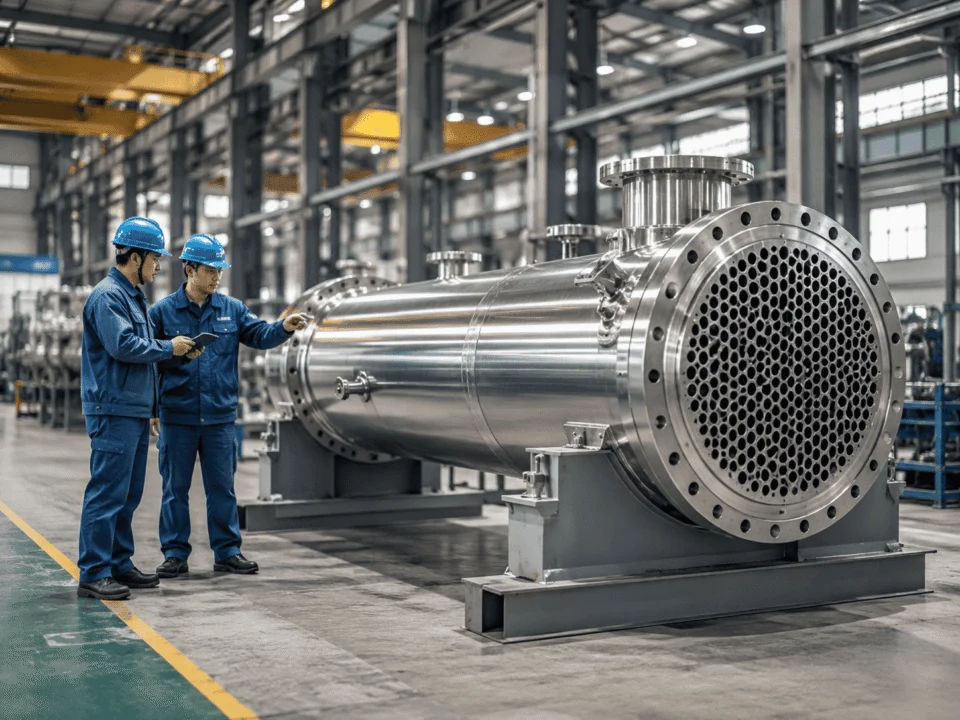
Medium Flow Rate Temperature Pressure Material Installation Space
ChannelVessel heat exchanger engineering and project support
Scroll to Top
DRAWING & FILE REVIEW

Send Your Drawings

Upload your drawings, datasheets or existing specifications. Our engineering team will review the files and respond with technical feedback.

Engineering Review

Drawings, specifications and process requirements

Confidential File Handling

Project files are used only for technical review and quotation

Faster Technical Feedback

Clearer inputs help us respond more accurately and efficiently

DRAWING & FILE REVIEW

Send Your Drawings

Upload your drawings, datasheets or specifications. Our engineering team will review your files and provide technical feedback.

Contact Form Demo (#3)
Project Protected NDA available
12h Response
ASME / PED
AFTER SUBMISSION
01 Review
→
02 Confirm
→
03 Quote
TECHNICAL QUOTATION

Get a
Technical Quote

Tell us what you need. Our engineering team will review your requirements and respond within 12 hours.

Engineered for Your Application

From concept to certified manufacturing

Global Compliance

ASME, PED and other international standards

Expert Support

Direct access to our engineering team

TECHNICAL QUOTATION

Get a Technical Quote

Tell us what you need. Our engineering team will review your requirements and respond within 12 hours.

Contact Form Demo
Project Protected NDA available
12h Response
ASME / PED
AFTER SUBMISSION
01 Review
→
02 Confirm
→
03 Quote