Industrial Columns & Towers for Distillation, Absorption and Stripping Processes
ChannelVessel designs and manufactures custom columns and towers for industrial separation, distillation, absorption, stripping and gas-liquid contact processes. Each tower can be built around your medium, operating pressure, temperature, material requirement, tower internals and site installation conditions.

Columns & Towers Built for Different Separation Processes
Different separation duties require different tower designs. Explore the main column and tower types below to quickly find the right solution for your process, operating conditions and performance target.
DistillationDistillation Columns
Used when liquid mixtures need to be separated by boiling point difference. Common in solvent recovery, product purification, chemical separation and continuous process lines.
PackingPacked Towers
Designed for efficient gas-liquid contact where mass transfer performance matters. Suitable for absorption, stripping and a variety of packing-based process duties.
StrippingStripping Towers
Used to remove volatile components, dissolved gases or light fractions from liquid streams. Often applied in wastewater treatment and process recovery systems.
AbsorptionAbsorption Towers
Built for gas absorption, scrubbing, emission control and chemical treatment duties. Helps transfer target gas components into a liquid phase efficiently.
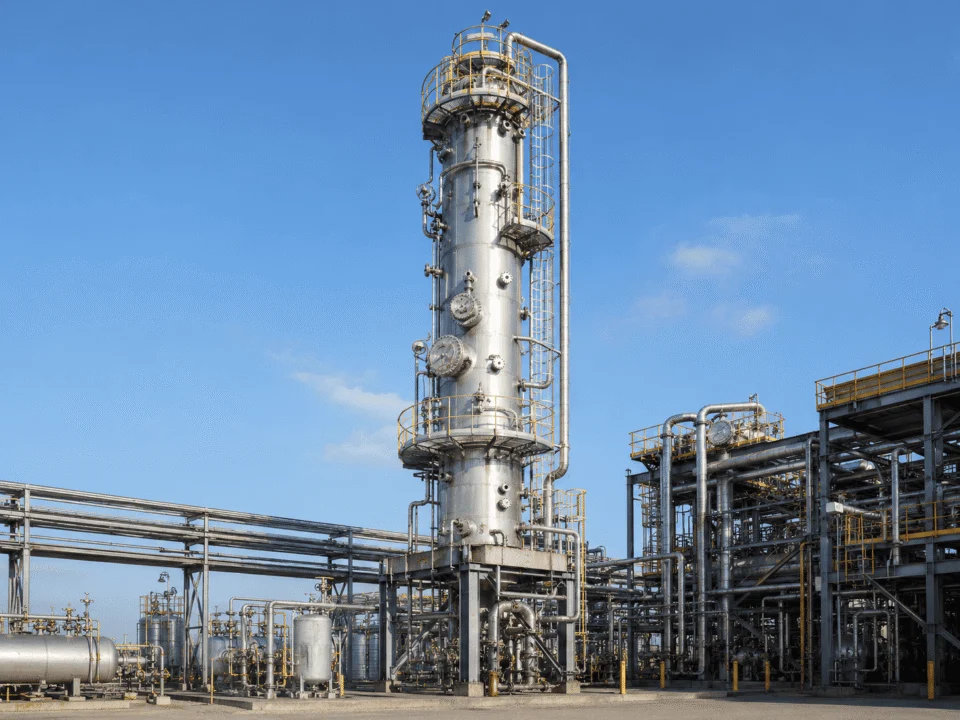
Custom EngineeringCustom Columns & Towers
For projects where standard tower types are not enough. Built around your process medium, layout limits, performance target and tower internals requirement.
Choosing the Right Tower for Your Process
Tower selection depends on your process duty, medium composition, vapor-liquid contact requirements, allowable pressure drop, corrosion risk, and available installation space.
Tower Selection Starts From the Process Duty
We follow a proven logic to match your process objectives with the right tower configuration and internals.
Process Duty and Tower Type Matrix
Use the matrix below as a guide to align your process needs with the most suitable tower type.
Solvent recovery, product purification, chemical separation
Absorption, stripping, scrubbing, mass transfer service
Wastewater treatment, chemical liquid treatment, process recovery
Gas treatment, emission control, acid gas absorption
Special media, special internals, site-limited layout
Note: This matrix is a starting point. Final tower selection should be confirmed by medium, flow rate, operating pressure, temperature, efficiency, pressure drop, and corrosion conditions.
Typical Technical Range for Custom Columns & Towers
ChannelVessel manufactures custom columns and towers for separation, absorption, stripping and gas-liquid contact processes. The following range shows our typical fabrication capability and available options for project evaluation.
Custom Column & Tower Technical Parameters
This parameter range covers common project evaluation points including tower type, pressure, temperature, dimensions, material, internals, surface treatment, testing and standards.
Tower Internals Selected Around Mass Transfer Performance
A column or tower is not only a pressure shell. Its process performance depends heavily on the internal structure, vapor-liquid contact method, liquid distribution, pressure drop and maintenance access.
Trays
Used for staged vapor-liquid contact in distillation and separation processes. Suitable when controlled contact stages are required for stable separation performance.
Random Packing
Suitable for absorption, stripping and general gas-liquid contact applications. Often used where flexible contact area and simple internal configuration are needed.
Structured Packing
Used when lower pressure drop and higher mass transfer efficiency are required. A common option for processes with efficiency or energy-saving requirements.
Liquid Distributors
Help distribute liquid evenly across the packing bed. Proper distribution improves packing performance and reduces channeling risk.
Mist Eliminators
Reduce liquid entrainment and protect downstream equipment. They help capture droplets before vapor or gas leaves the tower.
Support Grids & Hold-down Plates
Keep packing stable during operation and maintenance. These components support packing layers and help prevent movement under process flow.
Engineering note: Final internal configuration should be confirmed according to process duty, vapor-liquid load, pressure drop limit, medium characteristics, tower diameter and maintenance requirements.
Material Selection for Corrosive and High-Temperature Services
Material selection for columns and towers depends on the medium composition, corrosion risk, operating temperature, pressure, cleaning requirement and external service environment. ChannelVessel can fabricate carbon steel, stainless steel and duplex stainless steel columns and towers according to process conditions, drawings and project standards.
Material Choice by Medium and Service Condition
Use this table as a practical starting point for matching process media, corrosion risk and operating conditions with common tower material choices.
Suitable for common process media where corrosion risk is moderate and cost control matters.
Improves corrosion resistance for aggressive liquid or vapor service.
Suitable for clean process requirements, smoother surface treatment and easier cleaning.
Helps reduce corrosion risk in chloride-containing media or difficult service conditions.
Material should be selected according to operating temperature, pressure and medium behavior.
Protects the outer shell when equipment is installed outdoors, insulated or exposed to humid or corrosive environments.
Material should match solvent properties, temperature and project safety requirements.
Selected according to concentration, temperature and corrosion behavior.
Helps meet cleanability, surface finish and contamination control requirements.
External environment, rain, humidity, UV exposure and insulation design affect long-term protection.
Material and Fabrication Capability
ChannelVessel can fabricate stainless steel, duplex stainless steel and carbon steel tower bodies with material records, welding control and inspection support according to project requirements.
Corrosion Protection Is Reviewed With the Complete Service Condition
Material selection should be reviewed together with medium composition, chloride content, operating temperature, pressure, corrosion allowance, cleaning requirement, insulation condition and applicable project standards.
Material confirmation: Final material selection should be confirmed according to medium composition, chloride content, temperature, pressure, corrosion allowance, cleaning requirement, insulation condition and applicable project standards.
Manufactured in Our Pressure Vessel Workshop
Columns and towers require more than vessel fabrication. From plate rolling, welding and forming to heat treatment, surface finishing, inspection and pressure testing, ChannelVessel manufactures process towers in our own pressure vessel workshop with controlled production steps and export-ready documentation.
200,000 m²
Large-scale production space for pressure vessels, columns, towers, storage tanks and custom process equipment.
Welding, Rolling & Forming
Heat treatment, sandblasting, painting, polishing and surface finishing can be arranged according to project requirements.
ASME-Certified Capability
Pressure vessel fabrication capability for projects requiring ASME-related quality control, welding control and documentation support.
X-ray & Pressure Testing
X-ray inspection, dimensional checking, nozzle orientation review, pressure testing and leakage testing can be performed before shipment.
Real Workshop Capability Behind Every Custom Tower
Our workshop supports the fabrication of large vertical columns, tower shells, nozzles, supports and related pressure vessel structures. Production steps are controlled from raw material preparation to final inspection and export packing.

Rolling & Forming
Shell plates formed according to required diameter, thickness and project drawings.
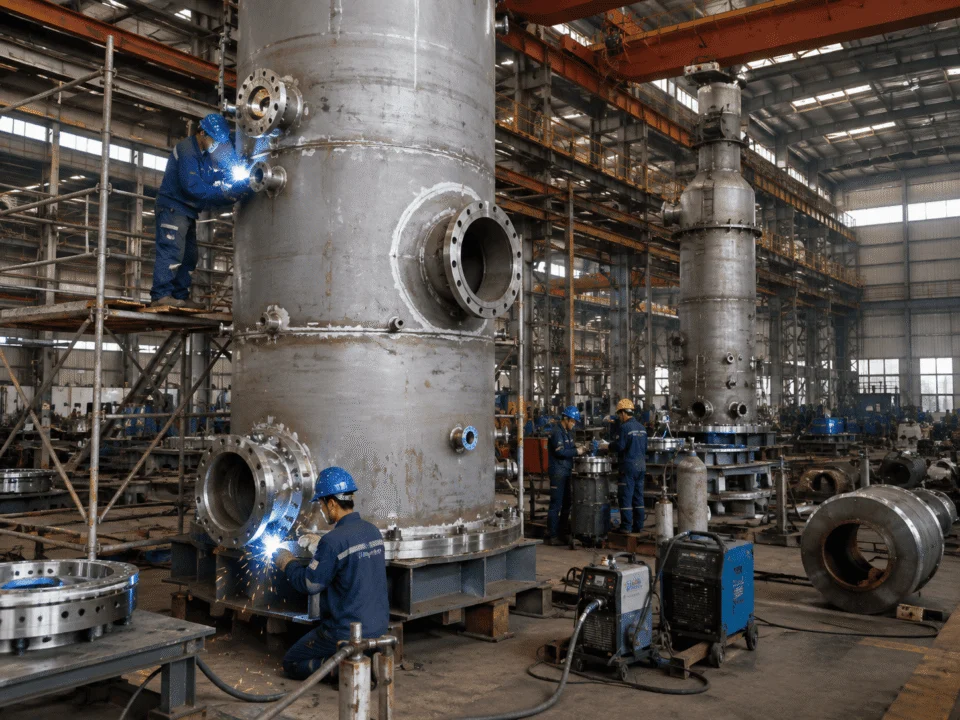
Welding & Assembly
Controlled welding and assembly for tower shells, nozzles and support structures.

Large Tower Fabrication
Tower shells, nozzles, supports and related pressure vessel structures assembled by project drawings.
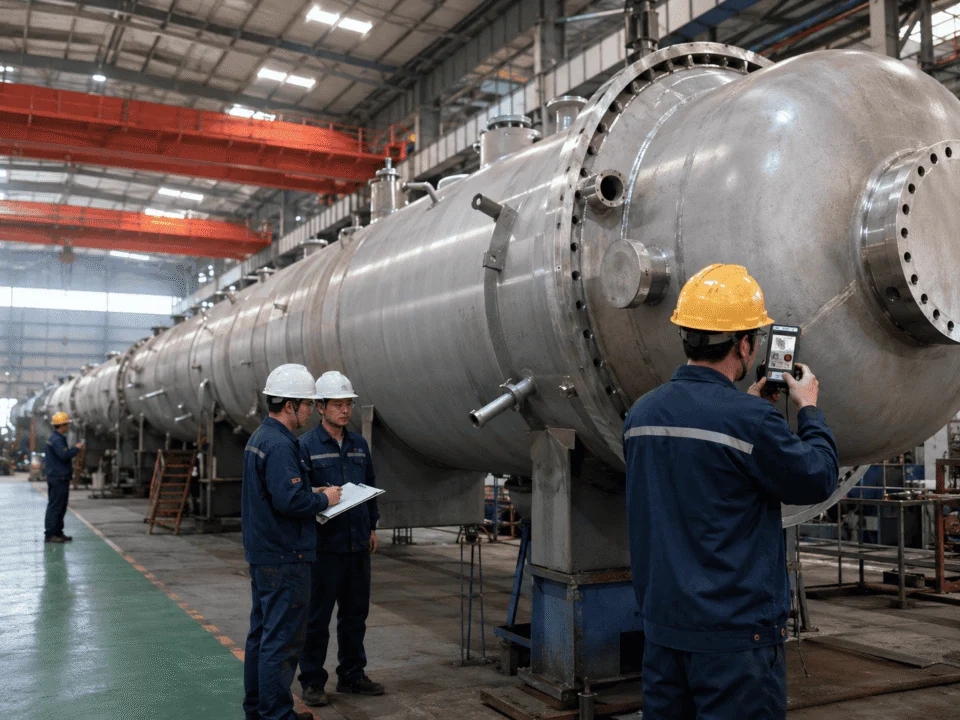
Inspection & Testing
RT / X-ray, UT, pressure test, leakage test and dimensional inspection before delivery.
Controlled Manufacturing Flow for Custom Columns & Towers
Each tower project is produced through controlled workshop steps, from raw material preparation to final packing and delivery.
What We Need to Design Your Column or Tower
A custom column or tower quotation depends on the process duty, medium, flow rate, operating conditions, required separation performance, material and applicable standard. Sharing the information below helps our engineering team review your project faster and recommend a more suitable tower configuration.
Information That Helps Us Review Your Tower Project
The more complete your process data is, the faster we can review tower type, material, internal options, fabrication scope and testing requirements.
Process Purpose
Distillation, absorption, stripping, scrubbing or other separation duty.
Medium Name and Composition
Main liquid, vapor or gas components, concentration and corrosive substances if any.
Flow Rate
Liquid flow rate, gas flow rate or total process capacity.
Operating Pressure and Temperature
Normal operating data and design conditions if already available.
Required Separation Performance
Target purity, removal efficiency, recovery rate or outlet concentration.
Material Requirement
SS304, SS316L, duplex stainless steel, carbon steel or other specified material.
Diameter and Height Limits
Available installation space, transportation limits or site height restrictions.
Internal Type
Trays, random packing, structured packing, distributor, mist eliminator or specified internals.
Drawings or Process Documents
Drawing, datasheet, P&ID, layout drawing or previous equipment reference if available.
Destination Country and Standard
Project country, ASME / GB / PED-related documentation requirement or local standard.
Columns & Towers for Industrial Process Lines
ChannelVessel manufactures custom columns and towers for process lines where separation, absorption, stripping, scrubbing, solvent recovery or gas-liquid contact is required. Equipment can be designed around your medium, operating conditions, material requirements and project standards.

Chemical Processing
For separation, purification, absorption and stripping duties in chemical production lines.

Petrochemical
For process separation, gas-liquid contact, solvent recovery and vapor treatment systems.
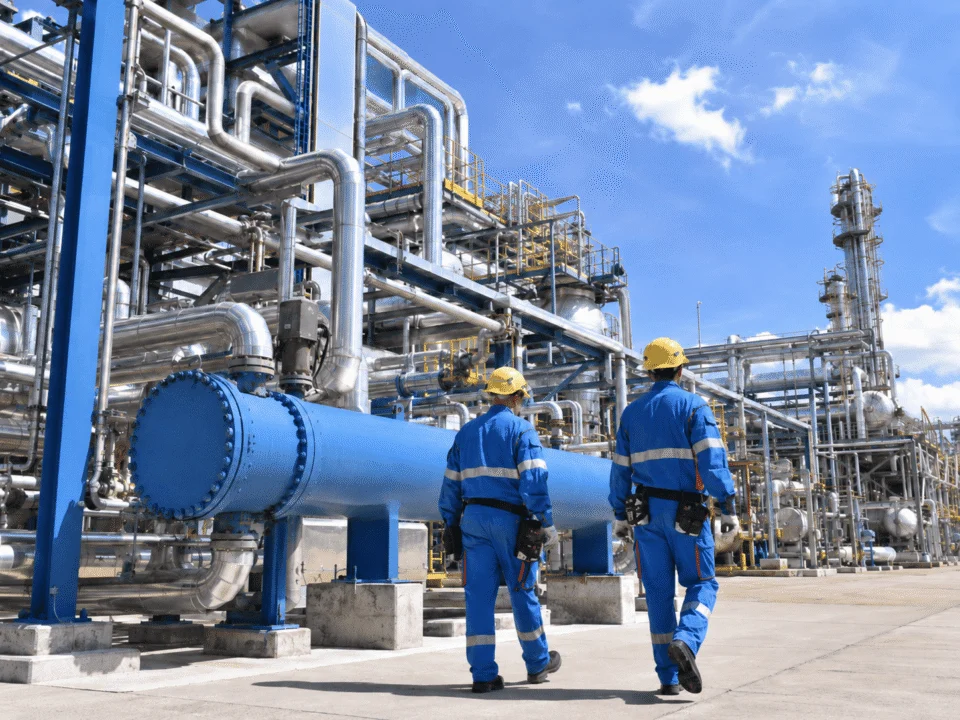
Oil & Gas
For gas treatment, liquid separation, stripping and process tower applications in oil and gas projects.

Solvent Recovery
For recovering solvents through distillation, condensation, purification and process separation systems.
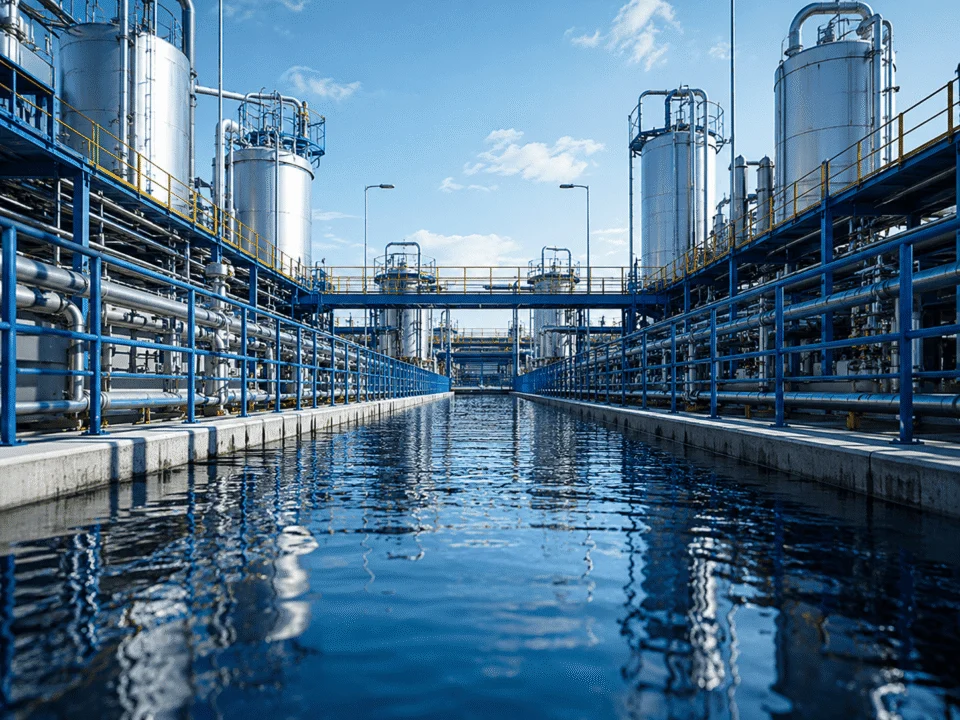
Water Treatment
For stripping, absorption, deodorization and gas-liquid contact duties in industrial water treatment lines.

Pharmaceutical and Clean Process Systems
For clean process towers requiring stainless steel materials, controlled surface treatment and project documentation.
Inspection and Testing Before Delivery
Before delivery, each column or tower is checked against drawings, material requirements, welding records, nozzle layout and testing requirements. Inspection steps can include material certificate review, dimensional checking, weld NDT, pressure testing, leakage testing, surface treatment inspection and packing review according to project standards.
Controlled Inspection Steps Before Shipment
Inspection is reviewed step by step so that dimensions, nozzles, welding, testing and shipping protection match the approved drawings and project requirements.
Material & Document Review
Material certificates, plate markings, project drawings and technical documents are reviewed before final release.
Welding Procedure Control
Welding procedure, welder qualification, weld appearance and welding records are checked according to project requirements.
Dimensional Inspection
Tower diameter, height, shell thickness, straightness, support position and main dimensions are checked against drawings.
Nozzle Orientation Check
Nozzle size, position, orientation, flange face and connection layout are reviewed to reduce installation risk on site.
NDT and Pressure Testing
RT / X-ray, UT, PT, hydrostatic pressure test, pneumatic test or leakage test can be arranged if required.
Surface, Packing and Shipping Inspection
Surface treatment, coating, nameplate, packing protection and shipping condition are checked before loading.
Built for Export, Transport and Site Installation
Large columns and towers need to be considered not only for process performance, but also for transport, lifting, site installation and export delivery. ChannelVessel can review tower height, diameter, weight, nozzle protection, lifting points, packing method and shipment arrangement according to your project destination and site conditions.
Export planning starts before the tower leaves our workshop.
Tower dimensions, lifting points, nozzle protection, packing method and shipment route are reviewed together so the equipment can move from workshop to port and then to the project site with fewer delivery risks.
Discuss Shipping Requirements
Share your destination port, site height limits, lifting condition and transport restrictions. We can review a practical delivery plan around your tower size.
Modular Design Available for Oversized Towers
Oversized columns can be reviewed for split-body or modular delivery when transport height, road limits, container limits or site lifting conditions are restricted.
Lifting Lug and Support Structure Design
Lifting lugs, saddles, skirt supports or temporary supports can be reviewed according to tower weight and handling requirements.
Nozzle Protection During Transport
Nozzles, flanges, manways and external connections can be protected to reduce transport damage before site installation.
Export Packing Arrangement
Wooden saddles, steel frames, flange protection and weather-resistant wrapping can be arranged according to equipment size and shipment method.
Flexible Shipment Options
Container, flat rack, open-top container or bulk vessel shipment can be reviewed according to tower dimensions, total weight, packing method and destination port.
Export Documentation Support
Packing list, invoice, material documents, inspection reports and project delivery documents can be prepared for customs and site handover.
Container Shipment
Reviewed for smaller tower sections, components, internals or equipment that fits standard container limits.
Flat Rack / Open-Top
Reviewed when tower dimensions exceed standard container height or width but still allow containerized project shipping.
Bulk Vessel Shipment
Reviewed for very large towers, heavy equipment or oversized cargo that requires special loading and port coordination.
Frequently Asked Questions About Columns & Towers
Here are some common questions buyers ask before ordering custom columns, towers, tower internals or pressure vessel-based process towers.
In industrial process equipment, “column” and “tower” are often used in similar ways. A column usually refers to a vertical vessel used for separation or mass transfer, such as a distillation column or absorption column. A tower is also a vertical process vessel and may be used for absorption, stripping, scrubbing or gas-liquid contact. The exact name often depends on the process duty, internal structure and industry usage.
We can manufacture distillation columns and custom tower bodies according to drawings, datasheets and project requirements. The fabrication scope can include shell body, heads, nozzles, manways, supports, lifting lugs and related pressure vessel structures. If tower internals are specified, we can also review the required internal arrangement with the project documents before confirming the final supply scope.
Yes, tower internals can be reviewed together with the vessel body when they are included in the project scope. Common internal options include trays, random packing, structured packing, liquid distributors, support grids, hold-down plates and mist eliminators. The final internal configuration should be confirmed according to process duty, vapor-liquid load, pressure drop, tower diameter and separation performance requirements.
For a custom tower quotation, it is helpful to provide the process purpose, medium name and composition, flow rate, operating pressure, temperature, required separation performance, material requirement, tower diameter or height limits, internal type if specified, and drawings or datasheets if available. If your information is not complete, you can still send what you have first, and we will help review what is missing.
Columns and towers can be manufactured for projects requiring ASME-related pressure vessel fabrication, inspection and documentation support. The applicable design code, pressure rating, material, welding requirements, NDT scope and testing method should be confirmed before production. If your project requires ASME documentation or third-party inspection, please provide the project standard and destination country during quotation.
Material selection depends on medium composition, concentration, temperature, pressure, chloride content and corrosion risk. Common material options include carbon steel, SS304, SS316L and 2205 duplex stainless steel. For more aggressive media, special alloy may be reviewed if required. Final material selection should be confirmed according to the actual service condition, corrosion allowance, cleaning requirement and applicable project standards.
Oversized towers can be reviewed for modular design, split-body delivery or special packing when height, diameter or weight exceeds normal transport limits. Shipment methods may include container, flat rack, open-top container or bulk vessel shipment depending on tower dimensions and destination port. Nozzles, flanges, supports and surface finish can be protected during transport to reduce damage before site installation.
Yes, we can manufacture custom columns and towers based on your drawings, process datasheet, P&ID or technical specifications. The project documents help confirm tower type, design pressure, temperature, material, nozzle orientation, internal structure, testing requirements and delivery scope. If you only have basic process information at the early stage, you can send it first for preliminary review.