Chemical Reactors Engineered Around Your Process
Custom chemical reactors designed around reaction chemistry, mixing duty, heat transfer, materials, pressure and control requirements — not vessel volume alone.
Heat Removal Comes Before Heating Method
Jacket, half-pipe or coil is not the first decision. The first question is how much heat must be added or removed, how quickly, and with which utility.
Understand whether the process releases, absorbs or is sensitive to heat.
Define heat-up, cool-down and reaction-control requirements.
Determine how much effective area is needed for the process duty.
Steam, hot water, thermal oil, cooling water or chilled media.
Select the heat-transfer geometry after the thermal basis is clear.

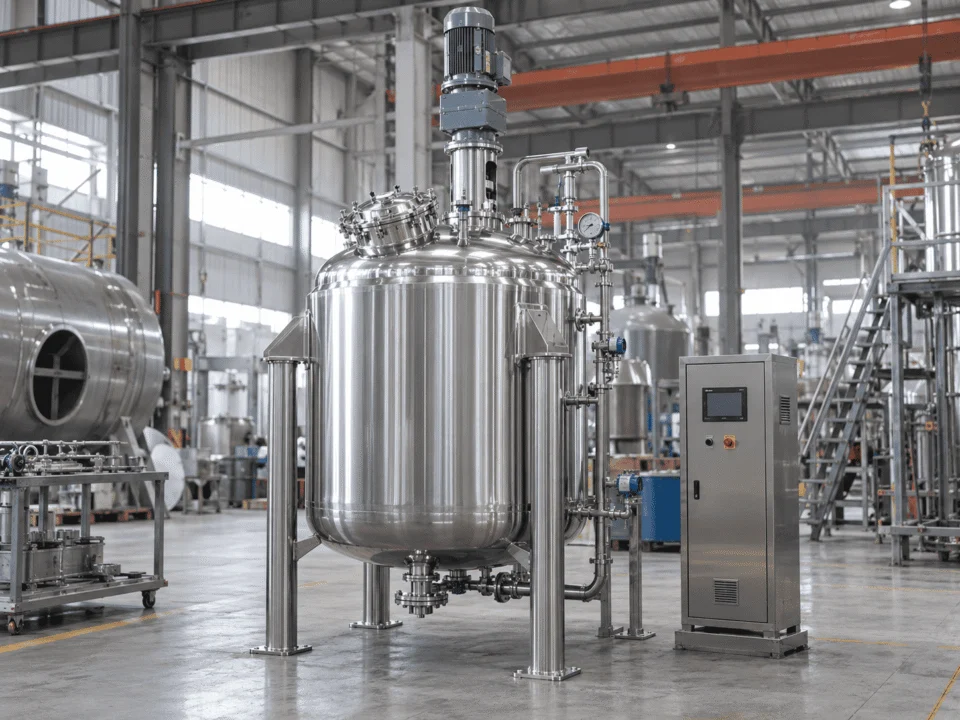
A real jacketed or half-pipe reactor under fabrication, showing welds and heat-transfer construction clearly.
If heat generation exceeds the system's ability to remove heat, reactor temperature can rise rapidly. Cooling capacity, reaction conditions and control strategy therefore need to be considered together.
Mixing Is a Process Requirement, Not an Impeller Choice
The impeller should be selected after the mixing objective is clear. Blending liquids, suspending solids, dispersing gas and moving a high-viscosity batch all require different flow patterns, torque and geometry.
Select the main duty to see which design variables matter most.

Reactor geometry, baffle arrangement, shaft position and impeller configuration are engineered together around the required mixing duty.
Prioritize circulation and batch uniformity.
For miscible liquids, the design should create effective top-to-bottom and radial circulation without adding unnecessary shear or motor power.
A circulation-focused impeller with suitable diameter, clearance and speed is typically more important than maximizing RPM.
Where Reactor Designs Commonly Fail
Many reactor problems are not caused by one bad component. They come from process conditions, geometry, mixing, heat transfer, materials and scale-up decisions that do not work together as a system.
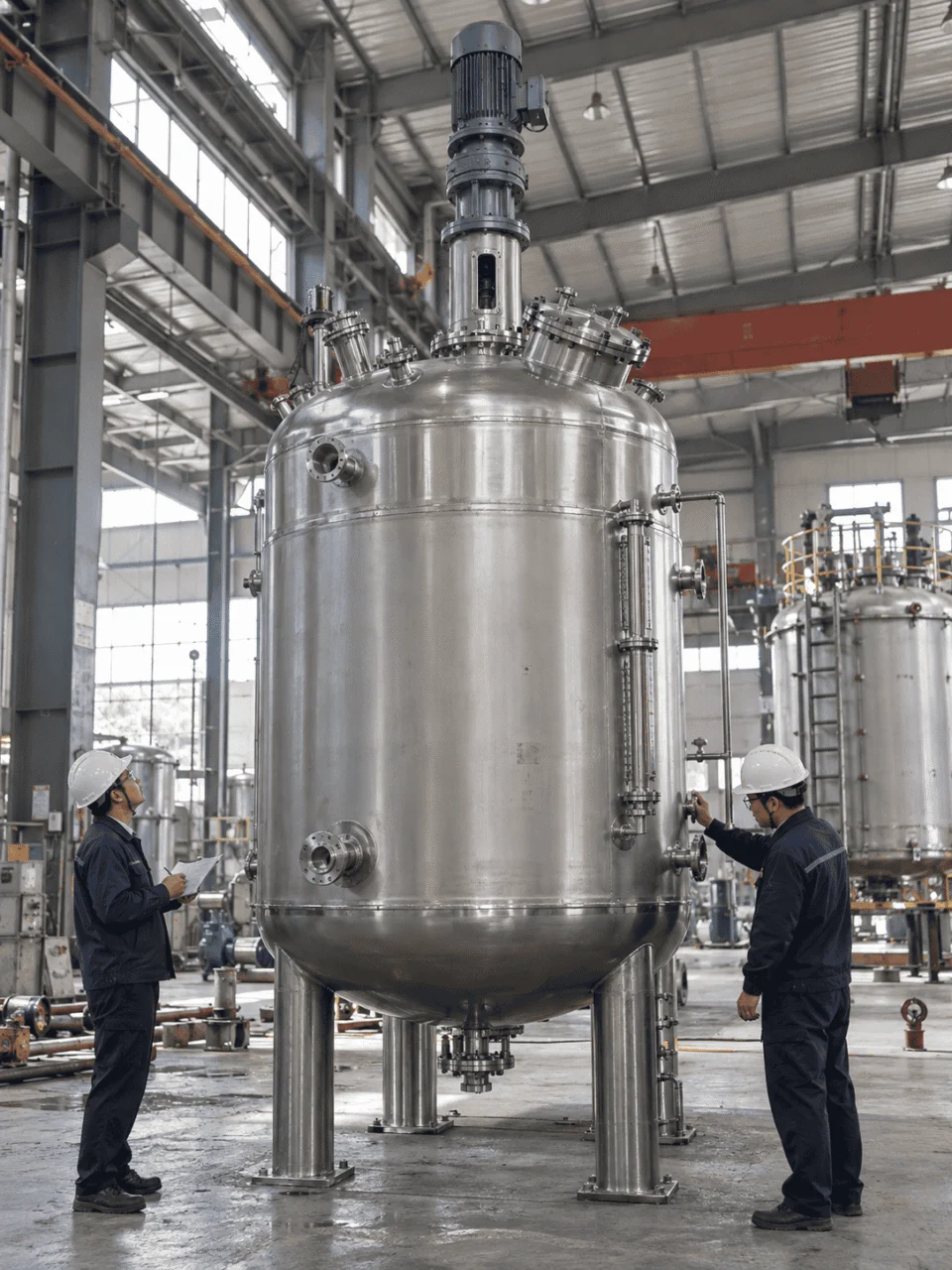
Hot spots can appear when heat is generated faster than it is removed.
The reactor may have enough nominal jacket area on paper, but poor circulation, insufficient utility flow or a fast exothermic reaction can still create local temperature rise.
Do not evaluate cooling capacity separately from mixing and reaction heat generation.
Reactor reliability improves when thermal, mixing, mechanical and material decisions are checked against the same process basis.
From Lab Reactor to Production Reactor
Scaling a reactor is not simply a matter of increasing every dimension by the same ratio. Mixing, heat transfer, circulation and mechanical behavior change as vessel size increases.

Illustrative scale-up path only. Final production design depends on the actual process, chemistry, utility and operating criteria.
Heat-transfer area does not grow as quickly as reactor volume.
As a reactor becomes larger, the amount of reacting material increases faster than the available vessel surface area. A production reactor may therefore need a different jacket arrangement, added coil area or a different cooling strategy.
Recalculate heat-up and cool-down duty.
Check reaction heat against available cooling capacity.
Confirm utility flow and temperature at production scale.
Keep the process objective constant, then redesign the equipment around the new scale.
Choose the Configuration Around the Process Duty
Reactor configuration should follow the process requirements already defined: heat transfer, mixing, pressure, vacuum, materials and control. The vessel type is the result of those decisions, not the starting point.
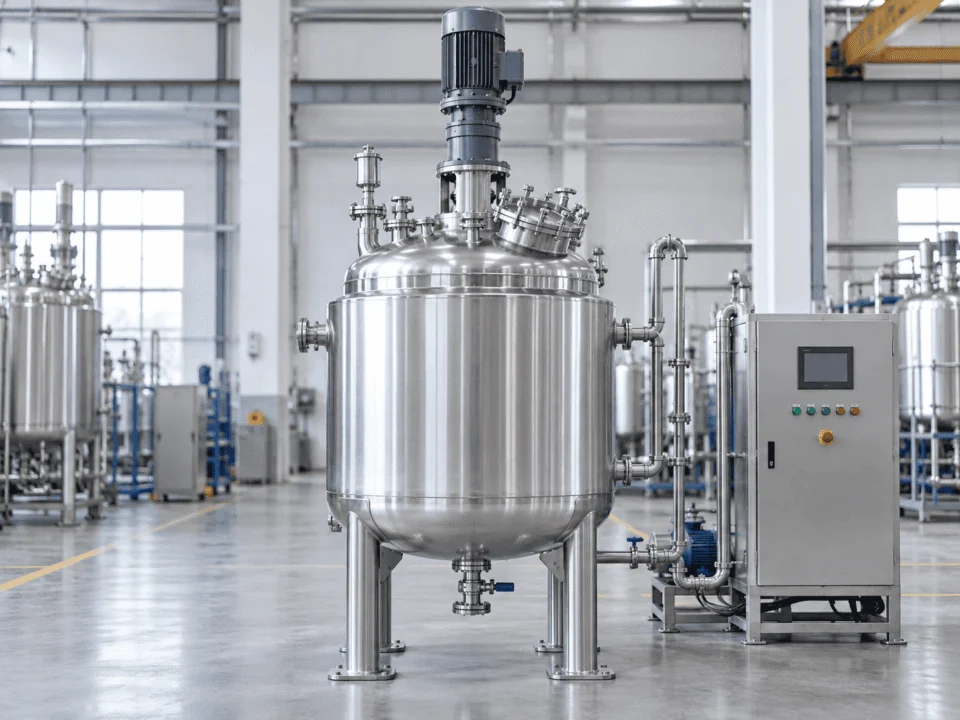
Best image direction: a vertical stainless-steel reactor with visible jacket construction, top-entry agitator and process nozzles.
Jacketed Reactor
A jacketed reactor is suitable when heating, cooling or temperature control is a primary part of the process design. Jacket geometry should be selected from the required duty and available plant utility.
Build the Reactor So the Final Documentation Matches the Equipment
Fabrication quality is not only what the finished reactor looks like. Material traceability, welding records, inspection, pressure testing and final documentation should all connect back to the approved design basis.
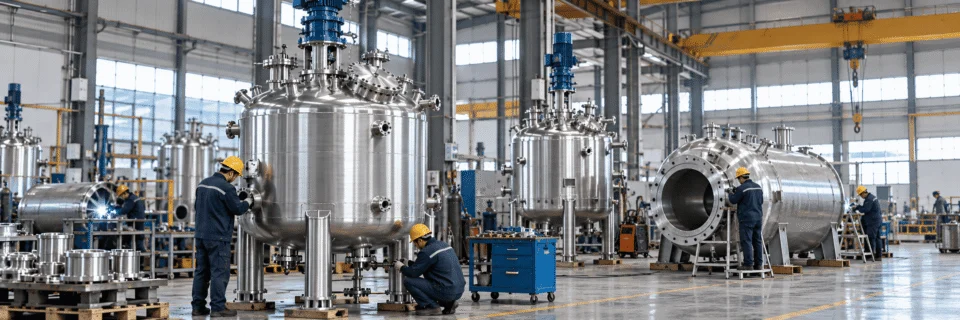
Best image direction: a real stainless-steel reactor under fabrication or final inspection inside a Chinese factory, with welding, dimensional inspection or pressure-test preparation visible.
Confirm the material before fabrication starts.
Plates, heads, nozzles and other pressure-retaining parts should be identified against the required material specification before they enter fabrication.
Use qualified procedures and qualified welders.
Joint preparation, welding sequence, filler material and welder qualification should match the approved fabrication requirements and applicable code basis.
Verify critical welds before the vessel is closed out.
Visual inspection and required nondestructive examination should be completed at the specified stages so defects are found before final assembly or testing.
Test the completed pressure boundary against the design basis.
Hydrostatic or other approved pressure testing is performed after fabrication and inspection are complete, according to the required code and project procedure.
Check dimensions, finish, nozzles and documentation before shipment.
Final inspection should confirm the reactor matches the approved drawing, required surface condition, nozzle orientation and ordered accessories.
What the buyer should be able to receive with the reactor
Material certificates and traceability records for applicable pressure-retaining parts.
Applicable WPS, PQR, welder qualification and weld identification records.
Inspection reports for the nondestructive examination required by the project.
Test pressure, holding condition, result and instrument information as applicable.
Key dimensions, nozzle orientation and final equipment configuration checked against drawing.
Approved or as-built drawings reflecting the manufactured reactor configuration.
Chemical Reactors for Different Process Environments
Different industries place different demands on mixing, heat transfer, corrosion resistance, pressure control and documentation. The reactor configuration should follow the process environment rather than a fixed product template.

Chemical Processing
For corrosive, heated, mixed or pressurized chemical processes where material selection, sealing and welding quality directly affect equipment performance.
View Chemical Industry →
Petrochemical Processing
For higher-temperature, higher-pressure and hydrocarbon process conditions where mechanical design, inspection records and project documentation matter.
View Petrochemical Industry →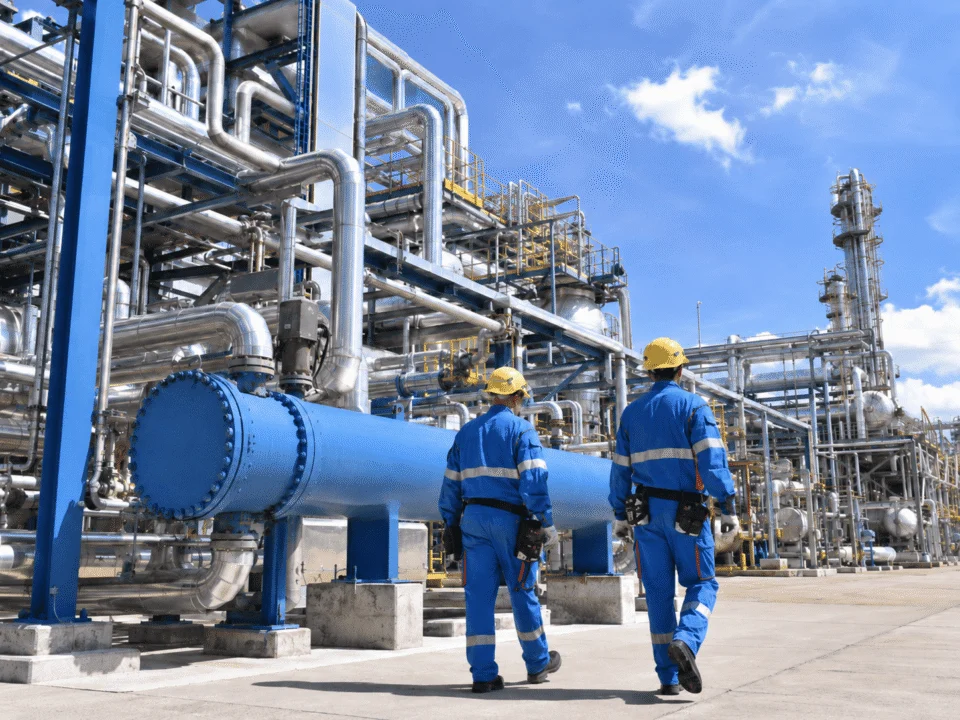
Oil & Gas Processing
For pressure holding, gas-liquid service, separation and process duties where equipment reliability, nozzle design and traceability are important.
View Oil & Gas Industry →
Pharmaceutical Processing
For cleanable stainless-steel process equipment where internal finish, dead zones, material compatibility and cleaning method cannot be ignored.
View Pharmaceutical Industry →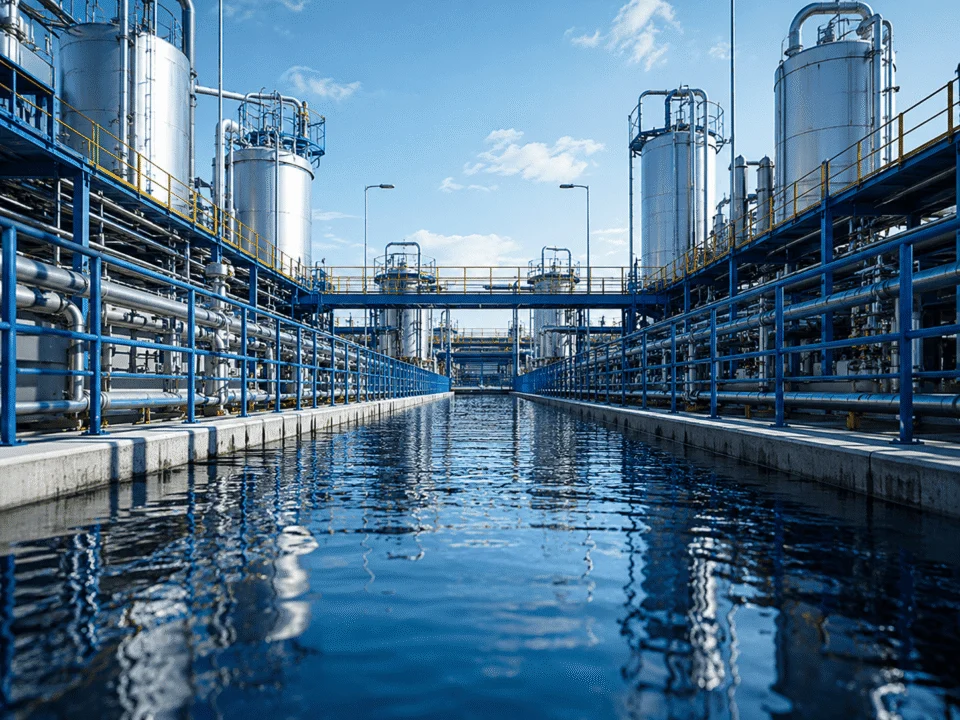
Water Treatment
For filtration, chemical dosing, separation and pressure-holding applications where vessel internals, corrosion resistance and process integration matter.
View Water Treatment →
New Energy Materials
For battery materials, solvent handling, reaction and thermal processes where corrosion resistance, sealing, cleanliness and solids handling may affect output.
View New Energy Industry →