ChannelVessel Intelligent Equipment Co., Ltd. Contact Us
High Pressure Vessel Manufacturer

High Pressure Vessels for Custom Industrial Applications

Custom high pressure vessels engineered around your operating pressure, temperature, process medium, capacity and installation requirements.

Send us your drawings, datasheet or operating conditions. Our engineering team can review design pressure, materials, vessel configuration, nozzle requirements, inspection and testing requirements before fabrication begins.

Up to 10 MPa

Project pressure reviewed against service conditions.

Custom Engineering

Designed around your process and installation requirements.

Inspection & Testing

NDT and pressure testing arranged to project requirements.

Export Project Support

Documentation and shipment prepared for international projects.
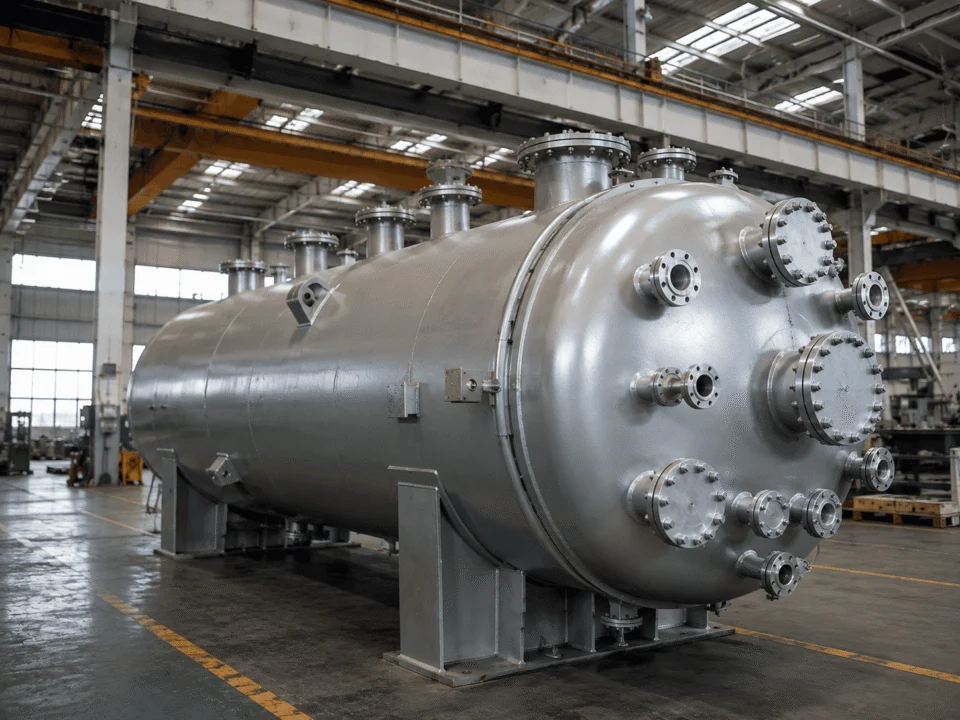
High Pressure Service
Factory-Built
High pressure vessel manufactured by ChannelVessel
Built Around Process Conditions Pressure, temperature, medium and nozzle requirements should be confirmed before fabrication starts.
Engineering Inputs

Engineering Inputs That Define Your Vessel

Accurate project information at the beginning helps define a vessel that is suitable for the actual pressure, medium, capacity and project requirements.

Provide complete information, get a more accurate design review and quotation.
High pressure vessel manufactured in a pressure vessel factory
01
bar

Pressure &
Temperature

  • Design pressure
  • Operating pressure
  • Design temperature
  • Operating temperature
02

Process
Medium

  • Gas or liquid
  • Chemical composition
  • Corrosiveness
  • Density / viscosity
03

Capacity &
Volume

  • Required capacity
  • Working volume
  • Liquid level range
  • Hold-up / residence time
04

Nozzles &
Connections

  • Nozzle size and quantity
  • Connection standard
  • Orientation
  • External piping loads
05

Code & Project
Requirements

  • Required design code
  • NDT / inspection scope
  • Documentation
  • Project / site requirements
Not sure what information is required? Send us the available process conditions first. Our team can help identify the missing project inputs.
Send Your Requirements
Process Requirements

High Pressure Vessels for Different Process Duties

The same pressure rating can lead to different vessel configurations depending on the process duty. Selecting the right design inputs helps define a vessel that matches the actual service conditions.

Gas Buffer & Receiver Service

Typical Duty

Receiving compressed gas, stabilizing pressure and providing buffer volume between compressors, process equipment or downstream users.

Key Design Inputs
Gas composition
Operating pressure
Design pressure
Buffer volume
Pressure fluctuation
Flow rate
Safety connections
Drain requirements
Configuration Considerations
Horizontal or vertical arrangement based on capacity and footprint
Piping layout and maintenance access around major connections
Pressure cycling or compressor pulsation reviewed before final design
Drain and safety connections positioned for actual service conditions

Pressure cycling and compressor pulsation can change the engineering requirements even when the nominal pressure stays the same.

Explore High Pressure Reactors

Pressurized Liquid & Chemical Service

Typical Duty

Storage, transfer or conditioning of liquids and chemicals under pressure. Common in chemical processing, water treatment and industrial utilities.

Key Design Inputs
Liquid composition
Operating temperature
Design pressure
Corrosion tendency
Required capacity
Drainability
Nozzle arrangement
Cleaning requirements
Configuration Considerations
Nozzle sizing and orientation for safe operation and maintenance
Corrosion allowance and material selection for media compatibility
Internal features for level control, mixing or heat transfer when required
Support type and layout based on weight, dynamics and site conditions

Two vessels with the same pressure may require different materials, corrosion allowances and connection details when the process media are different.

Explore High Pressure Reactors

Process Holding & Residence Service

Typical Duty

Controlled residence time, intermediate pressure holding and stable feed conditions before the next stage of the process.

Key Design Inputs
Residence time
Working volume
Operating level
Pressure stability
Inlet arrangement
Outlet arrangement
Instrumentation
Control connections
Configuration Considerations
Geometry and nozzle positions arranged for stable process flow
Usable volume and liquid level range defined before fabrication
Instrumentation and control connections integrated into the vessel layout
Downstream feed requirements considered when sizing outlets and internals

This duty is different from ordinary storage because pressure, residence time and process control all influence the final vessel arrangement.

Explore High Pressure Reactors

High Pressure Reaction Service

Typical Duty

Chemical reaction, mixing, agitation, heating or cooling under pressure where the vessel becomes part of the reaction process itself.

Key Design Inputs
Reaction medium
Reaction pressure
Reaction temperature
Agitation requirement
Heating / cooling duty
Residence time
Gas addition
Process controls
Configuration Considerations
Agitator loads and shaft sealing considered in the vessel design
Jacket or coil configuration matched to heating and cooling duty
Reaction heat and gas addition reviewed with process control requirements
Nozzle layout coordinated with instruments, feed lines and safety devices

When reaction, agitation or thermal control is part of the duty, the engineering scope moves beyond a simple pressure vessel.

Explore High Pressure Reactors
Pressure-Driven Design

What Changes as Vessel Pressure Increases?

Higher pressure impacts far more than wall thickness. As pressure rises, it can change the pressure boundary, openings, connections, materials and cyclic-service evaluation.

01

Shell & Head Thickness

Higher pressure requires increased thickness and verification for stability.

02

Head Geometry

Higher pressure can change head type and the way it is designed and formed.

03

Nozzle Reinforcement

Nozzle size and pressure increase reinforcement area and local thickness.

04

Flanges & Connections

Higher pressure increases flange class, connection rating and joint demands.

05

Material Strength

Material allowable strength and toughness must suit pressure and temperature.

06

Cyclic Service

Pressure cycling can amplify fatigue effects and require stricter evaluation.

High pressure vessel engineering blueprint
!
Buyer Note

Same Pressure ≠ Same Vessel Design

The same nominal pressure can lead to different vessel designs depending on diameter, temperature, process medium, corrosion allowance and pressure cycling.

Learn more about pressure vessel design basics
Critical Design Details

Critical Areas Reviewed in High Pressure Vessel Design

High-pressure vessel design is not evaluated only by overall shell thickness. Openings, transitions, closures, supports and welded junctions can introduce local loads or geometric changes that require individual engineering review.
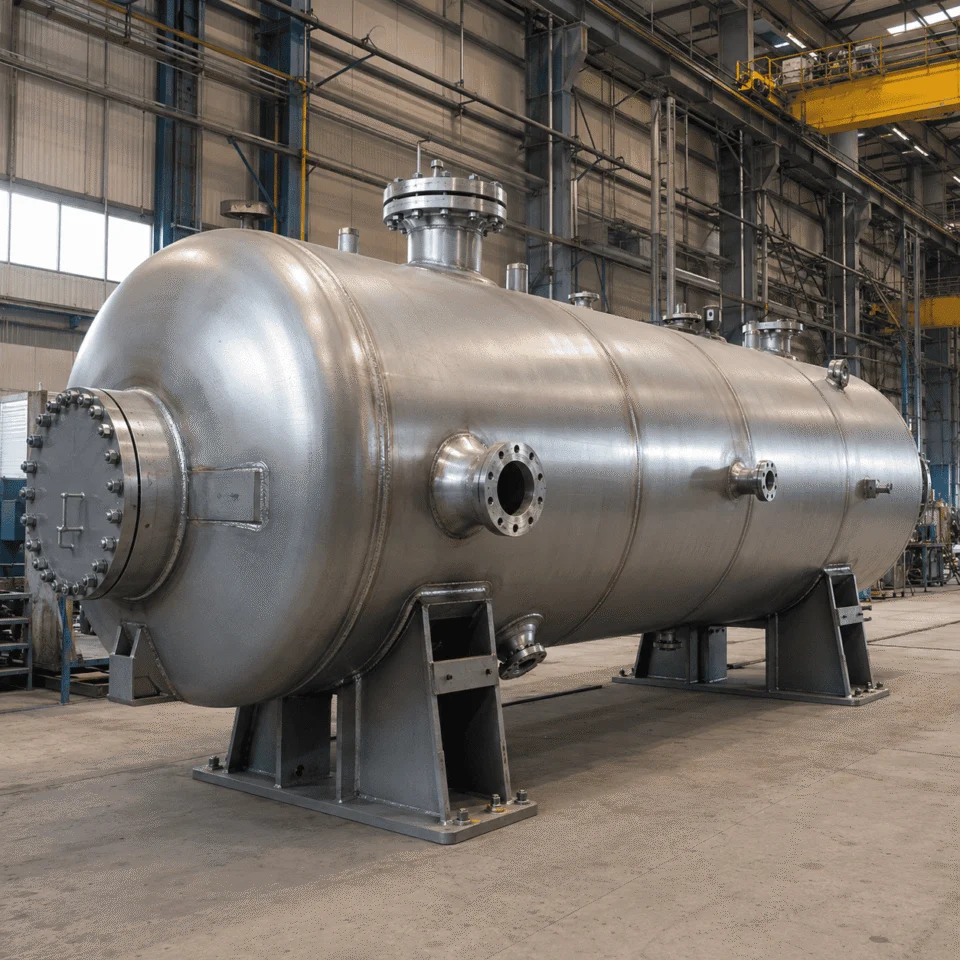
Critical structural areas of a high pressure vessel
Engineering Review Zones
Engineering Review

Five Areas That Deserve Local Attention

Local details can govern the final design. Adequate overall shell thickness does not automatically mean every opening, junction or support area is acceptable.
Material Selection

Materials Selected Around Pressure, Temperature and Process Media

Material selection for a high-pressure vessel should balance mechanical performance, corrosion resistance, temperature, fabrication requirements and project specifications.

Material Route Best Considered When Key Review Factors

Carbon Steel

General industrial service where corrosion and temperature remain manageable.

Carbon Steel Pressure Vessels

Typical Selection Logic

Suitable when the process medium permits carbon steel and the required strength, toughness and design temperature can be met.

  • Corrosion allowance
  • Design temperature
  • Medium compatibility
  • Required toughness
  • Coating or lining if specified

Stainless Steel

SS304, SS316L and project-specified stainless steels for corrosive or clean-process service.

Stainless Steel Pressure Vessels

Typical Selection Logic

Considered when corrosion resistance, product cleanliness, contamination control or process compatibility drives material choice.

  • Required stainless grade
  • Chloride exposure
  • Surface requirements
  • Design temperature
  • Cleaning and contamination control

Low-Alloy / Higher-Strength Steel

For projects where mechanical properties, temperature or toughness requirements exceed general material routes.

Typical Selection Logic

Used when higher mechanical performance or project-specific pressure-temperature requirements justify a more specialized steel grade.

  • Required strength
  • Toughness requirement
  • Heat treatment
  • Welding procedure
  • Code and project acceptance

Special / Corrosion-Resistant Materials

Duplex stainless, nickel-alloy, clad or other project-specified constructions for severe service.

Typical Selection Logic

Considered when aggressive media, chloride service, high corrosion risk or strict material-purity requirements cannot be addressed economically by standard grades.

  • Process compatibility
  • Corrosion mechanism
  • Material availability
  • Fabrication feasibility
  • Client material specification
Do not specify only “carbon steel” or “stainless steel.” For quotation and engineering review, provide the process medium, pressure, temperature, corrosion conditions and any required material specification or client standard.
Controlled Fabrication

Manufacturing and Welding Control for High Pressure Vessels

High-pressure vessel fabrication depends on more than producing a sound-looking weld. Joint preparation, fit-up, welding procedure, thermal control and dimensional traceability must remain consistent with the approved design throughout fabrication.
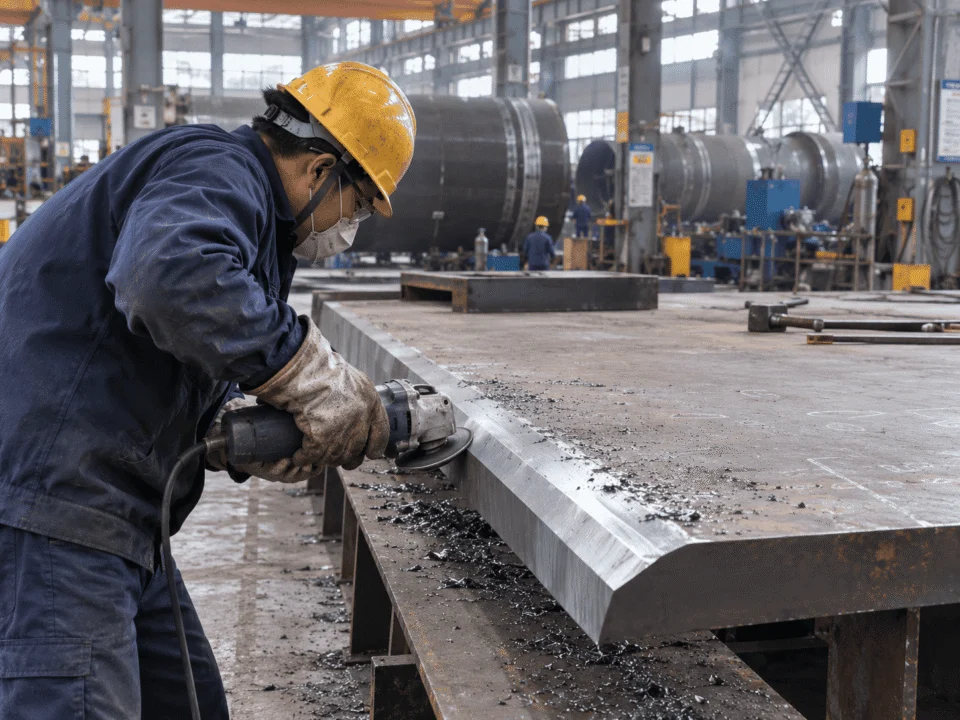
High pressure vessel joint preparation and groove edge condition control High Pressure Vessel Fabrication
Controlled fabrication turns approved engineering into a reliable pressure boundary. Preparation, alignment, welding sequence and traceability must be controlled before final inspection begins.
Welding Control Panel

Joint Preparation Before Welding

Groove geometry, edge condition and preparation quality affect fit-up, penetration and the consistency of the final welded joint.

A
Before WeldingConfirm material identity, groove preparation, cleanliness and joint condition before welding starts.
B
During PreparationKeep prepared joint surfaces protected from contamination and damage during assembly.
C
After PreparationVerify bevel condition and joint readiness before fit-up approval.
Inspection cannot compensate for uncontrolled fabrication. Manufacturing quality has to be built into the vessel before NDT, pressure testing and final documentation confirm the result.
Current Control Point Joint Preparation & Edge Condition

Plate edges, bevels and joint surfaces are prepared to match the required joint configuration before fit-up and welding begin.

Pre-Weld Control
Inspection & Testing

Verification Before a High Pressure Vessel Is Released

Fabrication is followed by defined inspection and testing steps to verify weld quality, dimensions, pressure-boundary integrity and project documentation before the vessel is released for shipment.

01
Inspection Gate

Visual & Dimensional

Final geometry and visible fabrication details are checked against the approved drawing and project requirements.

Overall dimensions Nozzle orientation Support position Weld appearance
02
Inspection Gate

Non-Destructive Examination

NDT methods are selected according to material, weld category, design code and project inspection requirements.

VTPTMTUTRT
Pressure Verification

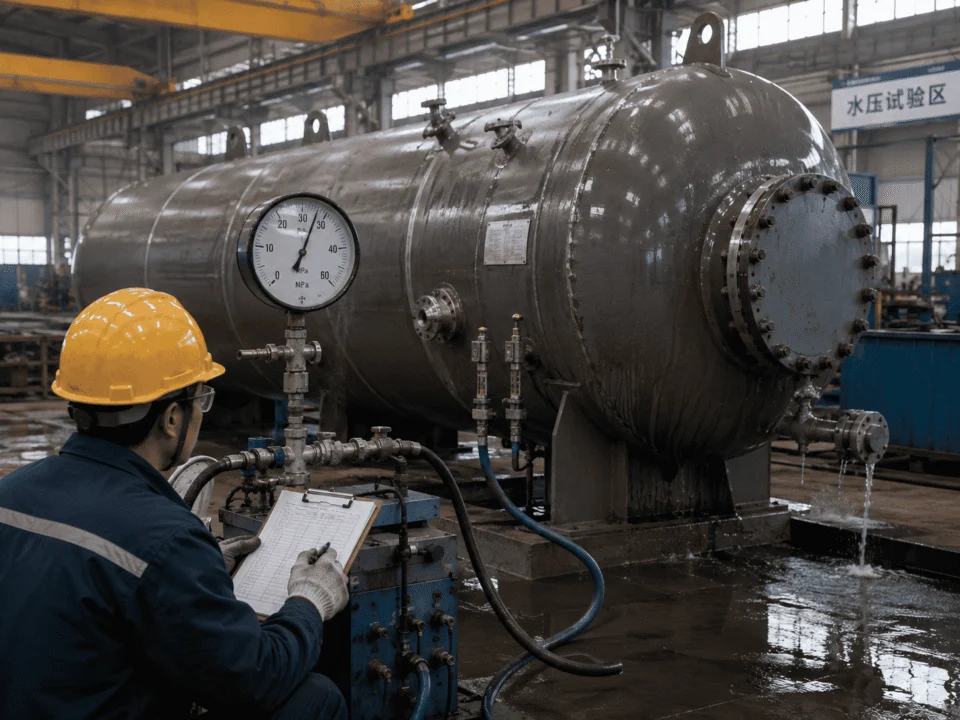
Hydrostatic Pressure Test

Test pressure and procedure are determined according to the applicable design code and approved project requirements.

Pressure-boundary integrity Welded joints Leakage observation
04
Final Gate

Inspection Review & Release

Inspection records are reviewed together before the vessel is released for shipment or the next project stage.
Ready for Release
Hydrostatic pressure testing of a high pressure vessel
Hydrostatic Pressure Test
Pressure testing verifies the completed pressure boundary before release. Testing is carried out under an approved procedure after the required fabrication and inspection stages are complete.
Verification Record

What Is Reviewed Before Final Release?

The release decision should be supported by inspection and test records that match the agreed project scope.

A
NDT ReportsRequired examination results and acceptance records for relevant pressure-boundary welds.
B
Pressure Test RecordApproved test procedure, test conditions and recorded result for the completed vessel.
C
Final Dimensional CheckCritical dimensions, nozzle orientation and fabrication geometry verified against the approved drawing.
D
Witness & Release StatusClient or third-party witness points are closed before final release when required by the project.
Pneumatic testing is not treated as a routine substitute for hydrostatic testing. It may be considered only where hydrostatic testing is impractical and where the applicable procedure, risk controls and project requirements permit it.
Inspection scope should be confirmed before fabrication begins. Required NDT methods, witness points, pressure-test requirements and third-party inspection should be defined early because they can affect fabrication sequence, documentation and project schedule.
Documentation & Traceability

Project Documentation and Traceability for High Pressure Vessels

A high-pressure vessel project should be supported by records that connect the approved design, pressure-boundary materials, welding, inspection and final test results into one traceable documentation package.

Record GroupTypical DocumentationStatus
D

Design Documents

Engineering records aligned with the approved project basis.

Approved GA DrawingFabrication DrawingDatasheetCalculation Documents as Agreed
Project Dependent
M

Material Records

Records connecting pressure-boundary components back to material identification.

Material CertificatesHeat Number TraceabilityPlate / Forging / Flange RecordsPMI When Specified
Available as Required
W

Welding Records

Documentation linking welding procedures and personnel to fabrication records.

WPSPQRWelder QualificationsWeld MapWeld Identification
According to Scope
I

Inspection & Test Records

Formal records produced from the agreed verification and testing scope.

NDT ReportsDimensional InspectionHydrostatic Test RecordHeat Treatment Record When ApplicableFinal Inspection Report
Per Inspection Plan
R

Final Documentation Package

Agreed project records compiled for final review, handover and shipment.

Approved DrawingsMaterial CertificatesWelding RecordsInspection ReportsPressure Test RecordApplicable Certificates
Final Project File
Define the documentation package before fabrication starts. If your project requires third-party inspection, specific certificates, document legalization, customer templates or country-specific records, include these requirements with the initial inquiry or purchase specification.
Send Documentation Requirements
Delivery & Site Readiness

Prepared for Transport, Handover and Site Installation

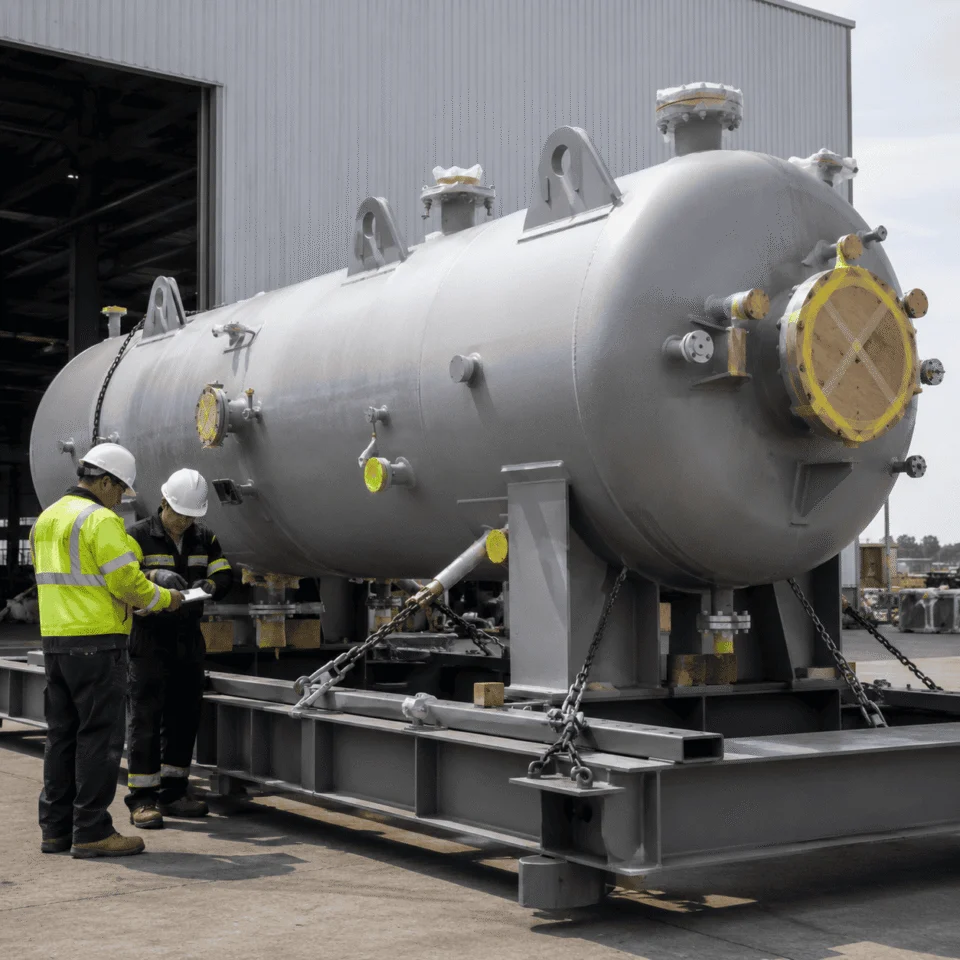
Final inspection is not the last project step. Shipping configuration, lifting arrangements, connection protection and installation interfaces should be reviewed before the vessel leaves the factory.

01
Factory ReadyInspection and release requirements closed
02
Transport ReadyProtection, lifting and shipping configuration confirmed
03
Site ReadyInterfaces and installation references prepared
Pre-Shipment Checklist

Before the Vessel Leaves the Factory

Transport Configuration

Shipping orientation, temporary supports, lifting arrangement and dimensional limits are reviewed for the actual vessel size and weight.

Transport Ready

Connection Protection

Flange faces, threaded connections, instrument openings and loose accessories are protected for transport as required.

Protected

Installation Interfaces

Nozzle orientation, support locations, anchor interfaces and key installation dimensions are checked against the approved project arrangement.

Interface Checked

Handover Information

Relevant GA drawings, nozzle information, lifting references, packing details and project-specific installation documents are prepared for handover.
Ready for Site
High pressure vessel lifting and transport preparation
Transport & Handover Preparation
Shipping preparation should protect both the vessel and the installation interfaces. Large-vessel transport, lifting and site access constraints are best considered before fabrication is fully finalized.
Tell us about site and transport restrictions early. If your project has container limits, road restrictions, lifting limits, restricted access or fixed foundation interfaces, provide these conditions before the vessel design is finalized.
Send Site Requirements
Applications

Where High Pressure Vessels Are Used

High-pressure vessels can serve different roles across gas, liquid, chemical and reaction systems. The correct vessel configuration depends not only on pressure, but also on how the vessel interacts with the surrounding process.

Gas Service

Gas Buffer & Receiver Systems

Vessel Role

Pressure stabilization and temporary gas volume within compressed-gas, utility and process systems.

Define for Your Project
Gas Pressure Range Volume Cycle Frequency
Process Service

Chemical & Petrochemical Processing

Vessel Role

Pressurized holding, receiving, buffering and intermediate process service within chemical production systems.

Define for Your Project
Medium Corrosion Pressure Interfaces
Gas Handling

Gas Processing & Energy Systems

Vessel Role

Pressure-containing equipment within compression, gas conditioning, buffering and utility gas systems.

Define for Your Project
Gas Composition Pressure Temperature Cycling
Liquid Service

Pressurized Liquid & Feed Systems

Vessel Role

Liquid holding, process feed, injection supply or pressure-assisted transfer between connected equipment.

Define for Your Project
Density Viscosity Working Volume Pump Interface
Custom Systems

Custom High Pressure Process Systems

Vessel Role

Engineered pressure vessels for pilot plants, OEM equipment and integrated process systems that do not fit a standard category.

Define for Your Project
Datasheet Drawings Interfaces Inspection Scope
The application tells us more than the pressure rating alone. Tell us what the vessel does in your process, what enters and leaves it, and how it connects to surrounding equipment. This often reveals design requirements that a pressure-and-volume inquiry alone cannot define.
RFQ Guide

What to Send Us for a High Pressure Vessel Quotation

You do not need a complete vessel drawing to start an inquiry. Send the technical information you already have, and we can review what is still needed for an accurate quotation and engineering assessment.

Start With What You Have

Choose the RFQ Path That Matches Your Project Stage

I Have Drawings or a Datasheet

Send your vessel drawing, process datasheet, nozzle schedule or equipment specification. We can review the available information before quotation.

Send Your Drawings

I Only Have Operating Conditions

Send the application, medium, pressure, temperature and required capacity first. We can identify the additional information needed for design review.

Send Your Requirements
Quotation Input Checklist

Information That Helps Us Review Your RFQ

Required to Start Basic process information needed for an initial vessel review.
Application / vessel duty
Process medium
Operating / design pressure
Operating / design temperature
Required capacity or volume
Helpful for a More Accurate Review Additional information that reduces assumptions during quotation.
Nozzle arrangement or schedule
Material requirement
Installation or dimensional limits
Piping / equipment interfaces
Site or transport restrictions
If Required by Your Project Project-specific quality and documentation requirements.
Design code or project specification
NDT scope
Third-party inspection
Documentation requirements
Certification requirements
Incomplete information is okay at the first inquiry stage. The more complete the process and project information, the more accurately we can review vessel configuration, materials, inspection scope and quotation.
Frequently Asked Questions

Frequently Asked Questions About High Pressure Vessels

Practical answers to common questions about vessel design inputs, materials, inspection, documentation and international project delivery.

What information do you need to quote a high pressure vessel?

To start an RFQ, provide the vessel application, process medium, operating or design pressure, temperature and required capacity. If available, also send drawings, a process datasheet, nozzle schedule, material requirements, site limitations and inspection requirements. A complete vessel drawing is not required for the first inquiry.

Yes. Customer drawings, existing vessel drawings, process datasheets and project specifications can be reviewed as the basis for quotation and fabrication. Before production, the design conditions, material, nozzle arrangement, welding requirements, inspection scope and applicable project requirements should be confirmed and approved.

Projects can be reviewed and manufactured according to applicable ASME requirements when specified. The required code edition, certification or stamping scope, inspection requirements and documentation package should be confirmed during quotation so the project scope is clearly defined before fabrication begins.

Material selection depends on the process medium, corrosion conditions, temperature, cleanliness requirements, surface requirements and project economics rather than pressure rating alone. Carbon steel pressure vessels and stainless steel pressure vessels suit different service conditions, so the actual medium and operating environment should be reviewed first.

Inspection can include visual and dimensional checks together with non-destructive examination such as PT, MT, UT or RT where required, followed by pressure testing according to the approved project plan. The actual NDT method and extent depend on the applicable code, material, weld category and agreed inspection requirements.

Third-party or customer-appointed inspection can be coordinated when included in the project scope. Depending on the inspection plan, this may cover material verification, welding records, NDT review or witnessing, hydrostatic testing, final inspection and document review. Required witness and hold points should be defined before fabrication starts.

The final documentation package depends on the agreed project scope and can include approved drawings, material certificates, welding qualification records, NDT reports, dimensional inspection records, pressure test records and applicable project certificates. Documentation requirements should be confirmed before production so the required records are captured throughout fabrication.

Shipping preparation is reviewed according to vessel dimensions, weight, lifting arrangement, transport orientation, nozzle protection and temporary support requirements. For oversized equipment, road, container, lifting and site-access limitations should be provided early because they can affect the final vessel configuration and shipping strategy.

A high pressure vessel is primarily used for pressure containment, receiving, buffering, holding or other process-pressure duties. A high pressure reactor additionally performs a reaction duty and may require agitation, heating or cooling, feed addition, reaction internals and process-control interfaces. The correct equipment type depends on what the vessel must do inside the process.

Project Review
Start Your Project

Ready to Discuss Your High Pressure Vessel Project?

Send us your process conditions, vessel drawings, or project specifications. Our engineering team will review the available information and respond with the right solution for your application.

A complete drawing is not required to start.

Custom
Engineering
Drawing
Review
Inspection
Support
Export Project
Support
Start with the information you have. Missing technical inputs can be identified during project review.
ChannelVessel engineers discussing a high pressure vessel project
Scroll to Top
DRAWING & FILE REVIEW

Send Your Drawings

Upload your drawings, datasheets or existing specifications. Our engineering team will review the files and respond with technical feedback.

Engineering Review

Drawings, specifications and process requirements

Confidential File Handling

Project files are used only for technical review and quotation

Faster Technical Feedback

Clearer inputs help us respond more accurately and efficiently

DRAWING & FILE REVIEW

Send Your Drawings

Upload your drawings, datasheets or specifications. Our engineering team will review your files and provide technical feedback.

Contact Form Demo (#3)
Project Protected NDA available
12h Response
ASME / PED
AFTER SUBMISSION
01 Review
→
02 Confirm
→
03 Quote
TECHNICAL QUOTATION

Get a
Technical Quote

Tell us what you need. Our engineering team will review your requirements and respond within 12 hours.

Engineered for Your Application

From concept to certified manufacturing

Global Compliance

ASME, PED and other international standards

Expert Support

Direct access to our engineering team

TECHNICAL QUOTATION

Get a Technical Quote

Tell us what you need. Our engineering team will review your requirements and respond within 12 hours.

Contact Form Demo
Project Protected NDA available
12h Response
ASME / PED
AFTER SUBMISSION
01 Review
→
02 Confirm
→
03 Quote