ChannelVessel Intelligent Equipment Co., Ltd. Contact Us
INDUSTRIAL STORAGE TANKS

Custom Industrial Storage Tanks for Process & Bulk Liquid Storage

ChannelVessel designs and manufactures custom industrial storage tanks for liquid storage, process holding, buffering and bulk storage applications.

From stainless steel and carbon steel tanks to insulated, jacketed, lined and application-specific configurations, each tank can be engineered around the stored medium, required capacity, operating temperature, corrosion conditions and plant layout.
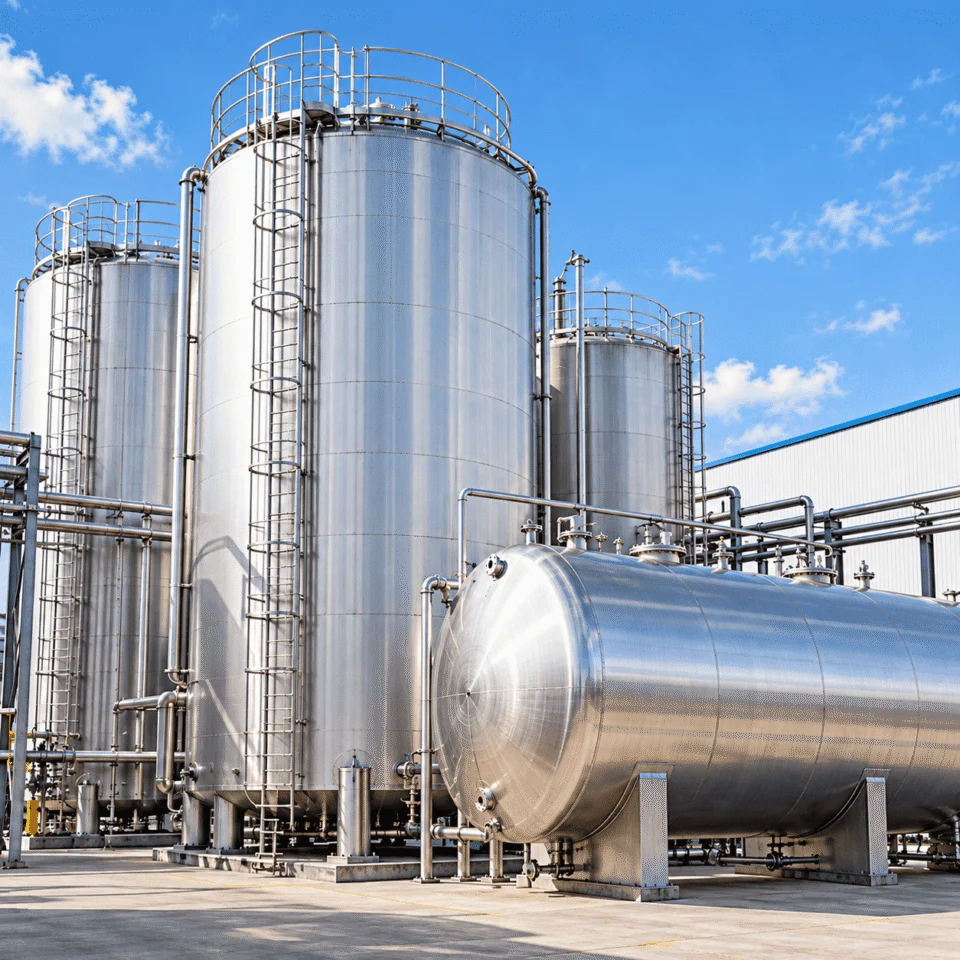
Vertical & Horizontal
Stainless & Carbon Steel
Custom Engineered
Custom industrial storage tanks for process and bulk liquid storage
ENGINEERING INPUTS

Start With What You Need to Store

The right industrial storage tank should be selected around the stored medium and operating conditions—not simply by capacity.

Before material, geometry, wall construction, connections or accessories are finalized, the tank should be reviewed against the process conditions and the space available at the installation site.

These inputs help determine the tank material, orientation, proportions, corrosion strategy, nozzle arrangement and thermal requirements before fabrication begins.

Stored Medium

Chemical composition influences material compatibility, corrosion resistance, lining requirements and seal selection.

Required Capacity

Capacity affects tank diameter, height, footprint, support arrangement, transport planning and installation method.

Operating Temperature

Temperature can affect material selection, thermal expansion, insulation and the need for heating or cooling.

Pressure & Venting

Atmospheric storage, low pressure, vacuum and process venting require different engineering considerations.

Corrosion Conditions

The stored liquid and environment determine whether stainless steel, carbon steel, coating, lining or corrosion allowance is appropriate.

Cleaning Requirements

Drainability, internal finish, sanitary connections and CIP compatibility may be important for hygienic applications.

Installation Environment

Indoor or outdoor installation can influence wind load, supports, coatings, insulation, access and maintenance provisions.

Available Footprint

Tank orientation and diameter-to-height ratio can be adjusted around building height, floor space and surrounding equipment.

For a Faster Tank Proposal
Stored medium Capacity Material Temperature Pressure Site dimensions Nozzles Applicable standard
TANK CONFIGURATIONS

Choose the Tank Configuration Around the Process

Orientation, wall construction, bottom geometry and support arrangement should be selected around storage duty, available footprint, drainage, temperature control and surrounding equipment.
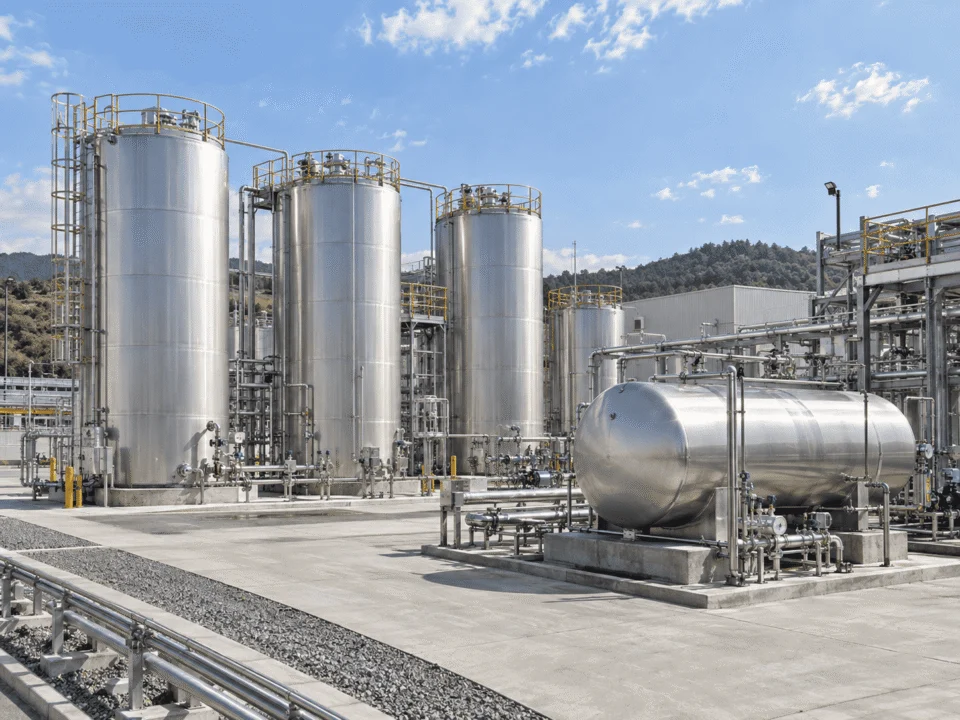
Vertical and horizontal industrial storage tanks

Tank geometry should follow the process and installation conditions—not a fixed catalogue format.

VERTICAL

Vertical Storage Tanks

Vertical tanks are commonly selected when larger storage capacity is required while keeping the plant footprint compact.

Best suited for
  • Bulk liquid storage
  • Chemical and process liquids
  • Process water
  • Food and beverage liquids
  • Large-capacity plant storage
  • Gravity-assisted drainage
Flat, sloped, conical or formed bottoms can be selected around drainage and process requirements.
HORIZONTAL

Horizontal Storage Tanks

Horizontal tanks are useful where installation height is limited or where the process layout favors a low-profile arrangement.

Best suited for
  • Oil and liquid storage
  • Process holding
  • Transfer systems
  • Skid-mounted equipment
  • Height-restricted areas
  • Horizontal piping layouts
Horizontal tanks can be mounted on saddles, frames or skids depending on the project.

Single-Wall

Suitable for many standard industrial storage duties where secondary containment is not integrated into the tank shell.

Double-Wall

Used where an additional wall is required for containment, insulation or another project-specific function.

Insulated

Helps reduce heat loss, limit temperature variation and protect personnel from hot external surfaces.

Jacketed

Heating or cooling jackets can maintain stored liquids within a required process temperature range.

Shop-Fabricated

Where transport dimensions permit, more fabrication and inspection can be completed under controlled factory conditions.

Large Project-Specific

Larger tanks may require segmented fabrication, transport planning or site assembly depending on size and location.

PRESSURE MATTERS Storage tank and pressure vessel design should not be treated as the same thing.

If significant internal pressure or vacuum becomes part of the operating condition, the design basis may need to move beyond conventional atmospheric storage tank practice.

Explore Pressure Vessels
MATERIALS & CORROSION

Select the Tank Material Around the Stored Medium

The correct tank material depends on chemical compatibility, concentration, temperature, contamination risk, cleaning requirements and expected service life—not simply the liquid name.

STAINLESS STEEL 304 / 304L / 316 / 316L

For Corrosion Resistance, Cleanability & Product Purity

Stainless steel is widely used where corrosion resistance, hygienic construction, cleanability or contamination control is important.

Food & Beverage Pharmaceutical Dairy Brewing Chemical Processing Clean Process Liquids
Stainless Steel Storage Tanks
CARBON STEEL General Industrial Storage

For Compatible Liquids & Large-Volume Storage

Carbon steel can be an economical choice where stainless steel is not required and the stored liquid is compatible with the selected steel and protection system.

Typical service

Water · Oil · Compatible chemicals · General process liquids · Bulk industrial storage

Protection options

Internal coating · Corrosion allowance · External paint · Project-specific cladding

LINED SYSTEMS For Aggressive Chemical Service

Use the Metal Shell for Strength and the Lining for Chemical Resistance

Where the base metal alone is not the preferred corrosion barrier, an internal fluoropolymer lining can be selected according to chemical compatibility and operating temperature.

PTFE PFA ETFE ECTFE PVDF FEP
SPECIAL MATERIALS Project-Specified

For Chlorides, Elevated Temperature & Severe Corrosion Conditions

Aggressive media, chloride exposure, elevated temperature or demanding process conditions may require project-specific alloys or other special materials beyond standard 304 and 316L.

Final material selection should use the actual chemical composition, concentration, temperature and cleaning conditions.

MATERIAL DECISION FACTORS What actually changes the material recommendation?
Chemical Composition Concentration Operating Temperature Cleaning Chemicals Product Purity Outdoor Environment Corrosion Allowance Expected Service Life
Review Material Selection
TECHNICAL CAPABILITIES

Industrial Storage Tank Capability Range

Custom-built around capacity, material, process conditions, corrosion requirements, site limitations and inspection specifications.

TYPICAL CAPACITY 50 L – 100,000 L+ Larger project-specific tanks available
Orientation Vertical / Horizontal
Dimensions Custom
Wall Thickness Engineered
Pressure / Temperature Project-Specific
Materials
Stainless Steel 304 / 304L / 316 / 316L
Carbon Steel Available
Special Materials Project-Specified
Linings PTFE / PFA / ETFE / ECTFE / PVDF / FEP
Construction
Wall Single / Double / Multi-Layer
Bottom Flat / Sloped / Cone / Dished
Supports Legs / Saddles / Skirt / Base Ring / Skid
Fabrication Shop / Project-Specific Site Strategy
Temperature Control
Heating Jacket / Half-Pipe / Coil / Electric
Cooling Jacket / Internal Coil
Insulation Available
Cladding Project-Specified
Connections & Access
Nozzles Custom Size / Quantity / Orientation
Manways Top / Side
Access Ladder / Platform / Guardrail
Process Ports Drain / Vent / Overflow / Sampling
Instrumentation & Cleaning
Level Gauge / Radar Connection
Temperature Sensor / Thermowell
Pressure / Vacuum Instrument Connections
Cleaning CIP / Spray Ball / Drainable Design
Surface & Corrosion
Stainless Finish Matte / Polished / Custom
Treatment Pickling / Passivation
Carbon Steel Coating / Paint System
Corrosion Allowance Service-Dependent
Not fixed catalogue values:

Diameter, height, wall thickness, design pressure and design temperature are engineered according to capacity, medium, density, loads, material, applicable code and installation conditions.

ENGINEERING REVIEW

Engineering the Tank Around the Application

A storage tank is more than a shell with several nozzles. The final design should reflect how the tank will actually operate, where it will be installed and how it connects to the surrounding process.

Geometry Follows the Site

Diameter, height and orientation can be adjusted around floor space, building height, access routes, surrounding equipment and transport limitations.

Loads Change the Structure

Liquid density, wind, seismic conditions, nozzle loads and support arrangement can influence wall thickness, anchoring and structural details.

Operation Changes the Details

Cleaning, drainage, maintenance access, heating, cooling and instrumentation requirements affect the final tank configuration.
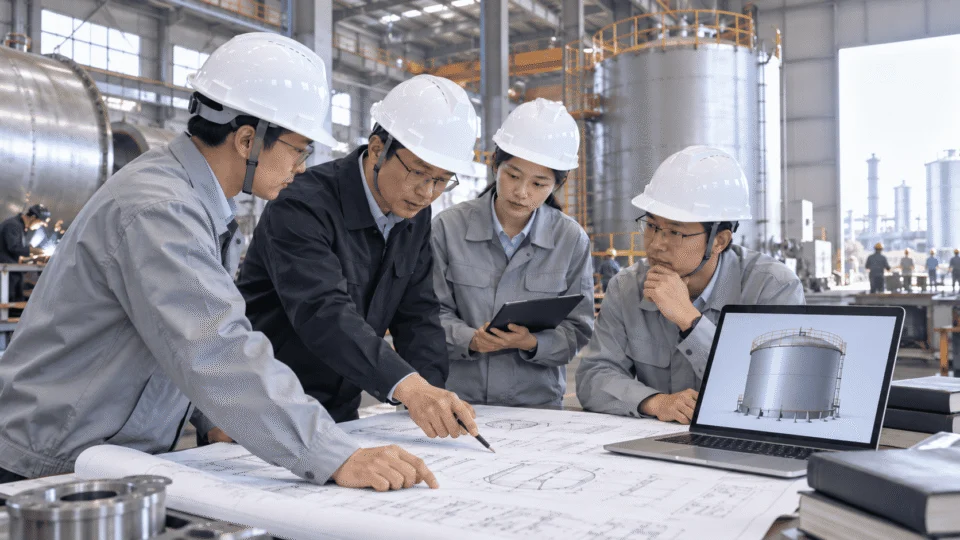
Engineering team reviewing industrial storage tank drawings

Final dimensions, supports, nozzles and inspection requirements should be confirmed before fabrication begins.

HOW ONE INPUT CAN CHANGE MULTIPLE DESIGN DECISIONS
Higher Liquid Density
→
Hydrostatic Load Shell Review Support Review
Outdoor Installation
→
Wind Load Anchoring External Protection Access Planning
More Aggressive Chemical
→
Material Selection Corrosion Strategy Lining Review Seal Compatibility
NO FINISHED DRAWING? Engineering can begin from the operating conditions.

Stored medium, required capacity, operating temperature, pressure or vacuum condition and installation constraints provide the starting point for developing the tank configuration.

Stored Medium Capacity Temperature Pressure / Vacuum Site Dimensions Required Connections
CUSTOM FEATURES

Configure the Tank Around the Process

Industrial storage tanks can be equipped with thermal-control systems, mixing, cleaning, instrumentation, custom nozzles and access structures according to how the stored liquid is handled before, during and after storage.

THERMAL CONTROL Maintain the required product temperature

Heating, Cooling & Insulation

Temperature-sensitive liquids can require heating, cooling or insulation to control viscosity, prevent crystallization, reduce heat loss or maintain a stable process condition.

Heating Jacket Cooling Jacket Half-Pipe Jacket Internal Coil Electric Heating Thermal Insulation External Cladding
PROCESS FUNCTIONS Store, mix, clean and monitor

Mixing, Cleaning & Instrumentation

Storage tanks can be configured for product uniformity, easier internal cleaning and process monitoring when the application requires more than simple liquid holding.

Mixing

Agitator · Mixer · Viscosity-based configuration

Cleaning

CIP · Spray Ball · Drainable Bottom · Cleaning Connections

Instrumentation

Level · Radar · Temperature · Pressure / Vacuum Connections

PLANT INTEGRATION Fit the tank into the surrounding system

Connections, Access & Skid Integration

Nozzle positions, access systems and auxiliary equipment can be arranged around plant piping, maintenance requirements and the final installation layout.

Custom Nozzles Top / Side Manway Drain Vent Overflow Sampling Port Ladder Platform Guardrail Pump Integration Valve & Piping Integration Skid Mounting
CODES & STANDARDS

Use the Design Basis That Matches the Operating Condition

Industrial storage tanks can fall under different design standards depending on pressure, temperature, stored medium, tank size, installation location and owner requirements. One code does not apply to every tank.

DESIGN BASIS BY OPERATING CONDITION Pressure condition is one of the first things to define.
ATMOSPHERIC STORAGE API 650

Commonly associated with welded steel tanks used for atmospheric storage service where conventional storage-tank rules are appropriate.

Atmospheric Duty Welded Steel Tanks Bulk Liquid Storage
LOW-PRESSURE STORAGE API 620

Used for certain large welded low-pressure storage tank applications where operating conditions extend beyond typical atmospheric service.

Low Pressure Large Welded Tanks Project-Specific Review
PRESSURE-VESSEL SERVICE ASME Section VIII

Where significant internal pressure or vacuum makes the equipment function as a pressure vessel, pressure-vessel design requirements may apply.

Pressure Duty Vacuum Conditions Pressure-Vessel Design
OWNER & PROJECT REQUIREMENTS

Applicable Standards Are Only Part of the Specification

Industrial projects often include additional requirements from the owner, EPC contractor or end user. These requirements can affect fabrication, inspection, documentation, surface treatment and traceability.

Review Codes & Standards
Materials Specified grades, traceability and certificates
Welding WPS / PQR / WPQ and project welding controls
NDT RT / UT / PT / MT scope and acceptance criteria
Inspection Hold points, witness points and third-party review
Surface Treatment Painting, pickling, passivation or project coating systems
Documentation MTCs, inspection reports, test records and final dossier
Instrumentation Connection standards, nozzle schedules and interface requirements
Packaging Export protection, transport preparation and project marking
Do not select the code from tank capacity alone.

The design basis should be confirmed from pressure or vacuum condition, temperature, stored medium, installation environment, owner specification and applicable project requirements.

INDUSTRIAL APPLICATIONS

Different Industries Need Different Tank Priorities

Two tanks with the same nominal capacity can require completely different materials, finishes, connections, temperature control and inspection requirements depending on the process industry.

Chemical industry storage tank applications
CHEMICAL PROCESSING

Chemical Storage Tanks

Chemical compatibility, corrosion control, sealed construction, lining options and heating or cooling may all influence the final tank design.

Corrosion Review Lining Options Heating / Cooling
Chemical Industry
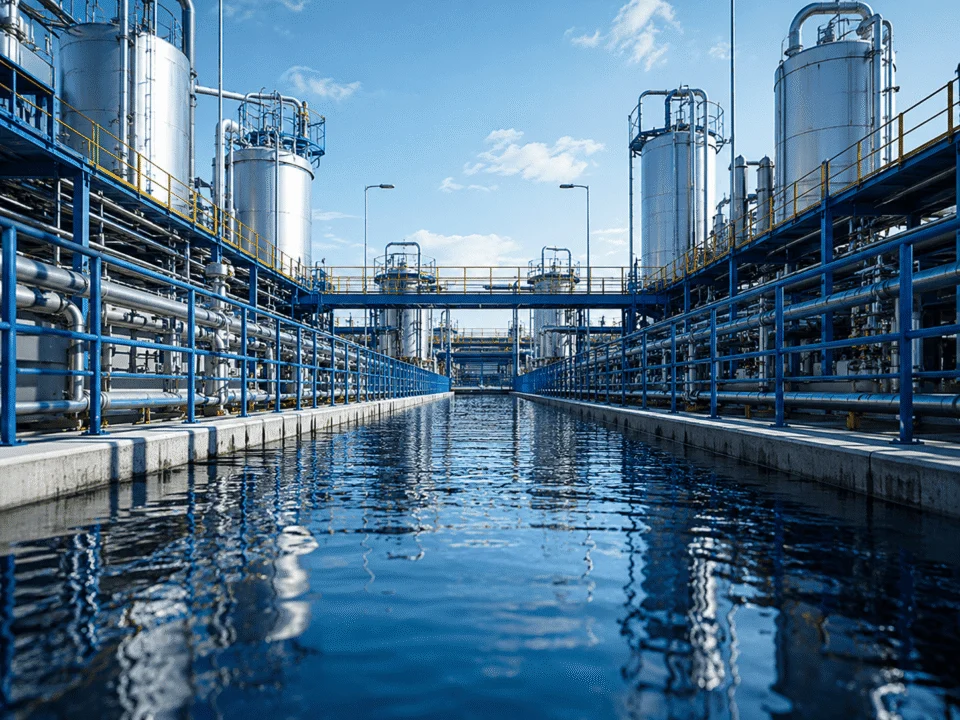
Petrochemical process equipment and storage vessels
PETROCHEMICAL

Hydrocarbon & Process Liquid Storage

Outdoor installation, venting, large capacity, access systems and project-specific codes are common considerations in petrochemical storage.
Outdoor Duty Venting Project Codes
Petrochemical Industry
Water treatment industrial tank applications
WATER TREATMENT

Water & Treatment Chemical Storage

Storage duties can range from process water to acids, alkalis and dosing chemicals, with material and coating selection matched to the liquid.

Process Water Acid / Alkali Coating Selection
Water Treatment
Food and beverage stainless steel storage tank applications
FOOD & BEVERAGE

Hygienic Liquid Storage

Stainless steel construction, internal finish, drainability, sanitary connections, CIP and temperature control can be important.

Stainless Steel CIP Sanitary Finish
Food & Beverage
Pharmaceutical stainless steel process tank applications
PHARMACEUTICAL

High-Cleanliness Process Storage

Material traceability, surface control, documentation, cleanability and process isolation can become central project requirements.

Traceability Documentation Cleanability
Pharmaceutical Industry
Dairy industry stainless steel storage tank applications
DAIRY

Temperature-Controlled Hygienic Storage

Milk, cream and dairy process liquids often require stainless steel, CIP capability, smooth internal surfaces and temperature management.

Hygienic Design CIP Temperature Control
Dairy Industry
Brewing and fermentation process tank applications
BREWING & FERMENTATION

Brewing & Process Liquid Storage

Water, brewing liquids and fermentation-related processes can require cleanable construction, temperature management and process connections.

Cleanable Design Temperature Control Process Connections
Brewing & Fermentation
New energy industrial process equipment applications
NEW ENERGY

Advanced Chemical & High-Purity Storage

New energy projects can involve corrosive chemicals, electrolyte-related liquids, high-purity media and specialized material or lining requirements.

High Purity Corrosive Media Special Materials
New Energy
FABRICATION & QUALITY CONTROL

From Fabrication to Inspection

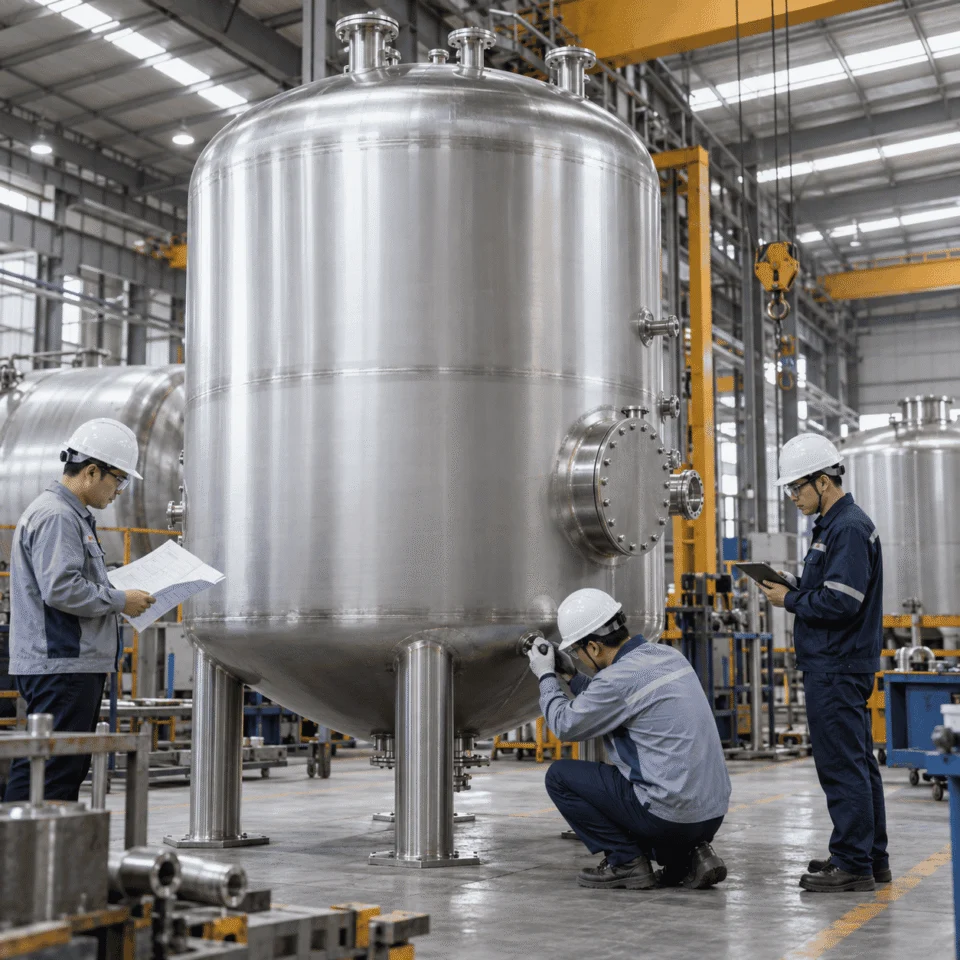
A well-designed tank still depends on controlled fabrication, welding and inspection. Manufacturing activities should follow the approved drawings, material requirements and project inspection plan from start to finish.
Industrial storage tank fabrication and inspection scene

Material traceability, welding control and inspection records can be coordinated around project requirements before shipment.

FABRICATION & WELDING

Build the Tank to the Approved Design

Fabrication & Welding
Material Preparation

Material identification, cutting and preparation according to fabrication drawings and project requirements.

Forming

Shell courses, heads, cones and other components formed to the required dimensions and geometry.

Fit-Up

Joint preparation, alignment, nozzle positioning and dimensional checks before final welding.

Welding

GTAW, SMAW, GMAW/MIG-MAG, SAW or other suitable processes selected around material, thickness and joint design.

INSPECTION & TESTING

Verify the Tank Before Delivery

Inspection & Testing
Visual & Dimensional Geometry · Nozzle Orientation · Supports · Overall Dimensions
Nondestructive Testing RT · UT · PT · MT
Material Verification PMI where required
Leak / Pressure Testing Hydrostatic · Leak Test · Vacuum Box where applicable
Documentation Material Certificates · Welding Records · NDT Reports · Test Records
Third-Party Inspection Project-specific witness or hold points can be coordinated
DEFINE THE INSPECTION SCOPE EARLY Inspection requirements should be agreed before fabrication begins.

NDT extent, hold points, documentation, witness requirements and final testing should be built into the manufacturing plan rather than added after the tank is already complete.

Material Traceability Welding Control NDT Testing Documentation Third-Party Inspection
FREQUENTLY ASKED QUESTIONS

Industrial Storage Tank FAQs

These are the questions we most often need to clarify before tank configuration, engineering review and quotation can move forward.

What information do you need to quote an industrial storage tank?

The most useful information includes the stored medium, required capacity, material preference, operating temperature, pressure or vacuum condition, installation location, required nozzles, accessories and applicable standard.

If you already have drawings or a data sheet, send them with your inquiry.

Can you design the tank if I do not have a drawing?

Yes. A tank configuration can be developed from the operating conditions and project requirements.

Stored medium, capacity, temperature, pressure or vacuum condition, installation space and required connections provide the engineering team with a practical starting point.

Should I choose stainless steel or carbon steel?

The selection depends on chemical compatibility, corrosion conditions, contamination risk, cleaning requirements and project economics.

Stainless steel is commonly selected for corrosive, hygienic or high-purity applications, while carbon steel can be economical for many compatible industrial liquids and large-volume storage duties.

When should I use a vertical tank instead of a horizontal tank?

Vertical tanks are often selected where larger storage volume is required while keeping the floor footprint compact.

Horizontal tanks can be useful where installation height is limited, where saddle mounting is preferred or where the surrounding process layout favors horizontal integration.

Can an industrial storage tank be heated or cooled?

Yes. Depending on the process, tanks can incorporate heating jackets, cooling jackets, half-pipe jackets, internal coils, electric heating, insulation and external cladding.

Can the tank include a mixer or agitator?

Yes. Agitators can be incorporated where mixing, suspension, blending or product uniformity is required.

The mixer configuration should be selected around liquid viscosity, tank geometry, process objective and required mixing intensity.

What is the difference between a storage tank and a pressure vessel?

A conventional storage tank is commonly used for atmospheric or relatively low-pressure liquid storage.

When significant internal pressure or vacuum becomes part of the design condition, pressure-vessel design rules may apply. The correct classification depends on the actual operating conditions and applicable project code.

What inspection methods are available?

Depending on project requirements, inspection can include visual and dimensional inspection, RT, UT, PT, MT, PMI, hydrostatic testing, leak testing, vacuum box testing and third-party inspection.

Can nozzle positions and tank accessories be customized?

Yes. Nozzle sizes, quantities, orientations and elevations can be arranged around the plant piping layout.

Manways, vents, drains, overflow connections, sampling ports, instrumentation connections, ladders, platforms, heating systems, insulation and other accessories can also be configured according to the project.

START YOUR TANK PROJECT

Tell Us What You Need to Store

A better tank proposal starts with better operating information. Send us your process conditions, site limitations and drawings if available, and our team can review the material, configuration, dimensions, connections and manufacturing requirements for your project.

INCLUDE THE FOLLOWING IF AVAILABLE Project Information for a Faster Review
Stored Medium
Required Capacity
Material Preference
Operating Temperature
Pressure / Vacuum Condition
Tank Orientation
Available Installation Space
Required Nozzles
Heating / Cooling Requirements
Insulation Requirements
Applicable Standard
Inspection Requirements

Existing drawings, data sheets or plant-layout information can help us review the project more efficiently.

Scroll to Top
DRAWING & FILE REVIEW

Send Your Drawings

Upload your drawings, datasheets or existing specifications. Our engineering team will review the files and respond with technical feedback.

Engineering Review

Drawings, specifications and process requirements

Confidential File Handling

Project files are used only for technical review and quotation

Faster Technical Feedback

Clearer inputs help us respond more accurately and efficiently

DRAWING & FILE REVIEW

Send Your Drawings

Upload your drawings, datasheets or specifications. Our engineering team will review your files and provide technical feedback.

Contact Form Demo (#3)
Project Protected NDA available
12h Response
ASME / PED
AFTER SUBMISSION
01 Review
→
02 Confirm
→
03 Quote
TECHNICAL QUOTATION

Get a
Technical Quote

Tell us what you need. Our engineering team will review your requirements and respond within 12 hours.

Engineered for Your Application

From concept to certified manufacturing

Global Compliance

ASME, PED and other international standards

Expert Support

Direct access to our engineering team

TECHNICAL QUOTATION

Get a Technical Quote

Tell us what you need. Our engineering team will review your requirements and respond within 12 hours.

Contact Form Demo
Project Protected NDA available
12h Response
ASME / PED
AFTER SUBMISSION
01 Review
→
02 Confirm
→
03 Quote