Custom Stainless Steel Storage Tanks for Hygienic and Industrial Applications
ChannelVessel designs and fabricates stainless steel storage tanks for food, beverage, dairy, pharmaceutical, chemical, and industrial applications. Available in 304 or 316L stainless steel, our tanks can be configured for vertical or horizontal installation, insulation, jacketed construction, agitation, and sanitary or industrial service requirements.
Stainless Steel Storage Tank Specifications
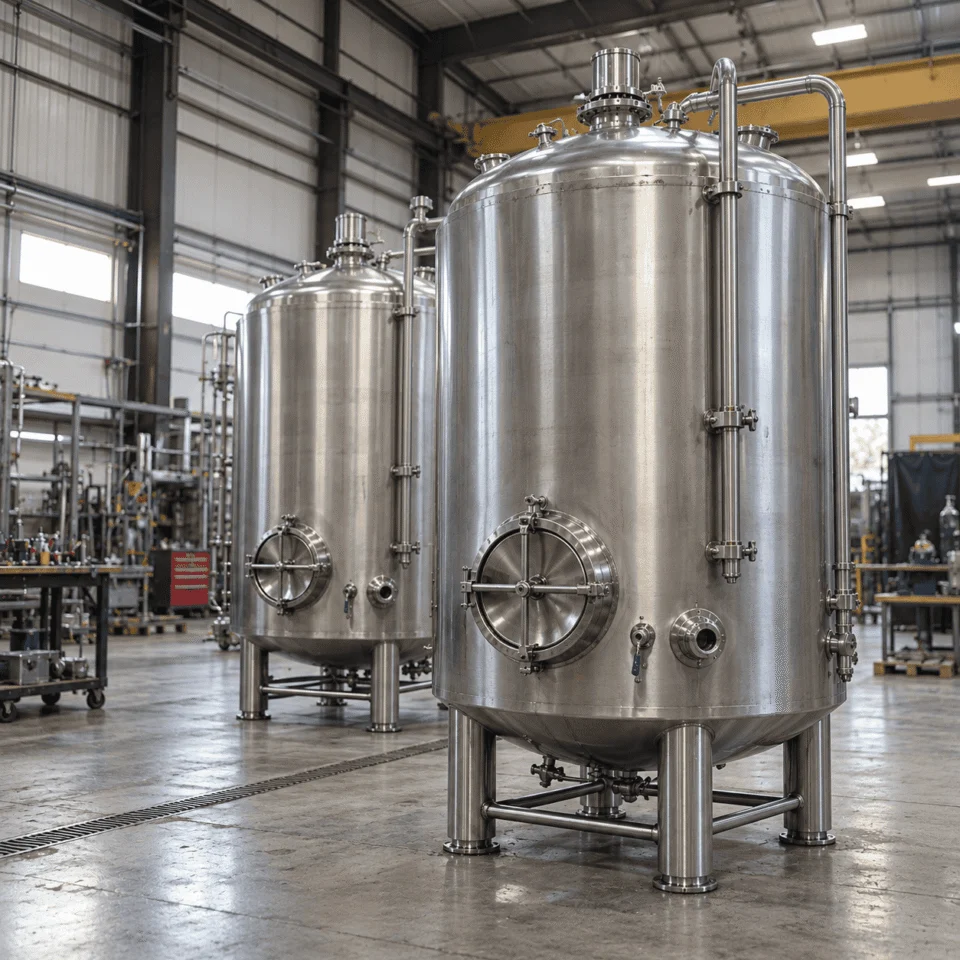
ChannelVessel storage tanks can be configured for general industrial storage, hygienic liquid handling, temperature-controlled processes and low-pressure service.
Final dimensions, wall thickness, pressure rating and construction details are confirmed according to the stored medium, capacity, specific gravity, temperature, pressure or vacuum conditions and applicable project requirements.
Final plate thickness, pressure and vacuum ratings, support structure, jacket design and nozzle reinforcement are determined according to vessel geometry, operating conditions and the applicable project specification. The stated design-pressure and full-vacuum capabilities are project-specific engineering ranges, not standard ratings for every atmospheric storage tank. Pressure or vacuum service must be confirmed for each project and may require a pressure-vessel design route and applicable code review.
Stainless Steel Storage Tank Configurations
Different storage duties require different vessel geometries, thermal arrangements, support systems and process functions. ChannelVessel configures each stainless steel storage tank around the actual operating and installation conditions.
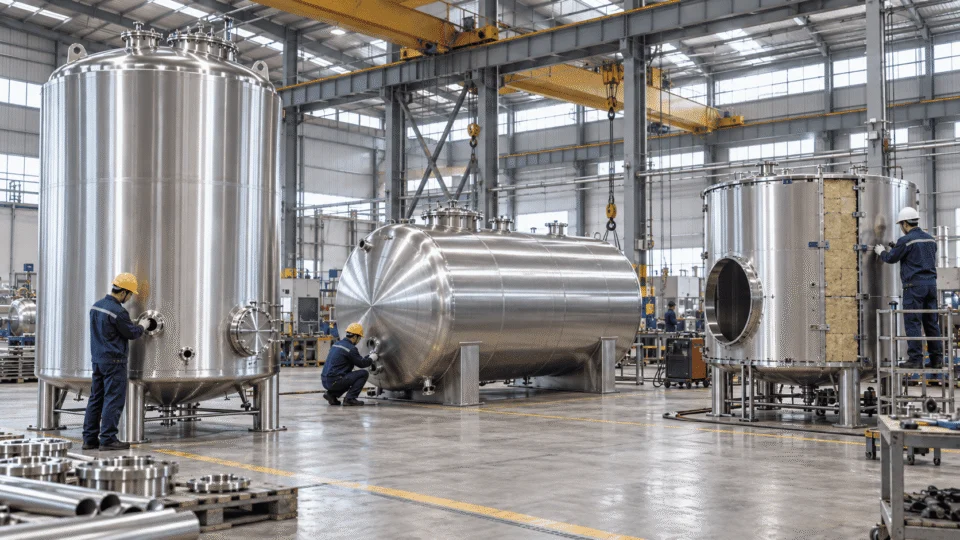
Geometry, insulation, thermal control, agitation, connections and support structure are selected according to the service requirement.
Vertical stainless steel storage tanks are widely used where high storage capacity must be achieved within a limited floor area.
Vertical tanks can be configured with legs, skirts or project-specific structural supports.
Bottom geometry can be selected according to drainage, process and cleaning requirements, while top-mounted connections can accommodate instrumentation, vents, CIP devices or agitation systems.
Large vertical tanks can also be supplied in field-assembled configurations where transportation or installation conditions prevent delivery as a complete vessel.
Horizontal tanks are suitable where building height, installation layout or transport restrictions favor a low-profile vessel.
Horizontal tanks are typically supported on saddles.
Connection positions, maintenance access and drainage arrangements are coordinated with the plant piping layout before fabrication.
Single-wall construction is suitable for storage applications that do not require active heating or cooling.
Even on a relatively simple tank, connection locations should be confirmed against the plant layout to avoid installation conflicts.
Insulation can reduce heat gain or heat loss where the stored product must remain within a defined temperature range.
The required insulation system depends on the stored medium, operating temperature, ambient conditions and expected holding time.
A jacket provides a heat-transfer surface for applications requiring controlled heating or cooling.
Jacket selection should be based on required thermal duty, utility pressure and temperature, product viscosity and available heat-transfer area.
Agitation can be integrated where the stored product requires mixing, suspension or temperature uniformity.
Fixed-speed or variable-frequency drives can be supplied according to process requirements.
The agitator, tank shell, support structure and internal components should be considered together rather than selected independently.
Custom Stainless Steel Storage Tank Projects
ChannelVessel supplies stainless steel storage systems for chemical, food, beverage and industrial processing applications. The following projects show how tank material, geometry, thermal control and inspection requirements can change according to the operating environment.
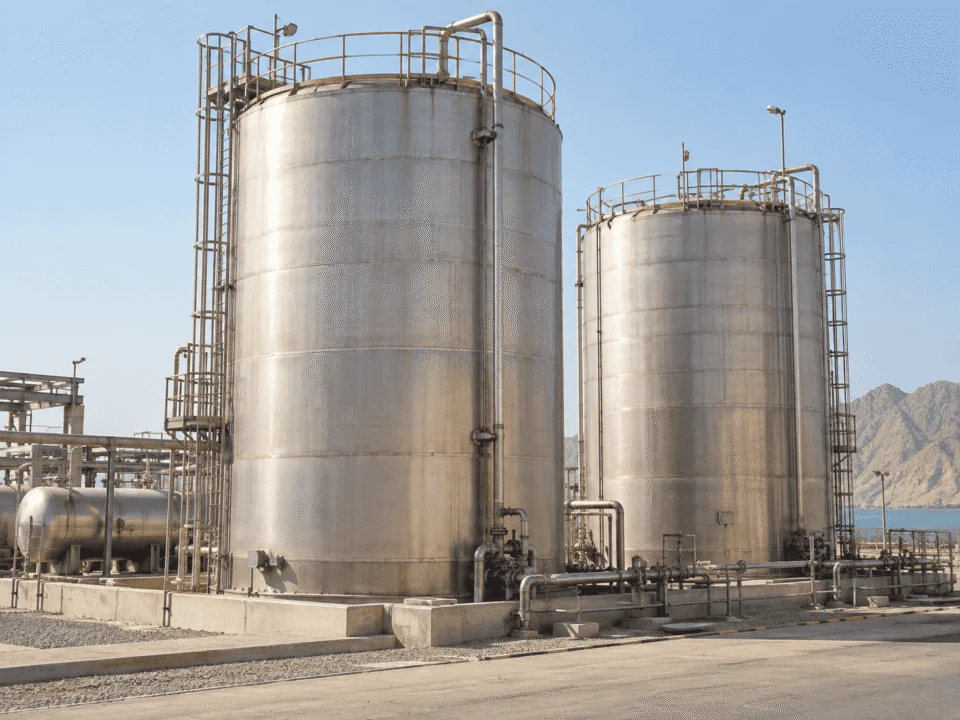
500 m³ 316L Chemical Storage Tanks — Oman
A chemical producer in Sohar required stainless steel storage and buffer tanks for organic acids and specialty chemical intermediates operating in a hot coastal environment.
The 500 m³ vertical tanks were supplied in knock-down form for field assembly in Sohar, with technical support for installation and inspection.
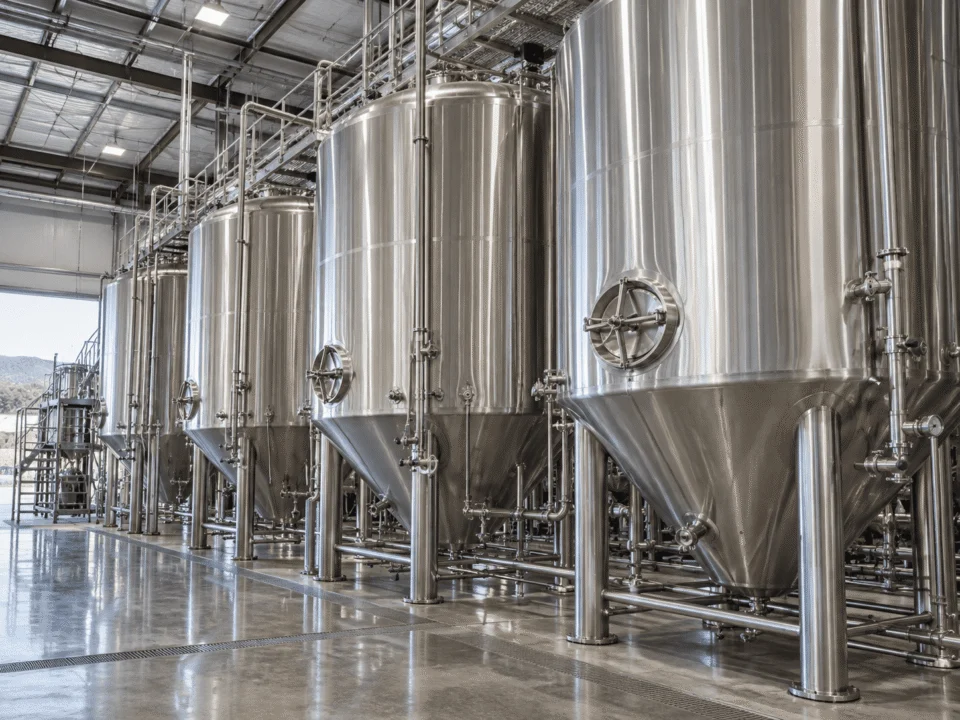
300–600 BBL Sanitary Beverage Tanks — California, USA
A beverage and craft brewing producer in California required sanitary fermentation and brite tanks as part of a production-capacity expansion.
The vessels were configured for hygienic beverage processing, temperature control and automated cleaning before shipment to California.
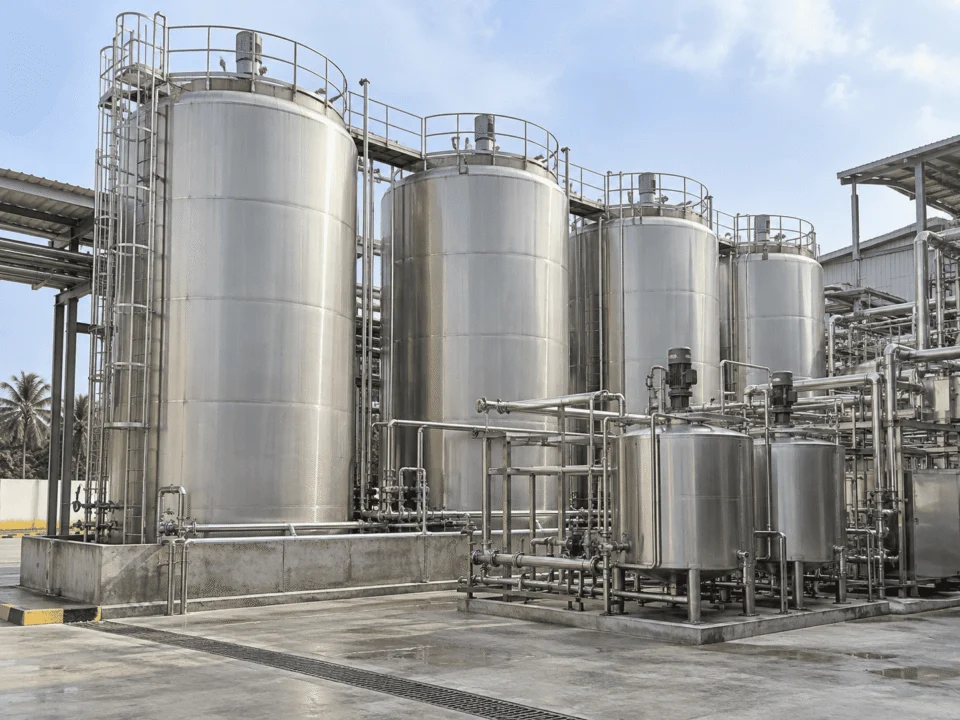
200 m³ Edible Oil Storage Tanks — Vietnam
A food-oil processing company in Long An required an integrated stainless steel tank system for palm oil, soybean oil and liquid food additives.
The system was designed to maintain product fluidity during storage while supporting controlled heating, mixing and transfer operations.
Send us your medium, capacity, temperature, pressure or vacuum conditions, installation constraints and drawing requirements.
Why Choose ChannelVessel for Stainless Steel Storage Tanks?
A stainless steel storage tank should be configured around the actual process, plant layout, hygienic requirements and inspection scope rather than selected only by nominal capacity.
Engineering Based on the Process
A tank should not be designed from capacity alone. ChannelVessel reviews the stored medium, usable capacity, specific gravity, temperature, pressure or vacuum conditions, cleaning requirements and installation constraints before the configuration is finalized.
The goal is to make the vessel fit the process rather than forcing the process to fit a standard catalog tank.
Custom Connections and Plant Integration
Nozzle size, quantity, connection standard and orientation can be customized around the customer's plant layout instead of being fixed by a standard vessel design.
P&IDs, GA drawings, existing tank drawings, nozzle schedules and equipment specifications can be reviewed before production to reduce piping, access and installation conflicts.
Industrial and Hygienic Fabrication
Different applications require different levels of finish and cleanability. Industrial service, food processing and high-purity applications should not automatically receive the same fabrication treatment.
Surface finish, product-contact weld treatment, hygienic connections, drainability and polishing requirements are selected according to the actual service and customer specification.
Inspection and Documentation
Inspection and documentation can be agreed according to the project requirements.
Send your GA drawing, P&ID, nozzle schedule or equipment specification for engineering review.
Stainless Steel Storage Tanks for Different Applications
The same working volume can require very different tank materials, finishes, connections, thermal arrangements and cleaning features depending on the stored medium and operating environment.
Storage systems designed around hygiene, cleanability and product handling.
A low-viscosity beverage and a viscous syrup can require very different outlet, cleaning and agitation arrangements even when the working volume is identical.
Cooling, hygiene and cleaning must work as one complete vessel system.
Dairy storage applications require particular attention to controlled product handling and cleanability.
Cooling and cleaning arrangements should be evaluated together so that the complete vessel can be operated and cleaned consistently.
Material and vessel configuration should follow the actual chemistry involved.
Chemical storage equipment should be configured according to the actual chemistry involved.
Material compatibility should be checked for the complete wetted system, not only the tank shell.
High-purity service requires tighter control of material, finish and documentation.
High-purity applications can require more tightly controlled construction and documentation.
The required level should be defined by the actual process specification rather than a generic industry label.
Water quality determines how far material, finish and documentation requirements must go.
The required material, finish, venting and documentation can vary considerably depending on water quality and process requirements.
Practical layout, drainage and process integration often matter most in general service.
For general industrial service, priorities often include practical nozzle arrangement, reliable drainage, corrosion resistance, maintenance access and process integration.
Application labels alone are not enough to define a tank. Final material, geometry, finish, thermal control, cleaning method and inspection scope should be confirmed from the actual process conditions.
How to Specify a Stainless Steel Storage Tank
A successful project begins with operating conditions rather than a tank size alone.
Use the specification sheet below as a practical checklist before requesting a quotation.A material suitable for one chemical or food product may not be suitable for another at a different concentration or temperature.
For example, a process requiring 10,000 L usable liquid volume may require a larger total internal volume depending on the agreed operating level.
The final fill ratio should be determined from the actual process requirements.
Where heating or cooling is required, the thermal duty should be defined before jacket or coil selection.
Positive pressure and vacuum resistance must be reviewed separately.
A tank designed only for atmospheric operation should not automatically be used under vacuum or pressurized service.
The vessel geometry should fit both the process and the installation site.
For large tanks, transportation should be considered before fabrication.
Large tanks can be manufactured in sections for field assembly where required.
Send your operating conditions, P&ID, GA drawing, nozzle schedule or existing tank specification.
304 vs 316L Stainless Steel Storage Tanks
304 and 316L are widely used stainless steels for industrial storage equipment.
The correct grade depends on the actual service conditions rather than a generic industry label.When 304 May Be Appropriate
304 can be suitable for:
Selection should still consider temperature, chlorides and cleaning chemicals.
When 316L May Be Preferred
316L is commonly considered for:
No stainless steel alloy is universally resistant to every chemical environment. Material compatibility should always be reviewed against the actual medium, concentration and temperature.
Read the Material Selection Guide →Sanitary Stainless Steel Storage Tanks
Internal Surface Finish
Available finishing requirements can include:
Where a specific Ra value is required, the acceptance value and inspection method should be defined in the project specification.
Product-Contact Welds
Depending on the required hygiene level, internal welds can be:
The required treatment should reflect the actual process. A general industrial water tank does not require the same finish as a pharmaceutical vessel.
Drainability
Poor drainage can leave product or cleaning solution inside the tank.
The objective is to allow the product and cleaning fluid to leave the vessel as completely as practical.
CIP Cleaning
CIP-compatible tanks can include:
CIP design should consider:
A spray ball alone does not guarantee effective cleaning.
Hygienic Connections
Available connection systems include:
Connection selection depends on:
Atmospheric Storage Tank or Pressure Vessel?
Storage tanks and pressure vessels can appear similar from the outside, but their mechanical design requirements can be very different.
Pressure, vacuum, venting and upset conditions should be defined before the mechanical design route is selected.Atmospheric tanks typically operate at or near atmospheric pressure with suitable venting.
Atmospheric service does not mean that mechanical design is unnecessary.
Some products require nitrogen blanketing to:
Vacuum can occur during:
Thin-walled vessels can be vulnerable to external pressure. Vacuum resistance should therefore be explicitly included in the design requirements where applicable.
Where significant internal pressure or vacuum forms part of normal or upset operation, a pressure-vessel design route may be required.
The applicable design code, pressure category and certification scope should be confirmed for each project based on operating conditions, design conditions, installation location and customer requirements.
Send the operating pressure, design pressure, vacuum conditions, temperature, stored medium and venting requirements for engineering review.
Stainless Steel Tank Fabrication and Quality Control
Fabrication quality begins before the first plate is cut and continues through final inspection and shipment preparation.
The workflow below groups engineering, fabrication and verification activities into one controlled manufacturing route.
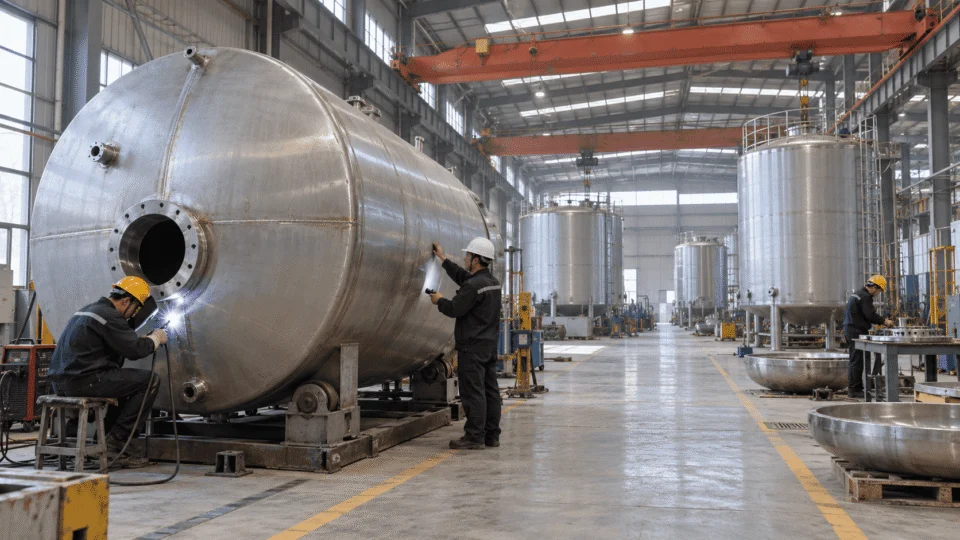
Confirm the design basis before fabrication begins.
Before fabrication, the technical review considers:
Undefined design conditions should be clarified before production.
Approve dimensions, orientation and connection layout.
The approved drawing confirms:
A clear equipment layout reduces installation conflicts.
Keep the specified stainless steel grade identifiable.
Material records can include:
This helps ensure that specified stainless steel grades remain identifiable throughout fabrication.
Prepare and form stainless steel plate to the approved geometry.
Stainless steel plate is prepared and formed according to the approved dimensions.
Match welding practice to the selected material and application.
Depending on the project, fabrication can include:
Welding and finishing requirements should match the selected material and application.
Finish the vessel for appearance, cleanability and corrosion performance.
Available surface treatments include:
Surface treatment affects appearance, cleanability and corrosion performance.
Apply the inspection scope required by the service and project specification.
Inspection scope can include:
Not every tank requires the same NDT program. The inspection scope should reflect the service conditions, applicable standard and customer specification.
Agree the required test method before production.
Testing can include:
The required test method should be agreed before production.
Confirm the vessel, accessories and documentation before shipment.
Before shipment, final checks can include:
Send your applicable standard, material requirement, NDT scope, surface finish and test requirements for technical review.
Quality Documentation Available
The final documentation package can be prepared according to the agreed project scope.
Documentation requirements should be defined during quotation rather than after fabrication.Standard Project Documentation
Documentation Defined by Inspection or Fabrication Scope
Customer-Specified Documentation
Customer-specified documentation can be included by agreement when the required scope is defined during quotation.
Define document format, inspection records, certification requirements and customer-specific forms before fabrication begins.What Information Do We Need for a Quote?
You do not need every detail finalized before contacting ChannelVessel.
Provide the information already available and remaining items can be clarified during technical review.Send the information you already have.
ChannelVessel can review the design basis before production.
Stainless Steel Storage Tank FAQs
Common questions about tank size, material selection, heating and cooling, agitation, sanitary construction, custom connections and design standards.
ChannelVessel manufactures custom tanks from small process vessels to large industrial storage systems.
A typical custom range is approximately 100–100,000 L, while larger field-fabricated tanks can be evaluated according to project requirements.
Final dimensions depend on capacity, transport restrictions and installation conditions.
304 is widely used in compatible water, food and general industrial applications.
316L is commonly selected where improved corrosion resistance or more demanding hygienic performance is required.
The final decision should consider the actual medium, concentration, temperature, chloride content and cleaning chemistry.
Yes.
Available configurations include:
The appropriate solution depends on the required thermal duty and available utilities.
Yes.
Agitation can be integrated according to viscosity, density, tank geometry, operating level and mixing objective.
Variable-speed drives and different impeller designs are available.
Yes.
Hygienic configurations can include:
The required hygiene level should be defined according to the process.
Yes.
Quantity, size, connection type and orientation can be arranged according to the customer's P&ID, nozzle schedule or plant piping layout.
Yes.
Existing equipment drawings, specifications, P&IDs and nozzle schedules can be reviewed before production.
No.
The design route depends on:
Atmospheric storage tanks and pressure vessels should not automatically be treated as the same type of equipment.
Discuss Your Stainless Steel Storage Tank Project
A useful proposal begins with accurate process information. Share the operating conditions, specifications or drawings already available, and our engineering team can review the tank configuration for your application.
Upload it with the information you already have. Remaining technical details can be clarified during review.
Custom fabrication · 304 / 316L · Industrial & sanitary service